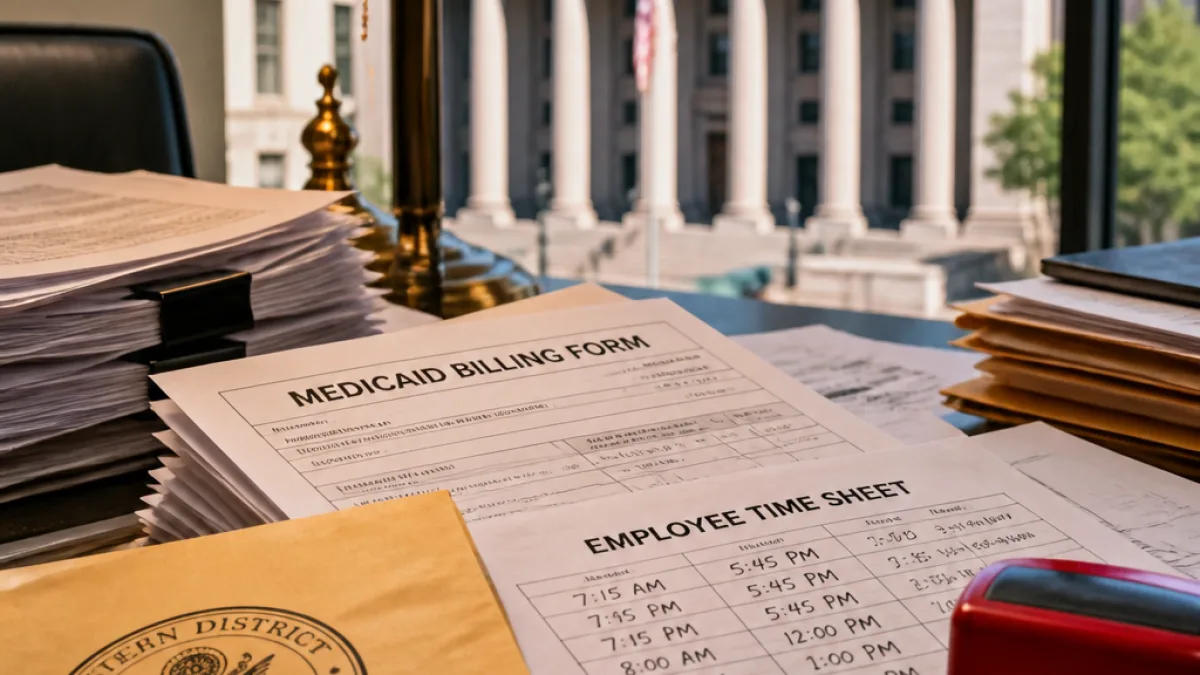
PHILADELPHIA — Federal and state prosecutors announced charges Tuesday against 19 people accused of scheming to extract more than $4 million from Pennsylvania’s Medicaid program by billing for home health services that were never provided.
Allegations of impossible hours and fake records
The indictments, filed by the U.S. Attorney’s Office for the Eastern District of Pennsylvania and the Department of Justice, describe a pattern of fabricated paperwork, overlapping shifts and other tactics designed to make fraudulent claims appear legitimate. In some instances, prosecutors say, care workers submitted time records claiming care was given while the caregiver was jailed, hospitalized, traveling abroad or employed elsewhere.
Federal authorities highlighted recurring examples of what they called "impossible work hours." One home health aide is accused of logging more than 24 hours of care in a single day on over 1,100 occasions. Prosecutors contend that led to billing for more than 64,000 hours that the aide could not have worked, producing more than $1.2 million in Medicaid payments.
"The great fraud against the American taxpayer takes many forms," U.S. Attorney David Metcalf said in a statement. "It is outrageous and unacceptable that anyone could steal money by billing nonexistent home care services for caregivers who were, in fact, dead, in prison, or trafficking drugs."
Who was charged
The defendants include home care company owners, paid aides and Medicaid recipients. Prosecutors have linked several defendants to Philadelphia-area operations. Among the individuals named in the press release are Joseph Pizzo, 47, and Tiziana Taormina, 52, who face charges including conspiracy and health care fraud. Investigators allege Taormina submitted claims for services while Pizzo was incarcerated and while he was working in construction; those claims allegedly generated at least $160,000 in Medicaid payments.
Other defendants listed by prosecutors include Donna Romsteadt, Alyssa Cuculino, Louise Israel and Elexis Cuculino. The indictments assert a range of misconduct from kickbacks to falsified clock-ins and double-billed shifts.
Scope and method of the alleged fraud
Authorities say the schemes used several recurring methods to inflate billings and secure reimbursements:
- Fabricated or altered time logs showing care at times when aides were unavailable;
- Overlapping shifts billed for the same patient; and
- Payments or kickbacks to clients in exchange for allowing fictitious claims.
Prosecutors characterized the operation as systemic rather than isolated incidents, alleging coordinated efforts to maximize reimbursements from the commonwealth’s Medicaid program.
Financial and local consequences
Medicaid is a joint federal-state program providing long-term services and supports to many of Pennsylvania’s most vulnerable residents. Fraud undermines the program’s integrity and diverts funds that would otherwise support direct patient care. Investigators say the losses here exceed $4 million, with a substantial portion tied to the alleged activities of a handful of individuals and companies.
| Allegation | Figure |
|---|---|
| Total alleged fraudulent billing | $4,000,000+ |
| Hours an aide allegedly billed that were impossible | 64,000+ hours |
| Payments tied to that aide | $1.2 million+ |
| Alleged payouts linked to Pizzo/Taormina claims | $160,000 |
Enforcement and next steps
Those charged face federal counts that can include health care fraud, conspiracy and related offenses. The U.S. Attorney’s Office and the Department of Justice handled the indictments, signaling the government’s continued focus on policing publicly funded health benefits.
If convictions follow, they could carry prison time, fines and orders to repay ill-gotten sums. The cases will proceed through the federal court system, where defendants will be entitled to a trial and may seek to negotiate pleas or challenge the evidence brought by prosecutors.
What this means for Pennsylvanians
Home health services are a crucial support for older adults and people with disabilities who rely on in-home aides to remain safe and independent. Prosecutors say fraud of this sort jeopardizes trust in providers and threatens funding for legitimate care. Health officials and oversight agencies typically respond to such enforcement actions by tightening audits and eligibility checks, which can affect providers across the state.
Members of the public who suspect Medicaid fraud may report concerns to state or federal authorities. Inquiries about the case itself should be directed to the U.S. Attorney’s Office for the Eastern District of Pennsylvania, which issued the indictments.
As the legal process unfolds, the indictments lay bare a network of alleged abuse that prosecutors contend siphoned millions from a program intended to protect Pennsylvanians in need.