
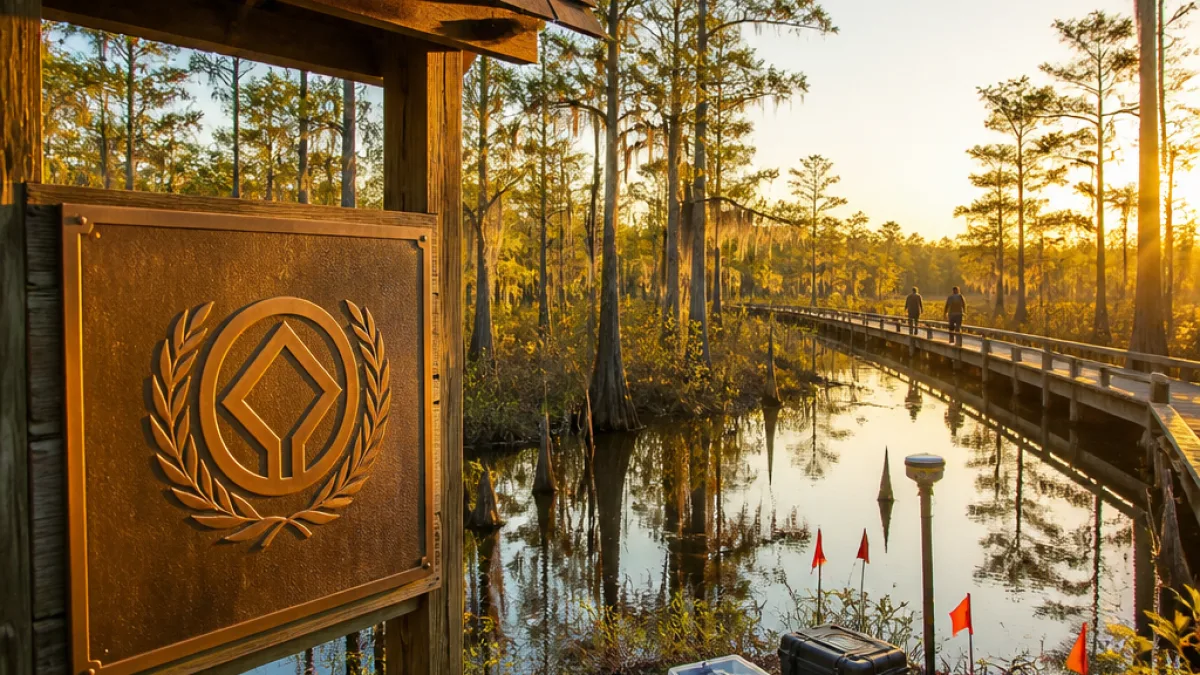
The Okefenokee Swamp in southern Georgia has been added to the United Nations Educational, Scientific and Cultural Organization’s World Heritage List, placing the 5,000-year peat records and expansive freshwater wetlands alongside globally recognized natural and cultural sites.
What the inscription recognizes
UNESCO cited the Okefenokee as one of the world’s largest freshwater ecosystems, highlighting its “exceptional biodiversity” and its largely undisturbed peat beds that preserve a roughly 5,000-year record of environmental change. The designation was approved during a committee meeting in Busan, South Korea, where delegates added a range of natural and cultural landmarks from several countries to the World Heritage roster.
The international recognition formally links the Okefenokee National Wildlife Refuge with internationally known U.S. sites, amplifying the swamp’s scientific and cultural importance while drawing attention to local conservation efforts.
Local responses and concerns
The World Heritage tag drew a mix of celebration and concern among Georgians. Conservation groups that helped prepare the nomination hailed the decision as a long-term commitment to protection and stewardship, while some local residents and officials have voiced unease about increased international involvement in site management.
“We accept this inscription not as a finish line, but as a commitment to keep the Okefenokee wild, resilient, and thriving for generations to come,”
The quote above came from Kim Bednarek, executive director of the nonprofit Okefenokee Swamp Park, an organization that worked with the U.S. government on the refuge’s nomination package.
Why the swamp matters
The Okefenokee’s ecological value is multi-fold: it supports diverse plant and animal life, serves as the headwaters for two major rivers, and stores centuries of peat — partially decomposed plant material that locks away carbon and carries records of past climate and human influence. Those peat beds are central to why UNESCO described the swamp as globally significant; scientists and conservation managers view peatlands as important both for climate mitigation and as archives of environmental history.
- Biodiversity: A wide range of wetland species depend on the swamp.
- Hydrology: The Okefenokee functions as the source of two major rivers.
- Scientific value: Peat deposits preserve long-term environmental change.
Practical effects and what to watch next
UNESCO inscription does not automatically change the land-management status of a site in the United States, but it does bring international attention and can affect federal, state and local decision-making. The designation often leads to increased visitation, new opportunities for research partnerships and potential access to international conservation networks and funding. At the same time, communities sometimes express fears about outside influence over local land use and governance.
Officials and stakeholders in Georgia will be watching how federal agencies coordinate with local partners to balance conservation priorities, scientific access and tourism. The nonprofit that helped prepare the nomination already framed the recognition as a continuing commitment rather than an endpoint.
Other sites added at the same session
The Busan meetings included a number of other inscriptions that reflect both natural and cultural heritage. Among those added alongside the Okefenokee were a 13th-century Buddhist temple in Thailand and tidal flats in western South Korea.
| Site | Country | Type |
|---|---|---|
| Okefenokee Swamp | United States (Georgia) | Natural (peatlands, wetlands) |
| Wat Phra Mahathat Woramahawihan | Thailand | Cultural (13th-century Buddhist temple) |
| Tidal flats | South Korea | Natural (intertidal ecosystem) |
What this means for Georgia’s future
The UNESCO inscription arrives at a time when conservation and economic development conversations are intensified across the state. For Southeast Georgia, the elevated profile could strengthen ecotourism and research partnerships while also testing the capacity of local infrastructure and management to handle increased attention. Stakeholders will need to balance public access, scientific study and habitat protection to ensure the swamp’s resilience.
As this designation takes effect, expect further discussion among federal wildlife managers, state officials and local communities about how to implement protective measures, engage residents and visitors responsibly, and leverage the recognition to support both conservation and sustainable local benefit.
For now, the Okefenokee stands on the World Heritage List as a landscape whose ecological and scientific values are acknowledged on the global stage — a recognition that frames future choices for preservation and local stewardship.