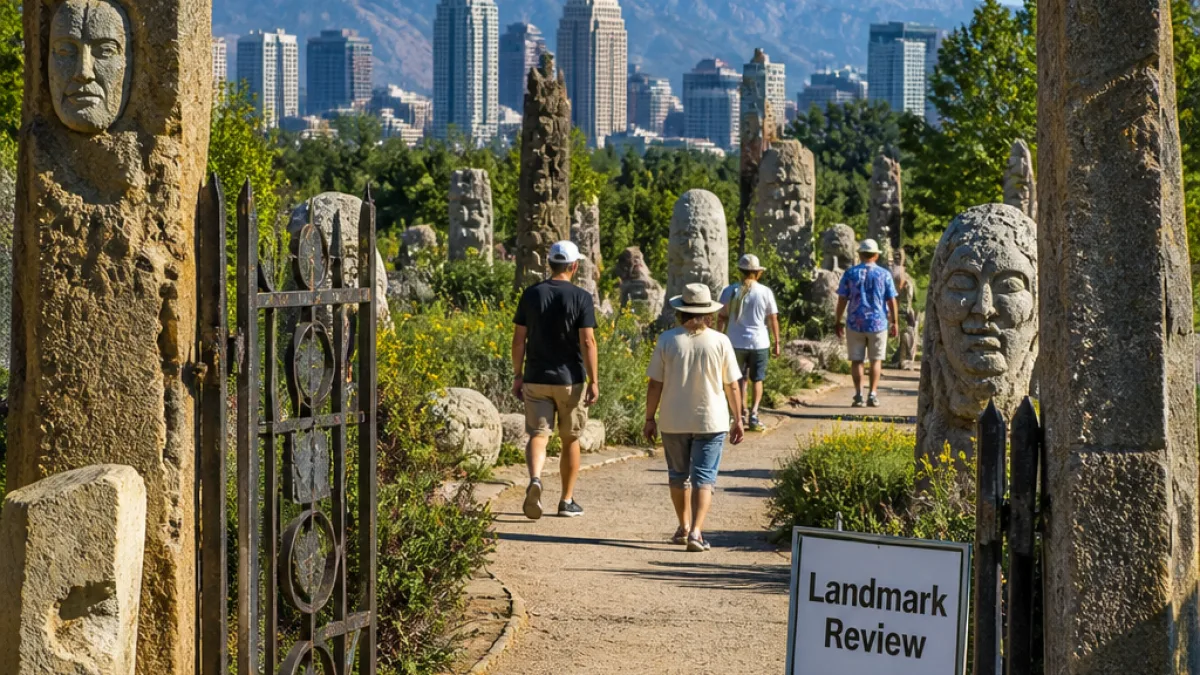
SALT LAKE CITY — City officials are pushing to designate the Gilgal Sculpture Garden as an official local landmark, a step that would create a buffer against development pressure for the small, idiosyncratic park known for its carved stones and unusual iconography.
What the designation would do
The proposed label would give Gilgal — created in the mid-20th century by sculptor Thomas Battersby Child Jr. — formal recognition under Salt Lake City’s preservation rules. Supporters say the change would limit alterations to the site and require additional review before nearby projects could move forward.
Gilgal has long been described as one of the city’s most eccentric cultural assets. The pocket garden recently marked a milestone: it "celebrated its 25th anniversary in September," according to the announcement from The Salt Lake Tribune, and now faces a new chapter as city planners weigh protective measures.
Why neighbors and preservationists are watching
Advocates contend that landmark status would accomplish two practical goals: it would formally recognize Gilgal’s historical and artistic value, and it would create a regulatory buffer to reduce the risk that adjacent development could compromise the park’s setting and visitor experience.
In a neighborhood that has seen rapid change and rising land values, small cultural sites like Gilgal can be particularly vulnerable. Supporters have framed the nomination as an effort to preserve a singular public space that draws attention for its carved stones, mosaics and inscriptions.
What’s at stake for the community
Designating Gilgal as a local landmark would not freeze the neighborhood in time, but it would add layers of review for proposed alterations to the site and for projects immediately bordering the garden. That can mean longer approvals for developers and more opportunity for public input.
For residents and visitors who value Salt Lake City’s quirky, small-scale cultural assets, proponents argue the protections are modest and necessary. For property owners and developers, they can add cost and uncertainty.
- Site creator: Thomas Battersby Child Jr.
- Era: Mid-20th century
- Recent milestone: Celebrated 25th anniversary in September
- Proposal: Local landmark designation to buffer garden from development
City staff and preservation groups typically weigh historical significance, architectural integrity and public interest when recommending landmarks. In Gilgal’s case, its artistic uniqueness and longtime community use are central to the case for protection.
Practical implications and next steps
The designation process typically moves through public meetings, staff reports and a vote by the municipal governing body or a preservation commission. If approved, the garden would gain the protections spelled out in the city’s preservation ordinance and would join other recognized historic places in Salt Lake City.
| Action | Likely effect |
|---|---|
| Landmark designation | Increased review for alterations and adjacent development |
| Public hearings | Opportunity for neighbors to comment |
Preservation measures can be contentious because they attempt to balance the value of protecting cultural resources with the needs of a growing city. Salt Lake City has in recent years weighed several high-profile preservation debates as development accelerates in established neighborhoods.
For Gilgal’s supporters, the nomination is a corrective step — a way to acknowledge a site that, while modest in size, is outsized in character. For city officials, the proposal will test how the municipal process protects places that residents say contribute to the city’s identity.
As the process unfolds, residents and interested visitors will have opportunities to weigh in during the public portions of the review. The outcome will determine whether Gilgal receives formal protections meant to preserve both its physical features and the unusual spirit that draws people to the garden.
Reporting for this package relied on coverage in The Salt Lake Tribune outlining the nomination and the garden’s background.