For the fourth year running, Utah has been named the nation's top state by U.S. News & World Report, a distinction that state leaders framed as evidence of strong communities and sound public policy — even as the state continues to struggle in measures of the natural environment.
The 2026 rankings released by the national publication again placed Utah at the top of an eight-category index that includes measures ranging from economic performance to public health, education and infrastructure. The report credits Utah's success to a balanced showing across multiple dimensions, with particularly high marks in areas that affect everyday opportunity and state finances.
Where Utah scored highest — and lowest
Utah earned top-tier placements in several headline categories: No. 2 in both Economy and Fiscal Stability, No. 4 in Infrastructure and No. 6 in Education. The state also topped the nation in several specific indicators, including the growth of its young population, even wealth distribution and a low smoking rate.
"Being named the No. 1 state is an honor, but what matters most is what that ranking represents: hardworking people, strong families, and neighbors who look out for one another," Gov. Spencer Cox said in a press release.
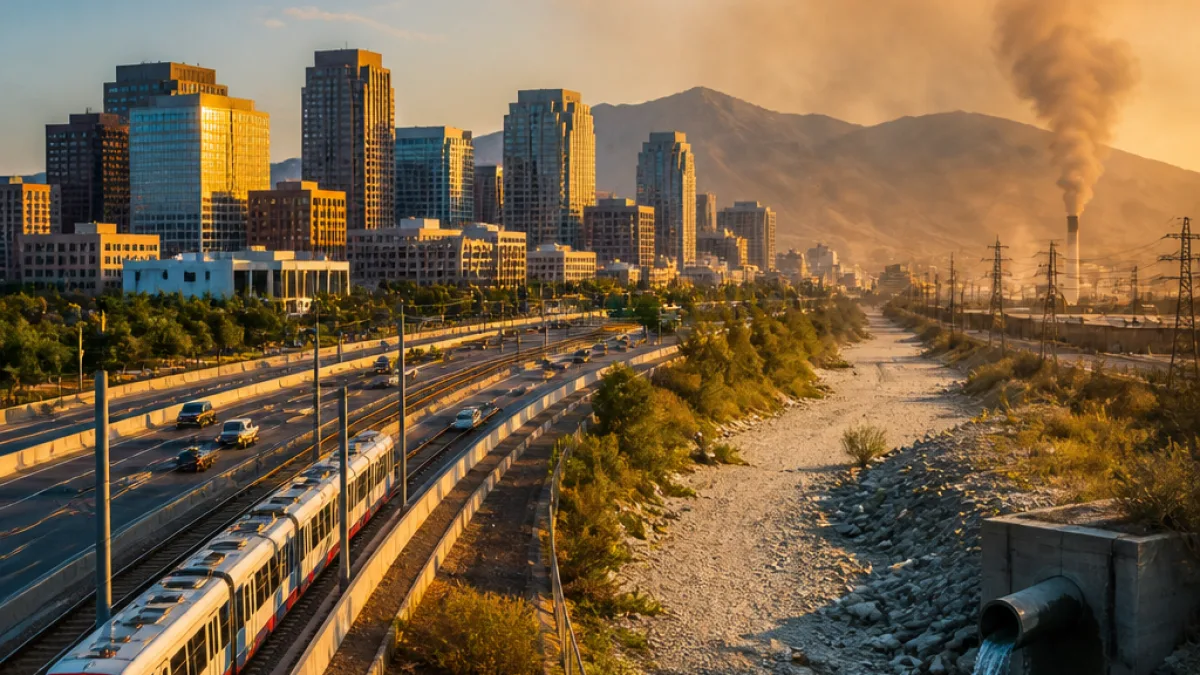
Yet the statewide picture is not uniformly positive. Utah again placed near the bottom in the report's Natural Environment category, coming in at No. 48 out of 50 states. The natural environment ranking factors air and water quality and pollution measures; the report and state officials note that Utah’s seasonal air quality problems and industrial toxins pushed the state low on that metric.
Numbers at a glance
To put the ranking into perspective, the report highlighted Utah’s relative strength across economic and fiscal measures along with clear environmental weaknesses. Below is a small snapshot of the state’s placement in selected areas covered by the ranking.
| Category | Utah rank |
|---|---|
| Overall | 1 |
| Economy | 2 |
| Fiscal Stability | 2 |
| Infrastructure | 4 |
| Education | 6 |
| Natural Environment | 48 |
Context and local implications
State leaders celebrated the ranking as validation of policy choices and the character of residents. U.S. News data editors attributed Utah’s repeat success to a "very uniquely balanced profile across all the categories," reflecting both strong institutions and demographic trends favorable to growth.
For Utahns, the ranking carries practical significance. High marks for economy and fiscal stability suggest a business climate that attracts investment and maintains low deficits, while strong infrastructure scores point to road, transit and utility systems that support growth. Conversely, the low natural environment ranking raises questions for policymakers and residents about air quality management, water resources and long-term public health implications.
Public health advocates and environmental groups have long pointed to winter inversions in the Salt Lake Valley and emissions from industry and transportation as recurring problems. Those issues were referenced in the U.S. News methodology, which incorporates air and water quality and pollution exposure — factors that suppressed Utah’s score in that category despite strong showings elsewhere.
How the national picture looked
Beyond Utah, the national standings showed South Dakota and Minnesota following in second and third place overall, respectively, with North Dakota and Nebraska rounding out the top five. At the other end of the spectrum, Louisiana finished last overall. The rankings are compiled from eight broad categories intended to capture different aspects of state performance and livability.
For residents and policymakers, the U.S. News rankings offer a composite view: Utah’s economy and institutions are performing at a level that merits national recognition, but environmental and air quality challenges remain a persistent counterweight. The state’s continued top billing will likely intensify debate over how to preserve economic and demographic strengths while confronting long-term environmental risks.
- What’s working: Strong economy, fiscal stability, infrastructure and growth of young population.
- What needs attention: Natural environment ranking near the bottom due to air and water quality concerns.
- Broader impact: Ranking may influence business recruitment, migration patterns and state policy priorities.
The U.S. News ranking provides one lens on Utah’s performance. As the state seeks to build on its strengths, addressing environmental shortcomings may be the central challenge to keeping Utah at the top in years ahead.