Dog survives two days in Caltrain tunnel, reunited with owner
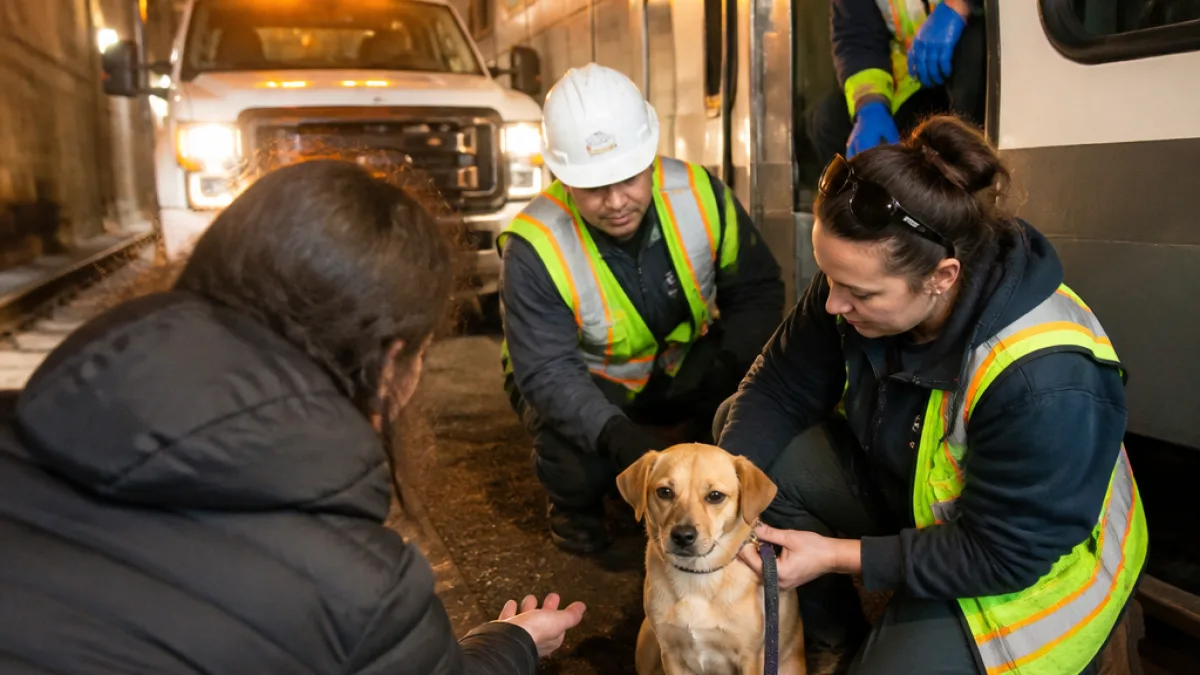
San Francisco animal-control officials say a runaway dog that spent two days in a Caltrain tunnel was rescued and reunited with its owner after being spotted by transit personnel. The animal, identified by shelter staff as Roo, was not injured, according to San Francisco Animal Care and Control.
The episode unfolded over two days when train operators and drivers traveling through the tunnel first reported seeing the dog. Shelter officials said on Instagram that on the first day operators believed the animal was dead, and on the second day a driver saw movement and thought the dog may have been struck by a train.
“A dog was in a Caltrain tunnel for two days. The first day train operators saw him and thought he was a dead animal. The second day a driver saw him move. He was so still they thought he had been hit by a train and was injured.”
San Francisco Animal Care and Control confirmed Roo was frightened but uninjured when staff reached the animal. The dog is microchipped and had recently been adopted before bolting, shelter officials said. Because of the microchip, staff were able to locate the owner, who was described as relieved to be reunited with Roo.
Incident details and immediate outcomes
- Location: Caltrain tunnel, San Francisco
- Duration: Two days in the tunnel, according to shelter post
- Animal: Roo, a recently adopted dog
- Status: Uninjured, microchipped, reunited with owner
The shelter’s account indicates transit workers played a central role in the discovery, first observing the animal and then reporting movement that alerted responders. Shelter staff did not provide further details about where in the Caltrain system the tunnel is located, or about the circumstances that led the dog into the rail corridor.
Broader context: transit corridors and animal safety
Rail corridors and tunnel environments pose obvious hazards for pets. While details specific to this case are limited to the shelter’s Instagram post, the rescue highlights two predictable patterns: animals can become disoriented and enter dangerous transit areas when frightened, and microchipping materially improves the odds of reuniting lost pets with their owners.
San Francisco Animal Care and Control’s public summary stressed the role of the microchip in locating the owner. That element echoes longstanding guidance from animal-welfare organizations: microchips and updated contact information increase the likelihood of recovery and safe return when pets escape.
Next steps and unanswered questions
The shelter has not released a timeline beyond the two-day period or indicated whether any transit operations were delayed during the rescue. Officials also did not release medical assessment details beyond noting Roo was not injured. San Francisco residents who rely on Caltrain or other rail transit should expect routine safety protocols remain in place; the agency and the shelter did not announce policy changes in response to this incident.
| Item | Detail |
|---|---|
| Animal | Roo |
| Location | Caltrain tunnel, San Francisco |
| Duration | Two days |
| Status | Uninjured; microchipped; reunited with owner |
For San Franciscans who own pets, the episode serves as a reminder to secure animals during transitions and to ensure microchip and contact information are current. For transit riders and operators, it underscores the unusual situations that can arise in rail corridors and the importance of swift reporting when an animal is observed in a potentially dangerous location.
San Francisco Animal Care and Control posted the account of Roo’s rescue on its Instagram page and confirmed the reunion with the owner. No further information was available from the shelter or Caltrain at the time of publication.