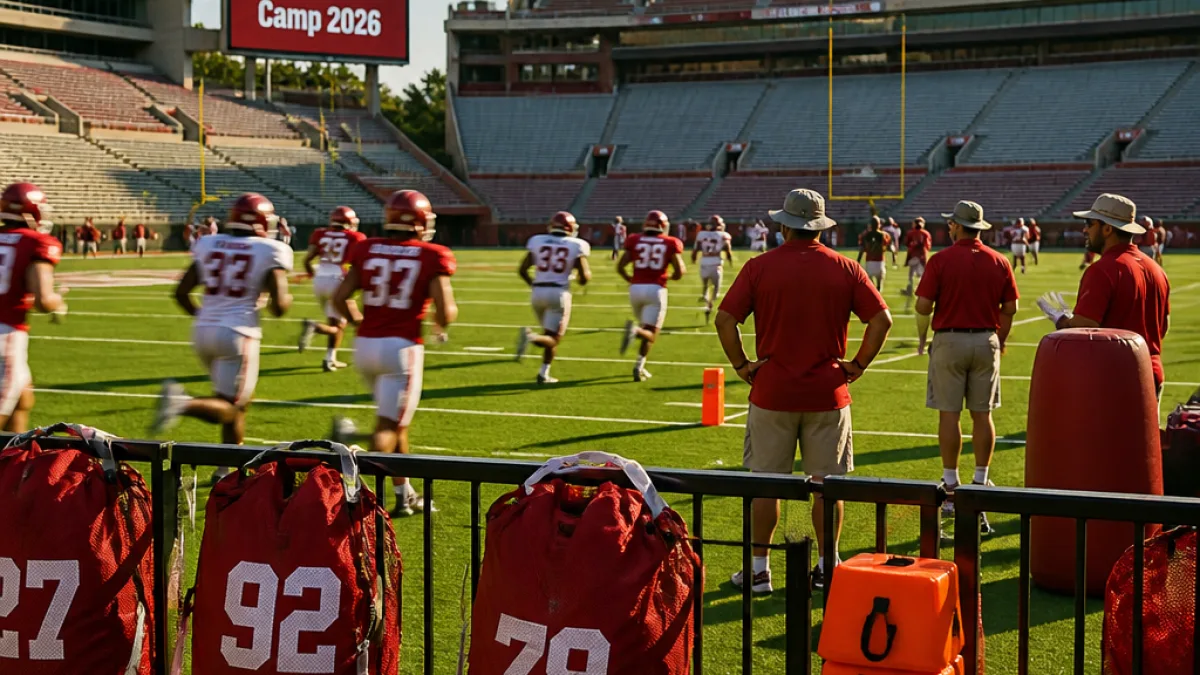
As the University of Alabama’s players report for preseason camp this week, the Crimson Tide face a short, intense window to resolve the kind of offensive questions that can make or break a season. Kalen DeBoer’s third year as head coach begins under a cloud of uncertainty on offense, where decisions at quarterback, along the offensive line and about the running game’s identity loom largest.
Quarterback battle remains the focal point
The most visible storyline entering camp is the quarterback competition. With Ty Simpson now in the NFL, the starting role is again unsettled. The two leading contenders are Austin Mack and Keelon Russell, both returning to the program and vying to run DeBoer’s offense.
Mack arrives with the advantage of experience. He served as Alabama’s primary backup last season and brings continuity to a staff that first acquired him in 2023. Mack’s strengths include size and accuracy, traits that fit a pro-style approach and a coaching staff focused on efficiency and ball placement.
Russell, meanwhile, remains an intriguing talent. A five-star recruit when he arrived, Russell offers upside and playmaking potential the staff covets. That ceiling — and the possibility of dynamic, improvisational plays — contributes to the interest surrounding him.
“Both of them are more than capable. I think they’re high-level, elite quarterbacks. Fortunately we have them both in our program and it’s going to be a competition that’s going to lead to a tough decision, one we’re fortunate to have,” DeBoer said at SEC media days.
DeBoer added that the decision will reflect production, character and work habits, suggesting the coaching staff will value both on-field performance and off-field leadership when selecting a starter for the Sept. 5 opener against East Carolina at Bryant-Denny Stadium.
Offensive line turnover raises questions
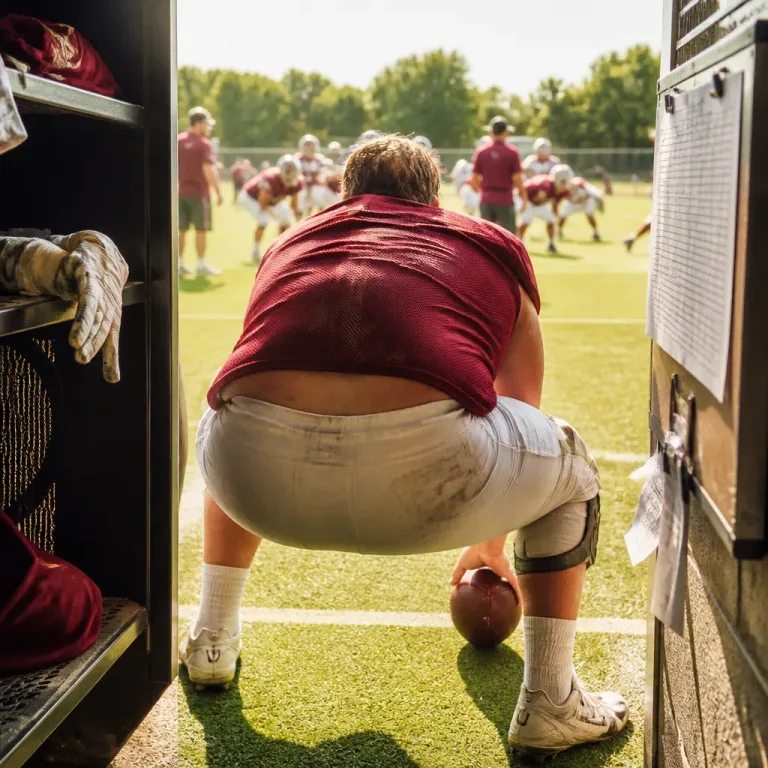
Perhaps no unit illustrates Alabama’s uncertainty more than the offensive line. The Tide enter camp with a nearly new front — only Michael Carroll returns as a starter from last season’s group. Carroll’s role itself is not fixed; he could move from right tackle to right guard, indicating the staff’s search for the best configuration.
Last season’s rotation and inconsistent run blocking are fresh in coaches’ minds. The team did not land a marquee offensive lineman from the transfer portal, so internal development and the health of the newcomers will determine whether the Tide can restore a reliable ground game.
Running game and identity
Alabama’s run game was a recurring problem in 2025, and how the Tide address that issue will shape playcalling and game management. With a revamped line and a new quarterback likely to take snaps, the staff must decide whether to emphasize a power ground attack or pivot toward a more pass-oriented scheme tailored to the quarterback’s skills.
Those strategic choices will ripple through the offense — affecting play-action effectiveness, third-down conversions and time of possession. For a program used to dominating between the tackles, the 2026 camp will test whether Alabama can reclaim that facet of its identity.
Immediate stakes and what to watch in camp
Camp offers a short runway: the opener is set for Sept. 5. Coaches will watch for quick reads on these fronts:
- Which quarterback demonstrates consistent accuracy, situational command and leadership during team periods?
- How the new-look offensive line handles contact in the run and pass game, particularly in live scrimmages?
- Whether the run game produces reliable yardage between the tackles or forces the staff to rely on more passing concepts early.
| Issue | Why it matters |
|---|---|
| Quarterback | Sets tone for offense and playcalling; determines starter for opener |
| Offensive line | Impacts run game and quarterback protection |
| Run-game identity | Affects balance, time of possession, and third-down efficiency |
Fans and media will be scrutinizing not only the decisions made but the manner in which they are made. DeBoer has emphasized he wants a confident choice — a starter who earns respect through both production and preparation. That signals a coaching staff more interested in long-term steadiness than a short-term spark.
For Alabama, the coming weeks are about consolidation. The Crimson Tide have the recruiting base, the depth and the coaching continuity to be competitive in the Southeastern Conference, but translating those advantages into a cohesive offense remains an urgent task.
How DeBoer and his staff resolve these three questions — quarterback, line, run game — will chart Alabama’s course into September and beyond. Camp will not merely reveal a depth chart; it will reveal whether the Tide can restore balance to an offense that must produce at an elite level to meet expectations in 2026.