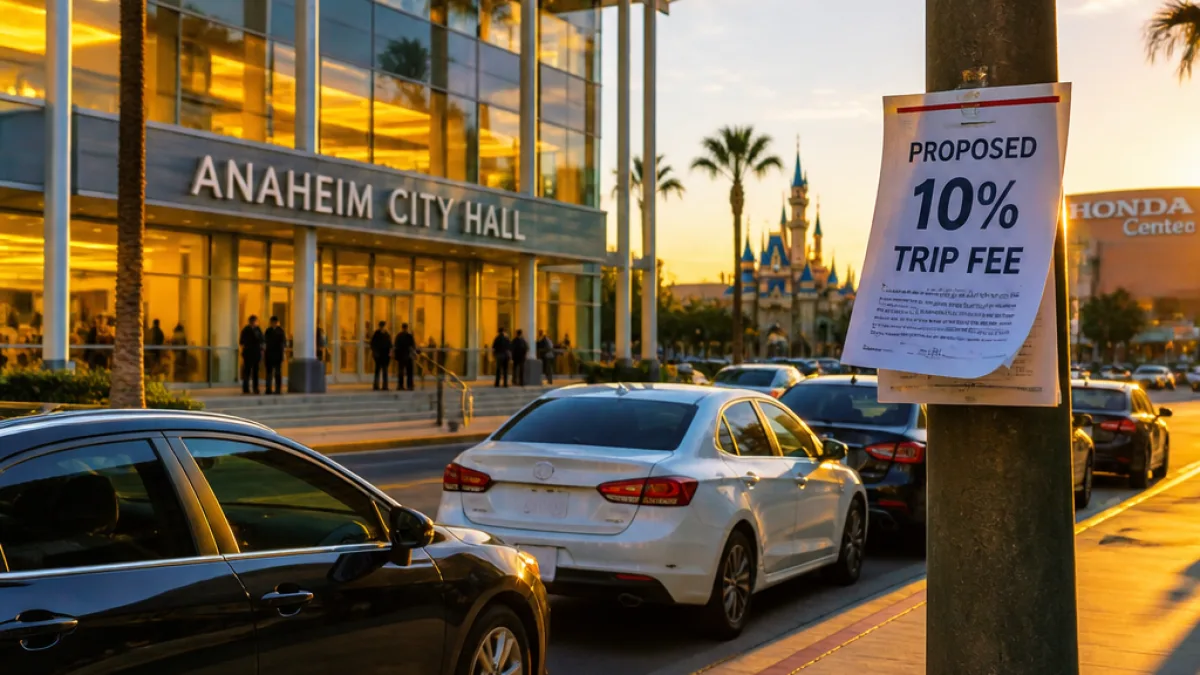
The Anaheim City Council on Tuesday declined to move forward this fall with a proposed 10% per-trip tax on certain rideshare trips to the city’s resort district, including the Disneyland area. Council members instead directed staff to research the proposal further and report back with data about how many resort employees use Uber and Lyft for commutes.
Council pauses ballot push amid worker concerns
The measure, which city staff previously estimated could generate about $3.6 million annually, would also have applied to portions of the Platinum Triangle, such as the Honda Center, Angel Stadium and the planned OC Vibe development near the Santa Ana River and the 57 Freeway. But after pushback from rideshare companies and concern from council members that the levy would disproportionately affect workers, council members declined to place the question before voters this November.
Councilman Carlos Leon, who is campaigning for reelection, said the council needed to weigh impacts on residents who rely on the services for work.
“I am concerned about this negatively affecting our residents who are workers in the resort district. I think for someone that’s visiting, a two-dollar charge on average isn’t going to make them decide whether or not to take a rideshare,” Leon said. “But for a worker that does rely on this to get to and from work, those $2 start to add up.”
Mayor Ashleigh Aitken asked staff to determine how many resort employees use rideshare services — a step signaling the city wants firmer evidence of who would feel the financial impact before pursuing voter approval.
Industry pushback and regional budget context
Lyft and Uber had criticized the plan, saying it would amount to a fare increase and could discourage use of their platforms. Nick Johnson, Lyft’s public policy director, argued the levy would drive up costs for workers and visitors alike and could reduce rideshare usage to the city’s most popular destinations.
The discussion comes as cities across Orange County grapple with tight budgets. Officials in the region have recently proposed or placed numerous tax measures on ballots after a difficult budget season that forced cuts in municipal spending.
- Proposed tax: 10% per eligible rideshare trip.
- Estimated revenue: $3.6 million per year.
- Affected areas: Disneyland resort district and parts of the Platinum Triangle (Honda Center, Angel Stadium, OC Vibe).
Next steps for the city
Rather than rushing to a November vote, council members directed staff to return with additional information, including the prevalence of rideshare use among resort employees and potential alternatives to a per-trip tax. The council’s decision to pause does not end the conversation; staff analysis could lead to a revised measure or different revenue strategies ahead of future ballots.
Advocates for the tax had framed it as a way to capture revenue from visitor trips that use Anaheim’s transportation network and destinations. Opponents warned it would be regressive for hourly workers who depend on rideshare apps for commutes and could raise the price of visiting Anaheim’s major attractions.
With the city weighing the twin goals of stabilizing municipal finances and protecting low-income workers, the council’s next meetings will be watched closely by resort employers, employee advocates and the rideshare companies themselves. Staff are expected to present findings on employee ridership patterns and a more detailed fiscal impact analysis before any measure is circulated for a vote.
The council’s move to pause reflects the political and practical tensions facing Anaheim as it balances the needs of its workforce, the demands of a major tourism economy and the realities of strained municipal budgets.