CAPE CORAL, Fla. — A Cape Coral man was ordered to federal prison this week after a U.S. district judge found him criminally responsible for a string of violent threats posted online against U.S. Immigration and Customs Enforcement officers.
Federal case centers on threats posted to BlueSky
Federal prosecutors said Joseph Rocco Giancola, 73, used the social media platform BlueSky to post repeated messages that urged or celebrated violence against ICE agents between May and July 2025. Giancola pleaded guilty to a single count of making interstate communications containing threats to injure on March 26, 2026, according to the U.S. Attorney’s Office.
At a sentencing hearing overseen by U.S. District Judge Kyle Dudek, Giancola received a term of six months in federal prison, followed by three years of supervised release. The judgment closes a months-long investigation by Homeland Security Investigations and ICE that traced the violent posts to a BlueSky account identified as @caindelonbsky.social.
What investigators found at the Cape Coral home
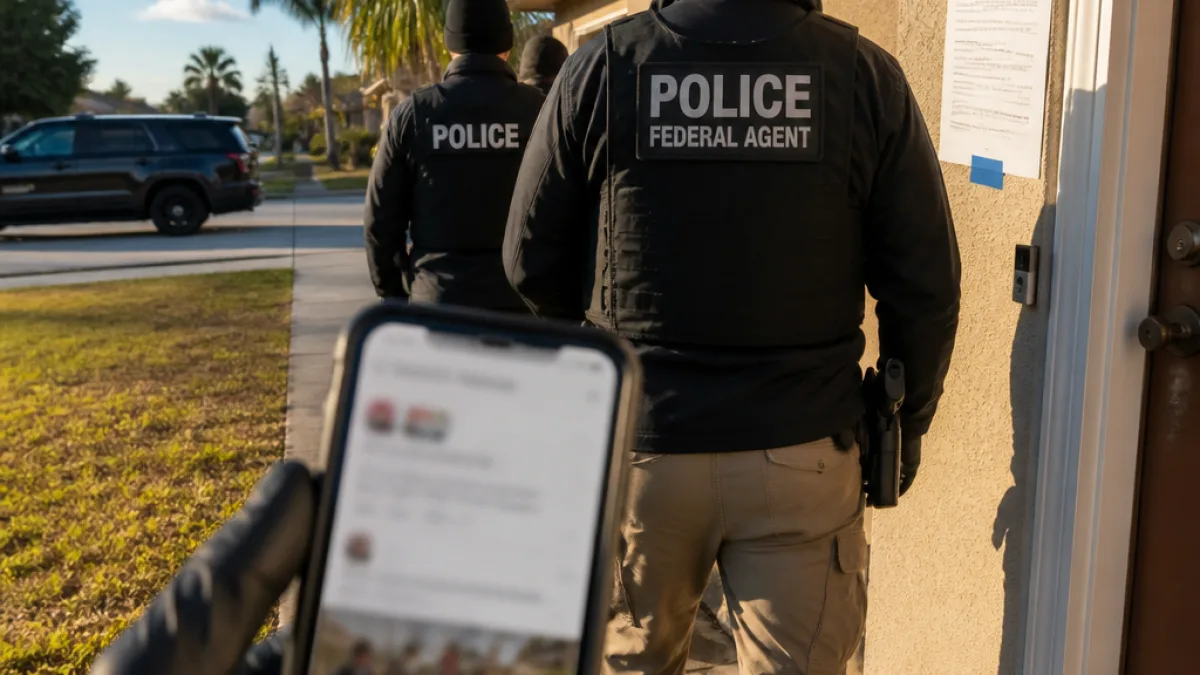
Court filings show that on Aug. 6, 2025, ICE located the threatening messages on the BlueSky account. Agents later executed a search warrant at Giancola’s Cape Coral residence on Oct. 30, 2025. The report says officers found Giancola in his bedroom with an unlocked computer displaying the BlueSky account connected to the threats.
“Our ICE law enforcement officers are now facing an 8,000% increase in death threats against them while they risk their lives every single day ... Threaten violence or death to our law enforcement? You’ll end up behind bars like this guy.”
The quotation above came from an Assistant Secretary with ICE cited in the government’s news release regarding the arrest. Prosecutors relied on those online posts as the primary evidence supporting the solitary charge to which Giancola admitted culpability.
Examples of the posted threats
- “Just shoot ice to kill”
- “Band together in neighborhoods, arm the band ... A few massacres and they will stop coming”
- “Let there be blood – MAGA blood and lots of it”
Those messages, cited in the court record, formed the factual basis for the interstate-threats charge. Federal law prohibits making threats in interstate commerce, including via social media platforms that cross state lines.
| Item | Detail |
|---|---|
| Defendant | Joseph Rocco Giancola, 73 |
| Charge | Making interstate communications of threats to injure |
| Plea | Guilty (March 26, 2026) |
| Sentence | 6 months federal prison; 3 years supervised release |
| Key dates | Threats posted May–July 2025; threats identified Aug. 6, 2025; search warrant Oct. 30, 2025 |
Local impact and legal message
The sentencing underscores how social-media activity can carry criminal consequences, even when posted from a private home in Cape Coral. Prosecutors and ICE officials emphasized that online threats toward law-enforcement officers are taken seriously, sparking federal investigations when necessary.
For Cape Coral residents, the case is a reminder that local digital behavior can trigger federal scrutiny and that threats made online are traceable and prosecutable. The court’s sentence imposes a short custodial term but extends monitoring into the community through supervised release.
As the investigation and prosecution record shows, the matter moved from online posts to tangible law-enforcement actions: identification of the account, a search warrant, and criminal charges that led to prison time. That arc — from threatening language on a social platform to a federal courtroom in Florida — reflects growing attention from federal agencies to violent rhetoric targeted at their officers.
Community leaders and residents will likely follow how the supervised-release period is enforced and whether the sentence produces a deterrent effect for similar online behavior. For now, Giancola’s case stands as a clear example of the legal limits on online speech when it crosses into threats of violence.