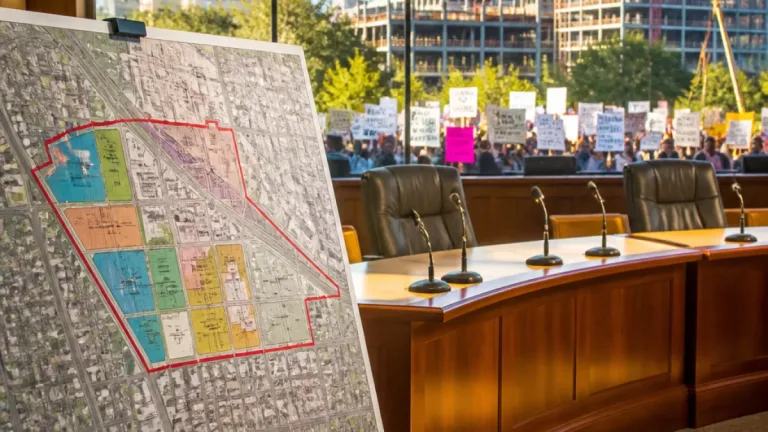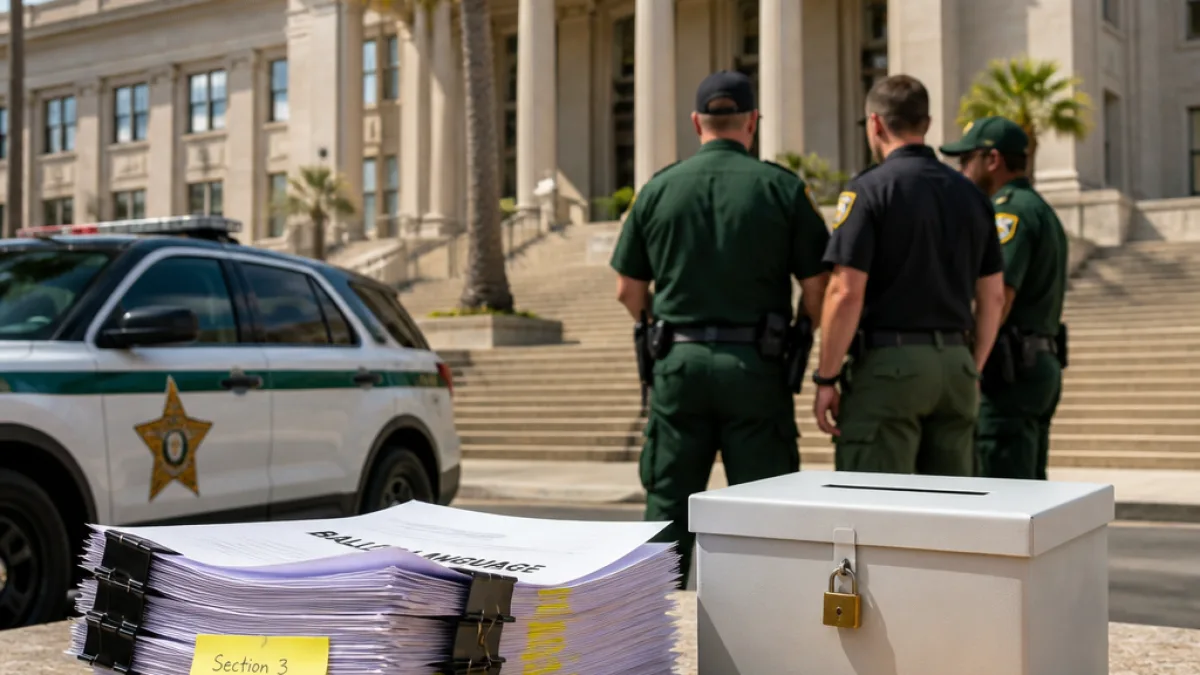
Florida voters are facing renewed debate over a proposed constitutional amendment that would increase the value of a home or condominium eligible for a property-tax exemption, and public-safety leaders are raising alarm.
Law enforcement voices concerns
This week the Florida Sheriffs Association issued an official statement expressing significant worry about the measure, joining a growing chorus of public-safety groups questioning the amendment’s consequences for local budgets and services. The association’s president discussed the group’s position on "The Florida Roundup," reflecting widespread concern among county law-enforcement leaders who are often funded in part by property-tax revenues.
At the same time, a judge has ordered the language used in the referendum to be rewritten, signaling legal and procedural questions about how the amendment will be presented to voters. The order adds another layer of uncertainty as campaigns on both sides prepare for what may be a decisive ballot fight.
Why sheriffs and safety groups are uneasy
Law-enforcement executives and other local officials typically rely on property-tax revenue to fund core services, including patrols, detention facilities and emergency response. While backers of the amendment say it would provide relief for homeowners, opponents caution that reducing the taxable base could limit local governments’ ability to maintain public safety and other services.
- Local budgets: Counties and municipalities depend on property taxes to support police, fire and corrections.
- Public safety concerns: Shrinking revenue could squeeze staffing, programs and infrastructure investments.
- Legal status: A court-ordered rewrite of the ballot language introduces timing and clarity issues ahead of the vote.
The conversation unfolded on WUSF’s program, where guests included Marion County Sheriff Billy Woods and former state senator Jeff Brandes, founder and president of the Florida Policy Project. Their appearances underscored how the amendment has drawn attention from both across the law-enforcement spectrum and policy advocates.
Ballot clarity and timing
Judicial orders to rewrite referendum language are not unusual in Florida, where courts have repeatedly reviewed ballot summaries to ensure voters are not misled. The order in this case requires the drafters to revisit phrasing that a judge found insufficient or potentially confusing. That process can change how voters understand the scope and effect of the proposed amendment and may affect campaign strategy and messaging from both proponents and opponents.
Advocates pushing for property-tax relief argue the amendment would help homeowners struggling with rising costs in a state where housing affordability remains a central concern. Opponents, including public-safety groups, warn of the trade-offs if local governments lose significant tax revenue.
Context: other statewide worries on the show
The program that covered the amendment also highlighted another acute public-safety crisis: this year is on pace for a record number of drownings in Florida, with children disproportionately affected. Guests who discussed water safety included Casey McGovern, executive director of Every Child a Swimmer, and Maritza McClendon, a 2004 Olympic silver medalist and water-safety advocate.
Those conversations served as a reminder that tax and budget decisions have tangible effects on prevention and safety programs, from community swim lessons to lifeguard staffing and public awareness campaigns.
| Item | Source/Guest |
|---|---|
| Property-tax amendment opposition | Florida Sheriffs Association; Sheriff Billy Woods |
| Referendum language rewrite | Judge’s order (WUSF report) |
| Child drowning crisis | Every Child a Swimmer; Maritza McClendon |
As Florida moves toward the next election cycle, the amendment will likely become a focal point for debates about taxation, public services and community safety. Voters will be weighing the potential benefits for homeowners against warnings from sheriffs and others about the fiscal consequences for local governments.
For now, the judge’s directive to revise the referendum’s language means the precise wording voters will see on the ballot could change, and with it the arguments and outreach campaigns offered by both sides. The coming weeks will be crucial for clarifying the amendment’s intent and consequences before Floridians cast their votes.
Coverage on this and related state issues continues across public radio outlets and local newsrooms as advocates, officials and the courts work through the next steps in the referendum process.