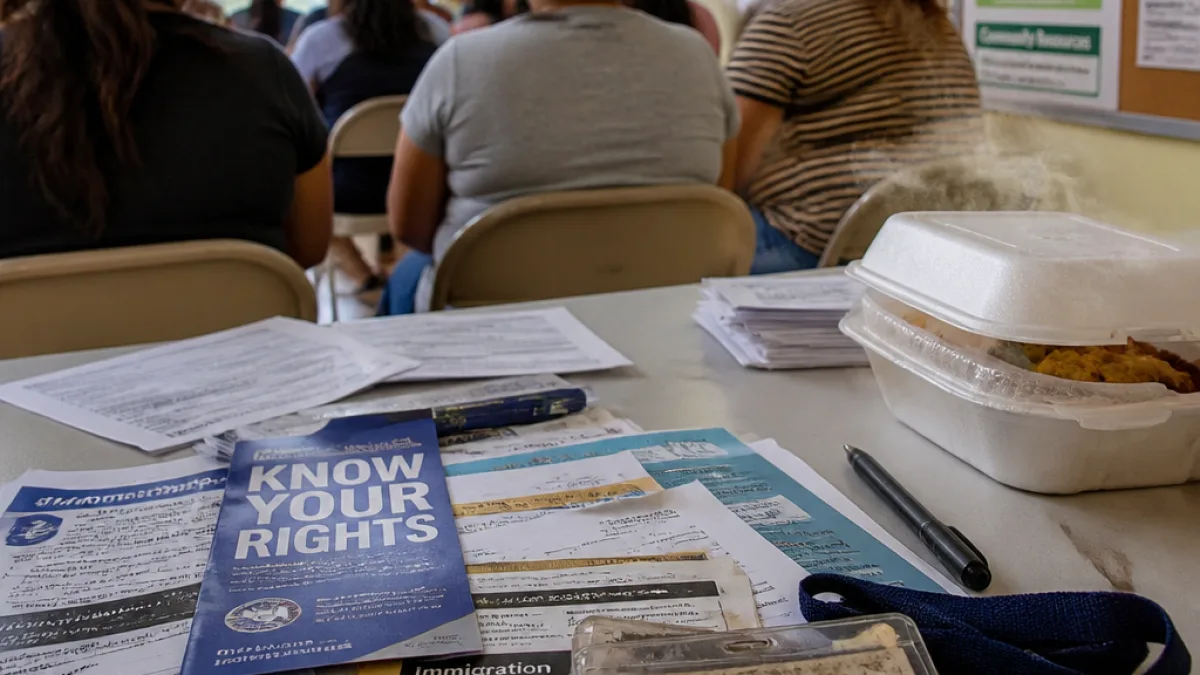
FORT PIERCE, Fla. — A federal appeals court decision last week has left tens of thousands of Haitians in South Florida in limbo as the expiration of Temporary Protected Status (TPS) approaches. Community leaders, health-care employers and affected families say the uncertainty is already causing upheaval in everyday life and could leave gaps in essential services if protections end.
Immediate worry in neighborhoods and workplaces
TPS was first extended to Haitian nationals after the catastrophic 2010 earthquake, giving beneficiaries the legal right to remain in the United States and work. The court action that delayed the expiration has provided a temporary reprieve, but for many people the reprieve is fragile: officials and community advocates describe a constant swing between hope and anxiety.
"It's a constant battle. Today it's yes, you can stay. Tomorrow it's no, you cannot stay," said Meschac St. Amour, president of Habitat for Children Ministries on the Treasure Coast.
St. Amour, who splits time between South Florida and humanitarian missions abroad, said the uncertainty affects ordinary decisions — whether someone can drive to work, sign a lease or enroll a child in school without fear. "Even if they have a car, they effort to drive it on the street," he said, underscoring how instability touches daily life.
Potential workforce shortfalls in health care
State and industry groups have already flagged the possible fallout. In a letter to the Department of Homeland Security, the Florida Health Care Association warned that changes to TPS policy could significantly weaken elder-care staffing statewide. The association and other stakeholders estimate as many as 35,000 health-care workers in Florida could lose work authorization if Haitian TPS protections end.
That figure would translate to pressure on nursing homes, assisted-living facilities and in-home care providers who rely on immigrant labor for roles ranging from nursing assistants to support staff. Employers say the sector operates with thin margins and limited staffing slack, so losing experienced workers would be disruptive.
Community response and practical concerns
Local nonprofits and faith-based groups already are bracing to help. Organizations that assist immigrants with legal services, benefits counseling and job-placement work say demand for support has risen. Meanwhile, Haitian community leaders are pressing elected officials to secure a legislative or administrative solution that would allow affected residents to remain and continue working.
Advocates emphasize several immediate needs for TPS holders and their families:
- Accurate legal counseling about current status and deadlines.
- Access to workforce planning resources for employers and workers.
- Support services for children and households facing potential income loss.
What officials have said and what’s next
The appeals court decision temporarily postponed the scheduled end of TPS for Haitians, but it did not resolve the larger legal and policy questions surrounding the program. Federal agencies and courts could take additional action, while Congress retains the power to enact more permanent protections for specific immigrant groups.
In the short term, community leaders are urging beneficiaries to maintain documentation, stay in contact with legal aid organizations and monitor official communications. Employers are being advised to consult human-resources and legal counsel as they plan for several possible outcomes.
| Issue | Possible local impact |
|---|---|
| TPS expiration | Loss of work authorization for tens of thousands |
| Health-care staffing | Potential loss of up to 35,000 workers in Florida |
| Community services | Increased demand for legal and social support |
Local human toll
People who fled disaster and instability in Haiti have built lives in South Florida over many years. They work in hospitals, care for the elderly, teach, run businesses and support families both here and abroad. For many, the TPS uncertainty is not an abstract policy debate but a question of whether they can stay in the neighborhoods they helped form.
As the clock runs down, advocates say the region needs clear answers and plans that protect public health, preserve critical services and treat affected families with dignity. Without swift resolution, the social and economic ripple effects could be felt across hospitals, long-term care facilities and the broader Florida economy.
Officials at the local, state and federal level have been asked for comment. Meanwhile, Haitian community leaders and advocates continue to press for stability for TPS holders who have long been woven into the fabric of South Florida life.