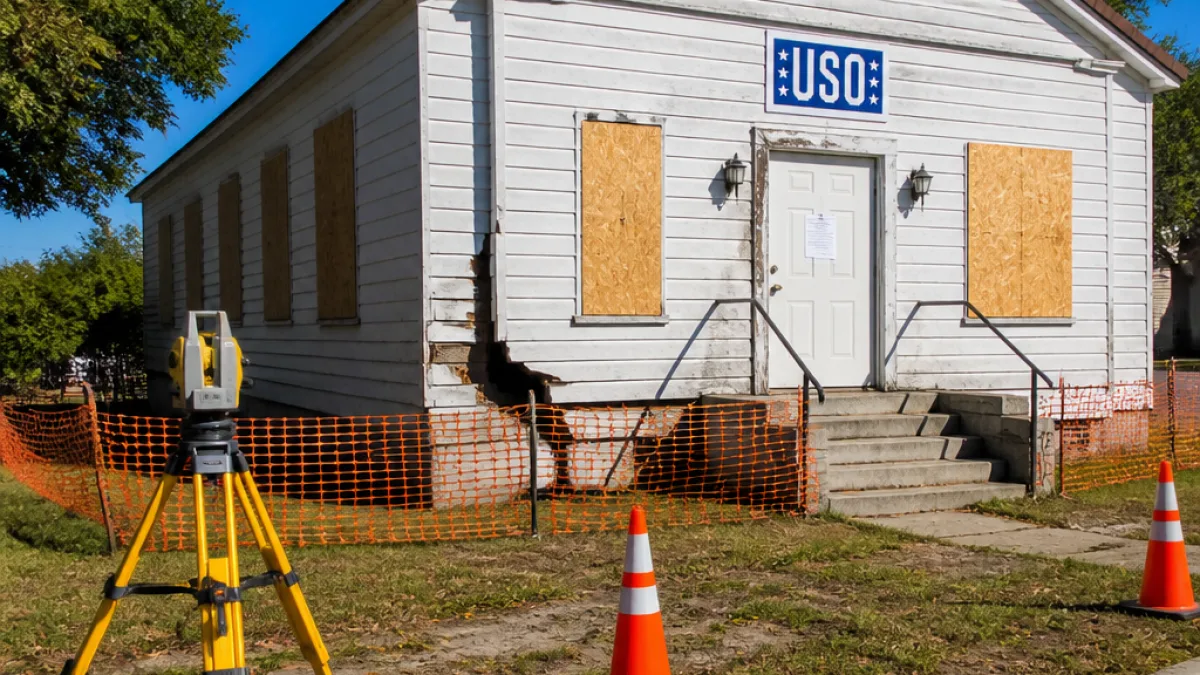
JACKSONVILLE, N.C. — A USO building that welcomed Marines and their families in Jacksonville since 1942 is headed for demolition after engineers identified major structural issues dating back to damage sustained in 2018, city officials said.
Study found unsafe footings; renovation costs proved steep
The structure, closed since 2021, was evaluated at the request of the Marine Corps when the U.S. Navy conducted a structural study that uncovered serious problems with the building's footings, Jacksonville Deputy City Manager Ron Massey told local officials. City leaders were presented with the option of renovation in 2022, but the estimated cost — about $8 million at that time — and subsequent price increases made repair impractical.
"One would be a complete renovation of the building, which when the study was completed in 2022 was estimated to be $8 million and that was before we started seeing all the price increases," Massey said.
Service members shifting to on-base location
Officials note the USO presence has continued on base at Camp Lejeune. The downtown facility served roughly 1,200 people per year during its last run off base, while the on-base center recorded substantially higher usage — about 45,000 visitors in the most recent 12-month span reported by city staff — demonstrating greater reach when services are located at the military installation.
- Original downtown USO opening: 1942
- Building closed: 2021
- Estimated renovation cost (2022): $8 million
- Recent on-base USO visitors: approximately 45,000 per year
Deputy City Manager Massey told local media the on-base location has proven more effective for service members. The shift in where Marines access USO services formed part of the city’s assessment about investing in an aging downtown structure versus supporting operations at the camp.
"When they last operated downtown, they served about 1,200 a year. In the last year at Lejeune, about 45,000 customers visited the USO. So, they’re more successful where they are," Massey said.
Veterans remember community anchor; timeline for demolition pending
Retired Marine Sgt. Maj. Joe Houle, who first visited the USO in 1964 and later returned with family, described the downtown facility as a comfortable refuge for young Marines on tight budgets and a place for families to gather. Houle initially opposed demolition because of the building’s landmark status, but said he accepted the city's decision after learning more about the structural concerns.
Officials have not yet finalized the demolition schedule or decided how the site will be used after the building is removed. City staff said the assessment and decision-making process weighed public safety, financial feasibility and the evolving needs of military patrons.
Local and regional implications
For Jacksonville-area residents with military ties, the demolition marks the end of a physical link to a decades-long community resource. The transition to a robust on-base USO operation reflects a nationwide pattern in which military support services concentrate closer to installations to increase usage and efficiency. For municipal leaders, the case underscores the fiscal realities of maintaining aging public buildings and the tradeoffs communities face when historic civic structures become costly to repair.
| Item | Figure |
|---|---|
| Year building opened | 1942 |
| Year closed | 2021 |
| Estimated renovation cost (2022) | $8 million |
| Annual visitors at downtown USO (final years) | About 1,200 |
| Annual visitors at on-base USO (recent) | About 45,000 |
As officials plan next steps, veterans and community members are left balancing memories of a neighborhood institution with public safety and fiscal stewardship. The story remains a developing local issue in Jacksonville, N.C.; the city has yet to announce specific timelines or redevelopment plans for the parcel.
Copyright 2026 WITN. All rights reserved.