Jefferson County Public Schools announced it has taken its dispute with the U.S. Department of Education to federal court, challenging an Office for Civil Rights investigation that alleges the district has discriminated against students by allowing transgender girls to use girls’ sports teams, restrooms and overnight accommodations.
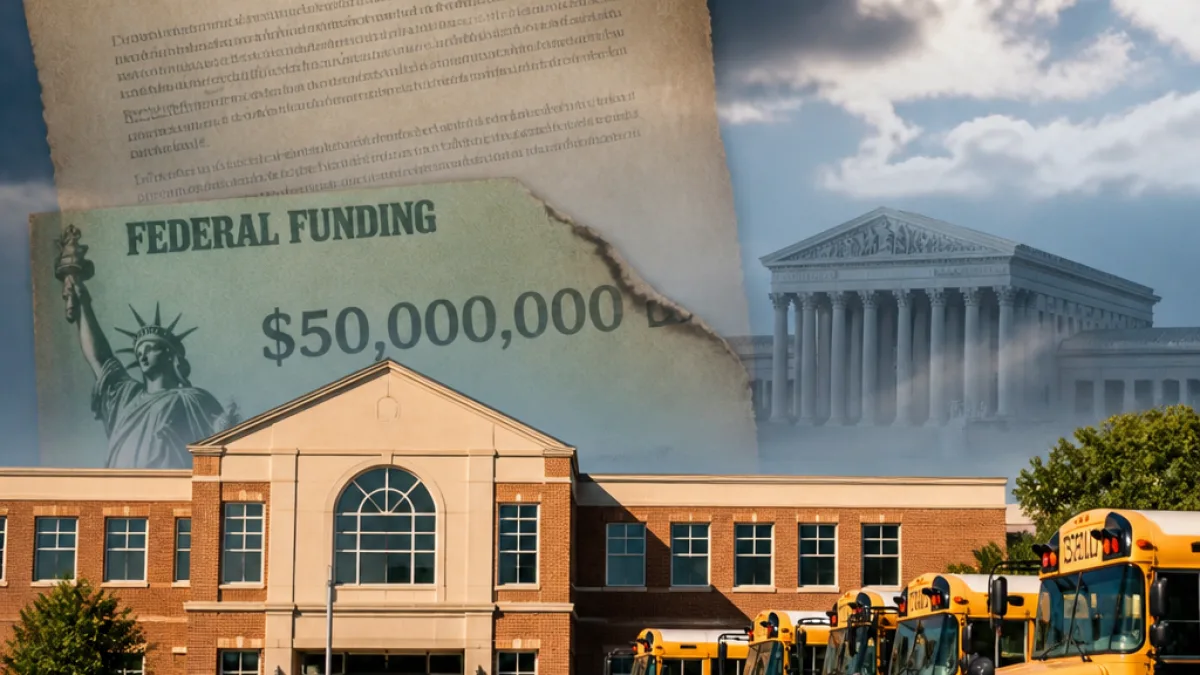
The district denies the federal agency’s allegations and says its policies conform with Colorado’s anti-discrimination statutes. Federal officials have warned the district that noncompliance could jeopardize approximately $50 million in federal education funding.
What the dispute is about
The Office for Civil Rights (OCR) contends Jeffco’s approach — which lets students access facilities and activities consistent with their gender identity — violates Title IX, the federal law that bars sex-based discrimination in programs receiving federal dollars. Jeffco maintains its rules protect transgender students and comply with state law.
Jeffco has hired Washington, D.C.-based civil rights attorney Tim Heaphy to represent the district in court. Heaphy said the board concluded it was necessary to seek judicial clarification because it sees conflicting direction from federal authorities.
"Even though it was a hard step to take, I think the board decided it was important enough to go to court," Heaphy said.
Immediate stakes for schools and families
The lawsuit centers on whether the federal interpretation of Title IX requires the school system to treat students differently than current Colorado law requires. The dispute puts both policy and funding on the line; the OCR has suggested withholding federal funds if the district does not adopt the agency’s recommended changes.
- Funding at risk: about $50 million in federal support.
- Policy conflict: federal OCR guidance versus state-level anti-discrimination protections.
- Impact on students: access to sports, restrooms and overnight accommodations.
Allegations and the district response
The following table summarizes the core points at issue in the OCR inquiry and Jeffco’s stated position.
| Issue | OCR allegation | Jeffco position |
|---|---|---|
| Participation on sports teams | Allowing transgender girls to join girls' teams violates Title IX | Policies permit participation by gender identity and comply with state law |
| Use of bathrooms | Permitting use based on gender identity is discriminatory | District says practices are consistent with Colorado anti-discrimination law |
| Overnight accommodations | Sharing accommodations by gender identity raises Title IX concerns | Jeffco maintains its approach follows state requirements |
Jeffco spokesman statements and additional details from the district were not included in the filing made public by the U.S. Department of Education. The lawsuit seeks a court ruling that will clarify how the district can legally proceed.
Broader legal and political context
The case lands amid a patchwork of rulings and administrative guidance nationwide about whether Title IX protections extend to gender identity. As Attorney Heaphy noted, courts and agencies around the country have differed on the question.
Legal experts outside the immediate case say the matter could prompt higher courts to reconcile competing federal interpretations or spur clearer rulemaking from the Department of Education. For families in Jefferson County, the outcome will determine whether current local policies stand or must change under federal direction.
What comes next
The lawsuit moves the dispute from administrative review to the federal judiciary. A judge will be asked to assess whether the federal agency’s interpretation of Title IX can be applied to Jeffco’s policies, and whether compliance would conflict with Colorado state law. Meanwhile, the threatened loss of federal funds looms as both a leverage point and a practical consequence for the district’s budgets.
For now, district officials have signaled they will defend their policies in court. Parents, students and staff in Jefferson County will be watching how quickly the litigation proceeds and what interim measures, if any, the court or the parties agree to while the case is decided.
This report is based on the district’s public filing and statements provided to reporters. Additional facts may emerge as the litigation progresses.