Minneapolis officials and business leaders are still tallying the costs after a federal immigration enforcement surge earlier this year that local authorities say disrupted commerce, closed storefronts and chilled travel to the Twin Cities.
City study tallies hundreds of millions in losses
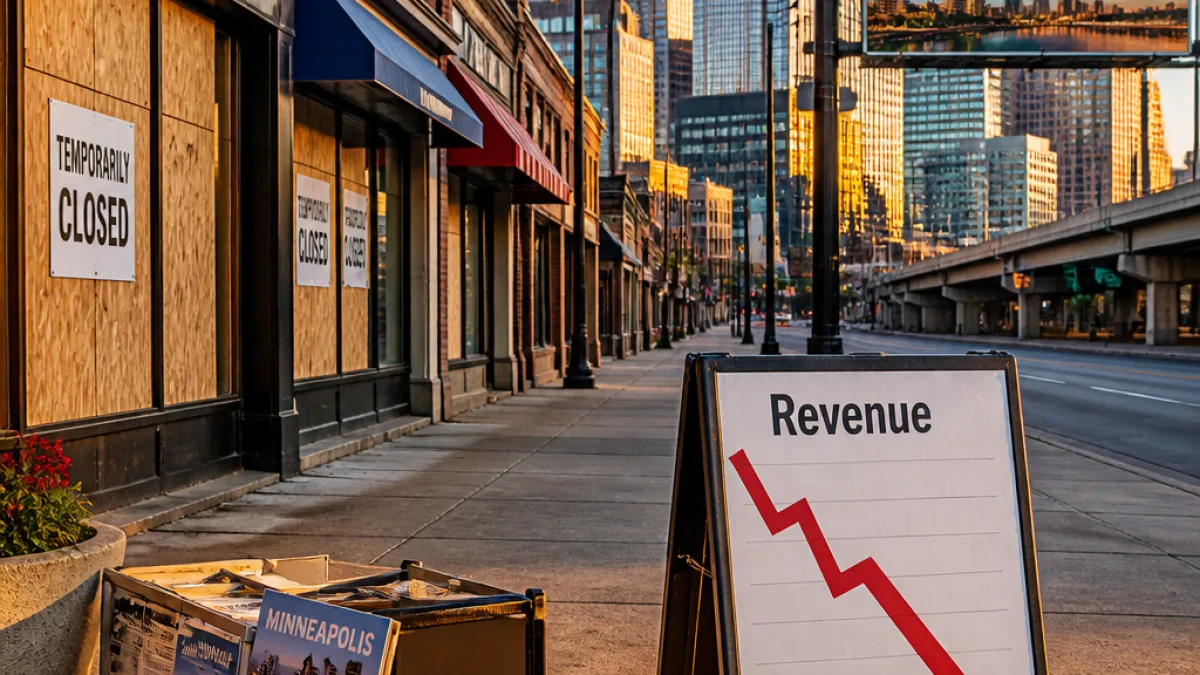
The City of Minneapolis published a study last month estimating nearly $700 million in lost economic activity tied to the surge, including $445 million in diminished business revenue and $152 million in lost wages. The numbers reflect canceled events, lower foot traffic for restaurants and retail, and reductions in bookings for hotels and arts venues, according to local promotional groups.
| Category | Estimated loss |
|---|---|
| Business revenue | $445 million |
| Wages | $152 million |
| Total economic activity | Nearly $700 million |
Local industries and community response
Meet Minneapolis, the city’s convention and tourism marketing organization, reported widespread cancellations and cutbacks affecting hotels, restaurants and arts organizations. The group and local business advocates have since traveled to Chicago to promote the Twin Cities to meeting planners and corporate buyers, aiming to restore confidence and bookings.
- Hotels and meeting venues saw cancellations or reductions in group bookings.
- Restaurants and cultural sites reported lower attendance and revenue.
- Workers experienced lost shifts and wages as operations scaled back during enforcement activity.
At a promotional event held at the Obama Presidential Center on Chicago’s South Side, Minneapolis representatives emphasized the region’s hospitality and community strengths.
“Minnesota is genuinely nice for a reason. There’s no reason to be rude at all,”
The remark was delivered by chef Diane Moua of Diane’s Place in Minneapolis, who joined others in appealing to corporate decision-makers to consider the Twin Cities for events and travel.
Broader consequences and public unrest
Officials and community members in Minneapolis and Chicago have said the federal operations followed a similar playbook and produced lasting harm. The Minneapolis operation, called Operation Metro Surge, drew attention in part because federal agents outnumbered some local law enforcement and because the operation coincided with highly visible clashes that culminated in deadly encounters. The source reporting notes that, during the current presidential term, at least 10 people have died in encounters with immigration agents nationwide.
Local leaders have called for review and accountability while trying to protect economic recovery. Business groups argue the damage extends beyond immediate revenue losses: reputational impacts can reduce future convention bids, deter tourists and slow the return of government and corporate meetings that generate sustained spending.
Repairing trust and rebuilding demand
City and tourism officials have focused on outreach, marketing and relationship-building to get bookings back on the calendar. The trip to Chicago was one example of that strategy: presenting the Twin Cities as a safe, welcoming and capable host for large-scale events.
Still, the study’s figures illustrate a longer recovery horizon. Lost wages affect household budgets and ripple through neighborhoods; lost business revenue strains employers who may already be operating on thin margins. The precise full cost — including longer-term effects on employment, entrepreneurship and cultural institutions — remains under review by local officials and independent analysts.
Residents and leaders face the dual tasks of pressing federal agencies for clearer, less disruptive enforcement practices and continuing economic recovery efforts. As the city measures the financial toll, business owners and community organizers say rebuilding trust will be essential to prevent future shocks of similar scale.
Minneapolis continues to promote its cultural assets and civic welcome while policymakers evaluate the broader consequences of federal enforcement actions in urban communities.