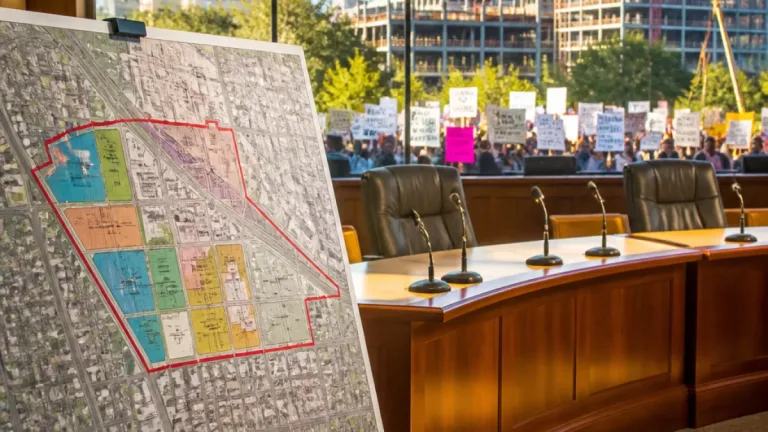
St. Paul city officials plan to clear the longtime encampment at Pig’s Eye Park on Wednesday, setting up a tense deadline for people who have lived at the site for months and for the volunteers and advocates who have resisted a rapid sweep without guaranteed indoor options.
Deadline set, questions remain over where people will go
The closure represents a significant shift in city policy. Under former Mayor Melvin Carter, encampments were largely tolerated; the administration of Mayor Kaohly Her has moved to break up large camps before winter. City leaders say the removals are part of a plan to prevent a return to large-scale outdoor living, but critics say the timeline is too compressed.
Estimates on how many people will be affected vary. City counts have been as low as about 120 at the camp's busiest times; some activists and residents have said the number felt closer to 300. Since the closure was announced in July, many people have left on their own, but a significant number remained through the final hours, uncertain whether the sweep would occur and where they would be relocated.
Voices from the camp and the council chambers
At public hearings and protests this week, residents, volunteers and service providers urged the city to pause and build individualized, long-term options before evicting people from the park. Volunteer Jim Seeman pointed to research on housing stability and employment, while another volunteer, David Mennicke, urged more time for coordination.
“I’m asking for permanent housing, peace, love, stability,”
said Drew, a camp resident who declined to give a last name.
Inside City Council chambers, testimony ran emotional and heated at times, with regular volunteers telling officials that immediate displacement without permanent housing and tailored services risks further instability for people already experiencing trauma and chronic homelessness.
City leadership and logistics
Mayor Her’s office has described the decision to close the camp as an executive action and said the administration has been coordinating shelter beds, hotel vouchers and other indoor spaces with faith-based groups and social-service providers. Council President Rebecca Noecker said she supports the mayor’s plan provided people are offered indoor options that meet their needs.
“My understanding is that that is a case-by-case basis situation,”
Noecker said, explaining that some residents have accepted shelter beds and others would be offered alternative arrangements. She added that the council’s role is to press for specific details about who will be placed where and how transitions will be handled.
Concerns over speed and long-term solutions
Advocates and service providers warned that pushing people into temporary shelter or into other outdoor sites without a pathway to permanent housing will not solve the underlying problem. Several speakers referenced research linking permanent addresses to better employment outcomes and urged the city to prioritize individualized housing plans and long-term supports.
- Closure date: Scheduled for Wednesday (city announcement in early July).
- Estimated residents: City counts about 120 at peak; activists say closer to 300.
- City options discussed: shelter beds, hotel vouchers, faith-based spaces, other indoor placements.
| Item | Reported detail |
|---|---|
| Planned camp closures | Pig's Eye Park first; two more camps planned before winter |
| Support from council president | Conditional on indoor placements for everyone |
Some residents said they intend to move to another growing encampment off Shepard Road; the city has said it plans to address additional sites this fall with the goal of preventing large encampments when winter arrives. That timeline, and how the city will ensure stable, long-term housing rather than short-term placements, remains the central point of contention between officials and community advocates.
The closure also occurs as Mayor Her faces separate scrutiny over workplace conduct, a factor some residents and observers say complicates political support for the administration’s approach to homelessness. Regardless, city leaders are moving ahead with the planned removals and say coordination with service providers has increased in recent weeks.
As the deadline approaches, many people who have built community at Pig’s Eye Park are left weighing risky choices: accept a short-term placement, move to another outdoor site, or try to hold out for a permanent solution they say has not yet been provided. The coming days will test the city’s capacity to follow through on promises of shelter and to demonstrate whether the removal will lead to stable housing outcomes or merely displace people without addressing root causes.