A Massachusetts hiker who collapsed and suffered a seizure while hiking in the Pemigewasset Wilderness was rescued Sunday night by the New Hampshire Army National Guard after conservation officers determined an aerial evacuation was the only practical option.
Remote location forced change in rescue plan
The New Hampshire Fish and Game Department says conservation officers were notified about 7:15 p.m. that a man was having a medical emergency near the Mount Guyot shelter, in the backcountry between Mount Bond and Mount Guyot.
The hiker, identified by authorities as Max Lichtenberger of Somerville, Massachusetts, had collapsed and suffered a seizure, leaving him dazed and unable to walk. Passing hikers and Appalachian Mountain Club staff at the shelter helped stabilize him and relayed the emergency by radio.
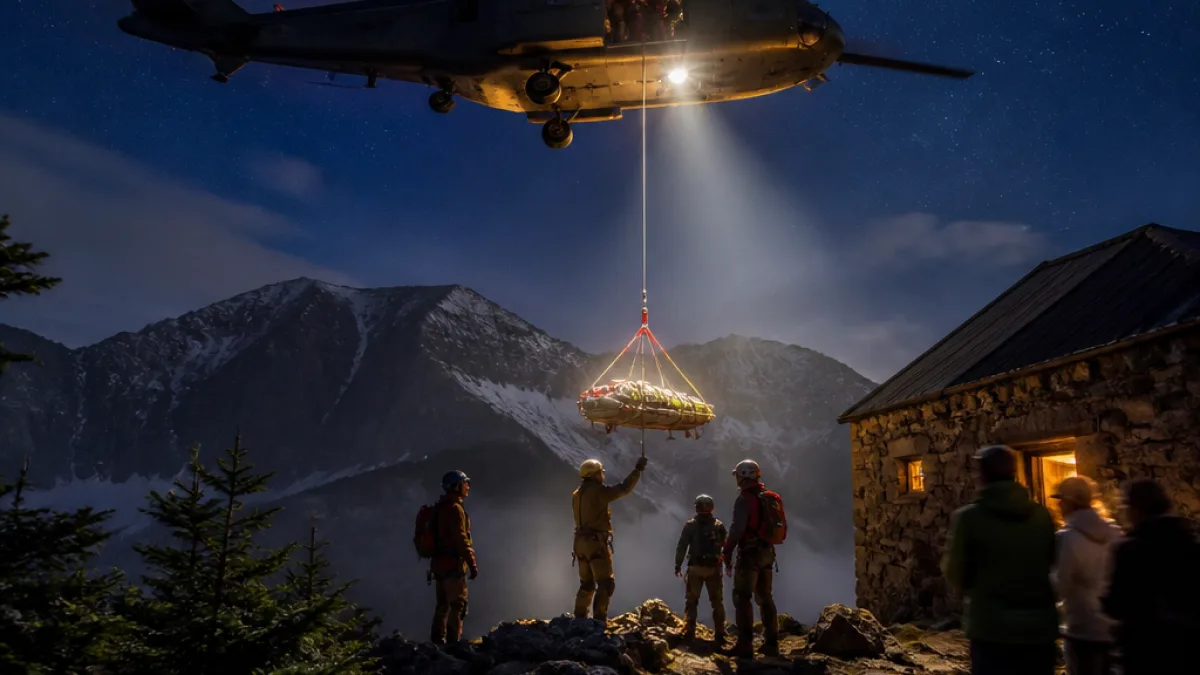
Because of the location’s remoteness, officers concluded that a ground carryout would have taken hours and required a large volunteer force. They requested National Guard assistance, and at about 9:30 p.m. a New Hampshire Army National Guard helicopter was dispatched to the scene.
Helicopter hoist and transfer
When the aircraft reached the Mount Guyot shelter, Appalachian Mountain Club staff helped the flight crew hoist Lichtenberger aboard. The helicopter then flew to a prepared landing zone at Cannon Mountain ski area, arriving around 10:45 p.m.
An ambulance waiting at Cannon Mountain transported Lichtenberger to Littleton Regional Hospital for further treatment, according to Fish and Game.
- Incident reported: About 7:15 p.m., near Mount Guyot shelter
- Guard dispatched: Helicopter launched about 9:30 p.m.
- Landing/transfer: Cannon Mountain arrival around 10:45 p.m.
- Patient: Transported to Littleton Regional Hospital by ambulance
| What | Time | Location |
|---|---|---|
| Emergency reported | ~7:15 p.m. | Mount Guyot shelter |
| National Guard helicopter launched | ~9:30 p.m. | En route to shelter |
| Hoist and airlift | Late evening | Mount Guyot shelter to Cannon Mountain |
| Ambulance transfer | ~10:45 p.m. | Cannon Mountain to Littleton Regional Hospital |
Why the Guard was needed
Fish and Game officials said the combination of the hiker’s condition and the shelter’s remote setting made a traditional ground evacuation impractical. In the White Mountains, rugged terrain and long carries can put additional strain on injured hikers and volunteers alike; an aerial rescue shortens the timeline to medical care and reduces the number of people exposed to danger in a prolonged carry-out.
The Appalachian Mountain Club maintains shelters and staffing in the Pemigewasset Wilderness and often serves as a key link between backcountry hikers and emergency services. In this case, staff at the Mount Guyot shelter assisted with first aid and radioed for help — actions that Fish and Game credited with stabilizing the hiker until rescuers arrived.
Sunday’s incident is a reminder of how quickly routine hikes can become life-threatening situations and why hikers should plan accordingly: carry reliable communication, know the nearest shelters and trailheads, travel with companions when possible and be aware of the limits of local cell coverage.
Fish and Game did not release further medical details about Lichtenberger’s condition after the hospital transfer. The department’s incident summaries typically list location, response partners and the outcome of rescues without disclosing private medical information.
For those who recreate in the Whites: remember that help can arrive, but it may take time. Radios, maps and basic wilderness first-aid know-how remain as valuable as ever — and when conditions dictate, the state’s Guard and volunteer networks stand ready to respond.