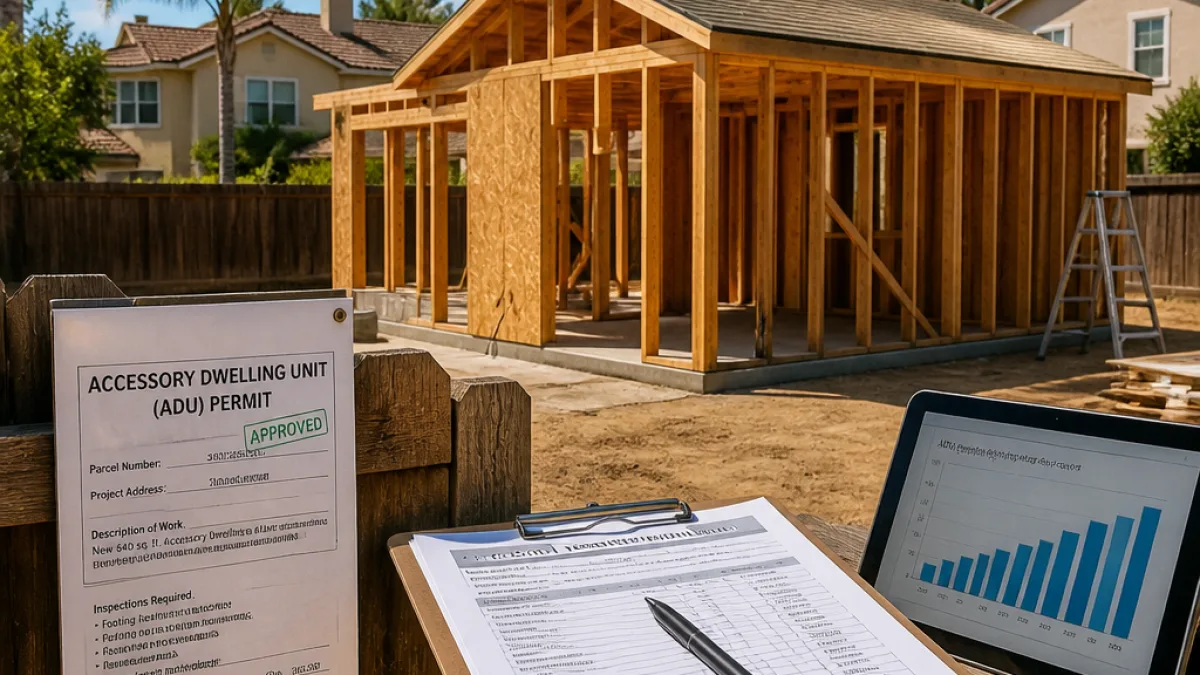
Orange County recorded a notable swing in residential construction last year as permits for accessory dwelling units (ADUs) surged, nearly matching the county’s single-family home permit totals and prompting a new crop of specialized real estate advisers in cities across the region.
Permit boom: the numbers
Countywide permitting data show 1,916 ADU permits were issued in 2025, up from 1,367 in 2024 — an increase of roughly 40 percent, according to data compiled by Cotality (formerly CoreLogic). During the same reporting period, the county issued 1,459 single-family home permits, marking a notable reversal from prior years when ADUs represented only a small slice of building activity.
"Orange County issued 1,916 permits for accessory dwelling unit construction in 2025, a 40 percent increase over the 1,367 permits issued in 2024,"
What the shift means for homeowners and buyers
The rapid expansion of ADU construction is changing how properties are valued and marketed across Orange County neighborhoods. Industry estimates cited in local reporting place the potential value added by a legally permitted ADU at $150,000 to $300,000 for a single-family lot. The National Association of Realtors also finds that, nationwide, homes with ADUs can sell for about 35 percent more than comparable properties without them.
That upside, however, is conditional. Permitting status, zoning compliance and documentation of rental income can materially influence market value. Unpermitted conversions or gaps in paperwork can produce the opposite effect, complicating sales and financing.
Industry response: specialization grows
The construction trend has created demand for real estate professionals who understand ADU-specific issues, from building permits to rental-income underwriting. One agent in the county has already repositioned his practice: an Anaheim-based real estate licensee now focuses exclusively on properties that include accessory dwelling units, working with homeowners and buyers across the region.
These specialists say transactions involving ADUs require extra due diligence — checking permit records, verifying compliance with local zoning and development codes, and assembling accurate rental-income histories for loan officers and appraisers.
- Permits: 1,916 ADU permits in 2025 vs. 1,367 in 2024.
- Comparison: ADU permits nearly matched single-family permits (1,459) in 2025.
- Value impact: Permitted ADUs estimated to add $150,000–$300,000 to home value; NAR estimates ~35% higher sale price.
Practical implications for Orange residents
For homeowners considering an ADU, the changing market underscores two realities: there is clear financial upside when the unit is permitted and documented correctly, and missteps can erode that benefit. Buyers hunting for homes with rental income potential will increasingly need professionals who can separate properly permitted, code-compliant units from undocumented or DIY projects that are harder to finance or insure.
For city planners and neighborhood stakeholders, the ADU surge raises questions about infrastructure, parking, neighborhood character and long-term housing strategy. While ADUs can add gentle density and affordable rental options, they also require coordinated permitting, inspections and record-keeping to realize those benefits without creating legal or safety risks.
| Category | 2024 | 2025 |
|---|---|---|
| ADU permits | 1,367 | 1,916 |
| Single-family home permits | — | 1,459 |
The countywide shift has already influenced how brokers position listings and advise clients. As ADUs move from niche to commonplace in Orange County, industry observers expect more agents to carve out niches handling the particular risks and rewards of ADU properties.
For residents, the takeaway is straightforward: ADUs are reshaping the local housing market, but the benefits hinge on proper permitting and professional guidance. Buyers, sellers and homeowners will face heightened pressure to document compliance and to work with advisors who understand the intricacies of accessory dwelling units.