SALINAS VALLEY, Calif. — Lettuce growers in the region known as America’s Salad Bowl have begun destroying harvested heads after retailers and restaurants sharply reduced orders amid a nationwide outbreak of cyclosporiasis tied to a lettuce supplier, according to farm operators and published reports.
Farmers say demand evaporated overnight
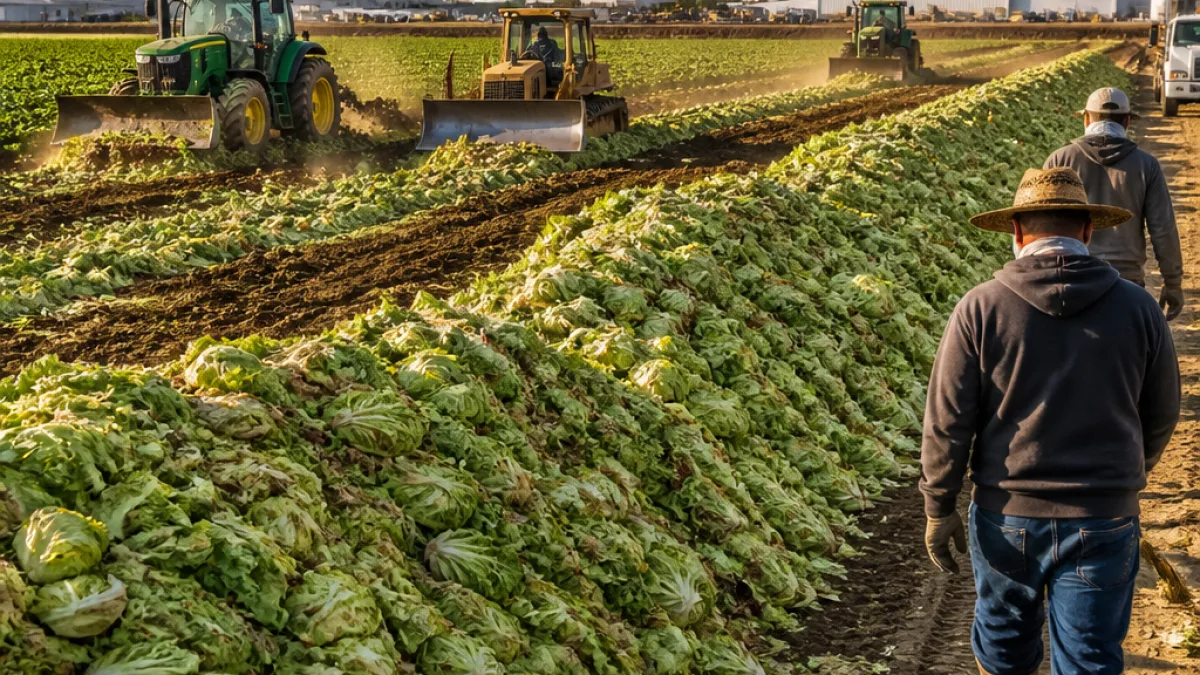
Coastline Family Farms, a Salinas Valley operation, this week discarded roughly 300,000 pounds of romaine hearts after buyers rejected shipments, the farmer who runs the operation told the Wall Street Journal. Other growers in the region report similar losses as restaurants and grocery chains — wary of consumer concern — cut purchases for salad menus and packaged greens.
"It is incredibly demoralizing," one grower said, describing the decision to return produce to the soil rather than try to move it into a soft market.
"It is incredibly demoralizing," Cox said.
The current outbreak of cyclosporiasis — an intestinal infection caused by a parasite that spreads through contaminated food or water — has sickened thousands of people across multiple states. Public health investigators have linked the immediate cluster to iceberg lettuce traced to a Mexican facility under supply to a California-based company, but the ripple effects are being felt in the Salinas Valley, which supplies a large share of the nation's lettuce.
Economic and supply-chain ripple effects
Growers said the consequences are twofold: immediate revenue losses from dumped crops and the risk of longer-term contracts being renegotiated or canceled. Industry data cited by reporters show traffic at chains known for salads has fallen in recent months, deepening the market shock.
For many farmers, planting and harvesting take months of labor, water and input costs. A spoiled or unsellable harvest can wipe out margins for a season and leave farmworkers idle or out of work when fields are plowed under.
- Immediate losses: fields destroyed and produce returned to soil.
- Market reaction: restaurants and retailers reducing orders or altering menus.
- Labor and cost pressures: sunk costs in planting and harvesting remain.
Public health lens and consumer behavior
Cyclosporiasis causes symptoms such as watery diarrhea, cramping, bloating and fatigue. Federal investigators have linked the current cluster to products sourced from central Mexico and connected to a supplier based in California, but officials have not announced a definitive single domestic source for all cases.
As news of the outbreak spread, consumer caution has translated into sharply reduced demand for salads and leafy greens at some quick-service and fast-casual chains, according to analyses reported by national outlets. Whether that shift persists will influence whether growers can recover some losses by finding alternative buyers or exporting produce to other markets.
| Metric | Number |
|---|---|
| Reported illnesses in latest outbreak | 1,947 |
| States affected | 9 |
Local consequences and next steps
Salinas Valley growers and regional trade groups are watching federal agency updates closely and urging clarity from retailers and suppliers. Farmers say they need transparent tracing, consistent testing protocols and buyer commitments before replanting or redirecting future crops.
Supply-chain experts note that perception often moves faster than facts in food-safety events: while investigations proceed, retailers may continue conservatively limiting orders until the public health picture clears, prolonging economic pain for producers.
For now, some growers say returning produce to the field — a costly but immediate way to dispose of unsellable greens — is preferable to the logistical expense of transporting and storing products that may not find buyers.
State and federal health agencies continue to update the public on outbreak investigations. Local farm groups and some growers have called for coordinated industry response to help offset losses and restore consumer confidence when it is safe to do so.
As the situation unfolds, the Salinas Valley’s operators face the twin challenge of recouping immediate losses and guarding against reputation damage that could shrink demand beyond the current outbreak.
Wesley Tanaka is the California correspondent for NEXO RADAR, covering agriculture, food safety and regional economies.