The Bridgeport City Council on Monday approved revisions to Chapter 10.12 of the city code that change when and where commercial vehicles, trailers and certain modified pickup trucks may be left on public streets, alleys and other rights-of-way. The ordinance, which takes effect Thursday, adds new definitions to guide enforcement and spells out exceptions for deliveries, disabled vehicles and public-works activity.
New prohibitions and defined exemptions
The updated code broadly bars large commercial vehicles from parking, standing or being left unattended on any public street, alley or right-of-way at any time. The council preserved limited exceptions: vehicles actively making deliveries or loading and unloading residential goods, disabled vehicles awaiting tow, and vehicles performing utility, emergency or other authorized work may remain temporarily in public ways.
"Large commercial vehicles are prohibited from parking, standing or being left unattended on any public street, alley or public right-of-way at any time."
To reduce ambiguity for both residents and enforcement officers, the ordinance introduces several specific definitions, including:
- Large commercial vehicle — a commercial motor vehicle that meets federal weight or passenger thresholds, such as tractor-trailers and similar heavy-duty rigs.
- Standard truck — a category distinct from heavy commercial vehicles and used to tailor time-of-day restrictions.
- Utility trailer and tow dolly trailer — separate trailer categories with differing parking rules.
- Make-shift walls — non-factory-built sidewalls or barriers added to pickup trucks.
Nighttime and tow rules for trailers and trucks
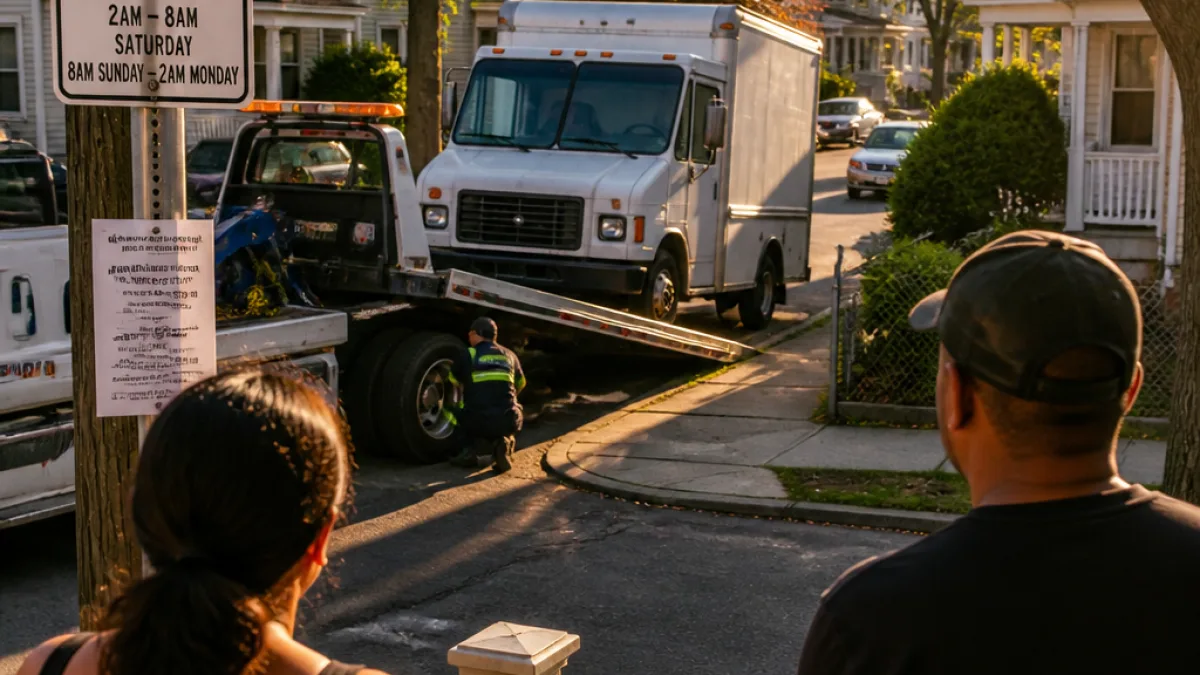
The ordinance limits when certain vehicles may occupy curbside or on-street spaces. Utility trailers are permitted to remain in a public right-of-way only if they are hitched to a valid, licensed vehicle between 9 p.m. and 7 a.m.; unhitched utility trailers are prohibited at all times and may be subject to towing. Tow dolly trailers are banned from parking on any public street or right-of-way whether attached to a vehicle or towing another vehicle.
Standard trucks that carry equipment, appliances, refuse or similar materials face a nighttime restriction: they may not be parked on public streets between 9 p.m. and 7 a.m. The ordinance also addresses pickup trucks altered with make-shift walls, a move intended to close a loophole that previously allowed enlarged or improvised side enclosures to operate as de facto cargo vans in residential streets.
| Vehicle type | Key rule |
|---|---|
| Large commercial vehicle | Prohibited on public rights-of-way at any time (with limited exceptions) |
| Utility trailer | May park 9 p.m.–7 a.m. only if hitched to licensed vehicle; unhitched prohibited |
| Tow dolly trailer | Prohibited on public streets/right-of-way at all times |
| Standard truck | No parking on public streets between 9 p.m. and 7 a.m. when carrying equipment or similar materials |
Enforcement and local impacts
The code revision is designed to provide clearer standards for city enforcement and to respond to resident complaints about long-term parking of heavy vehicles and trailers in residential neighborhoods. By defining vehicle categories and restricting overnight and unattended parking in specific cases, the City Council aims to limit visual blight, curbside congestion and potential safety concerns associated with large parked vehicles.
Residents, property managers and businesses should note the effective date this Thursday and the potential for towing of prohibited trailers. The ordinance does not change exceptions for vehicles actively engaged in deliveries, emergency response or authorized utility work, which remain permitted under the new language.
City officials have framed the changes as an effort to standardize enforcement across neighborhoods by replacing broad language with specific definitions and time windows. Enforcement details such as warning procedures, fine amounts and the city's towing policy under the revised code were not included in the council summary released with the ordinance; residents seeking those specifics should consult the full text of Chapter 10.12 or contact the municipal clerk's office.
The update follows similar moves in other Connecticut municipalities to limit the long-term street parking of commercial vehicles and trailers and reflects ongoing municipal efforts to balance residential concerns with commercial activity and deliveries.