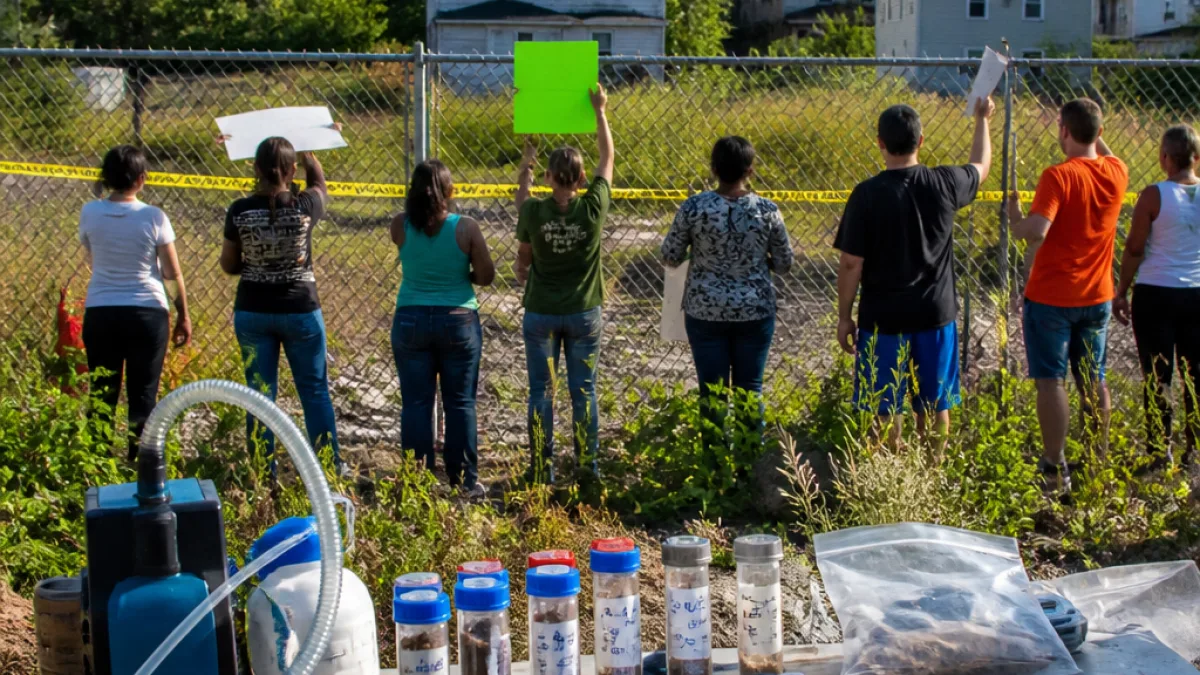
Keyport residents learned this summer what many had feared for years: independent soil testing at and near a shuttered toxic landfill showed concentrations of hazardous chemicals that exceed federal exposure triggers.
Independent testing reignites long-standing worries
More than 400 people in the area have been diagnosed with cancer, according to community reports, including dozens of people and pets living on a single block. The last public review by the New Jersey Department of Environmental Protection of the landfill — the site at the center of residents’ concerns — occurred in 2010. At that time, state testing documented several contaminants but officials said they had not established a clear pathway from the landfill to people in the neighborhood and took no further action.
That narrative changed when Scott Smith, an independent testing expert and former EPA whistleblower, collected soil samples in June from the landfill and from a home in Keyport. Smith’s results, shared with local media, found contaminant levels nearly 6.5 times higher than the EPA’s trigger threshold for human-health exposure.
"I showed up to the town hall that the NJDEP hosted, thinking that I was learning about a new development, something that was brand new, that was being brought to the community's attention. It wasn't until sitting in that town hall that I realized this has been going on for 40 years and nothing's been done about it."
— Alex Craft, Union Beach resident and community advocate
Residents say the state’s limited follow-up and long gap between official reviews have contributed to frustration and fear. Community members have long suspected the unused landfill, adjacent to Keyport, may be linked to what they call a cancer cluster. The 2010 DEP testing identified contaminants including benzene, arsenic, lead, vinyl chloride and PCBs, but the agency concluded at the time that no proven exposure pathway existed for residents.
What the new findings mean
The independent test results do not themselves establish a direct causal link between the landfill and the reported cancer cases, but they do indicate elevated levels of chemicals that public-health officials treat as red flags. Federal EPA guidance uses exposure thresholds to trigger further investigation or cleanup; findings at multiples above those thresholds typically warrant additional sampling, pathway analysis and community health evaluation.
Local advocates say the new data demand immediate state engagement to re-evaluate prior conclusions and to conduct updated, transparent testing across the neighborhood. They also want a full accounting of who has access to historic site data and why the DEP’s last documented review was more than a decade ago.
Key facts from testing and past reviews
| Item | Notes |
|---|---|
| 2010 DEP review | Detected benzene, arsenic, lead, vinyl chloride and PCBs; DEP reported no clear exposure pathway and took no further action. |
| June independent testing | Soil samples from the landfill and a Keyport home showed contaminant levels nearly 6.5 times the EPA trigger threshold for human-health exposure. |
| Reported health concerns | Community reports indicate more than 400 cancer diagnoses in the area, including dozens on one block. |
While the table summarizes what is currently known from public reports and the independent sampling, state or federal agencies must confirm findings and determine next steps. Those steps could include more comprehensive sampling, air and groundwater testing, exposure pathway analysis, and evaluation by public-health authorities.
What residents can expect and next steps
Residents should expect state engagement and clearer communication. Community advocates are calling for renewed sampling led or overseen by the DEP or federal agencies, plus public meetings where results are presented and explained. If agencies confirm elevated contamination, the process typically involves mapping exposures, considering short-term protective actions, and developing remediation plans.
For now, local health officials and environmental regulators will need to reconcile the 2010 conclusions with the new independent findings. The community’s demand is straightforward: a transparent, science-driven response and accountability for decades of perceived inaction.
- Independent testing: Soil samples found levels nearly 6.5 times the EPA trigger for human-health exposure.
- Contaminants of concern: benzene, arsenic, lead, vinyl chloride and PCBs were documented in 2010.
- Community impact: Residents report more than 400 cancer diagnoses in the area; many believe the landfill is a contributing factor.
Local residents and advocacy groups say they will press the DEP to re-open the investigation and to coordinate with public-health agencies. Until state or federal authorities provide updated, verifiable testing and a clear plan, Keyport families remain on alert and demanding answers about how long toxins may have affected their homes and neighborhoods.