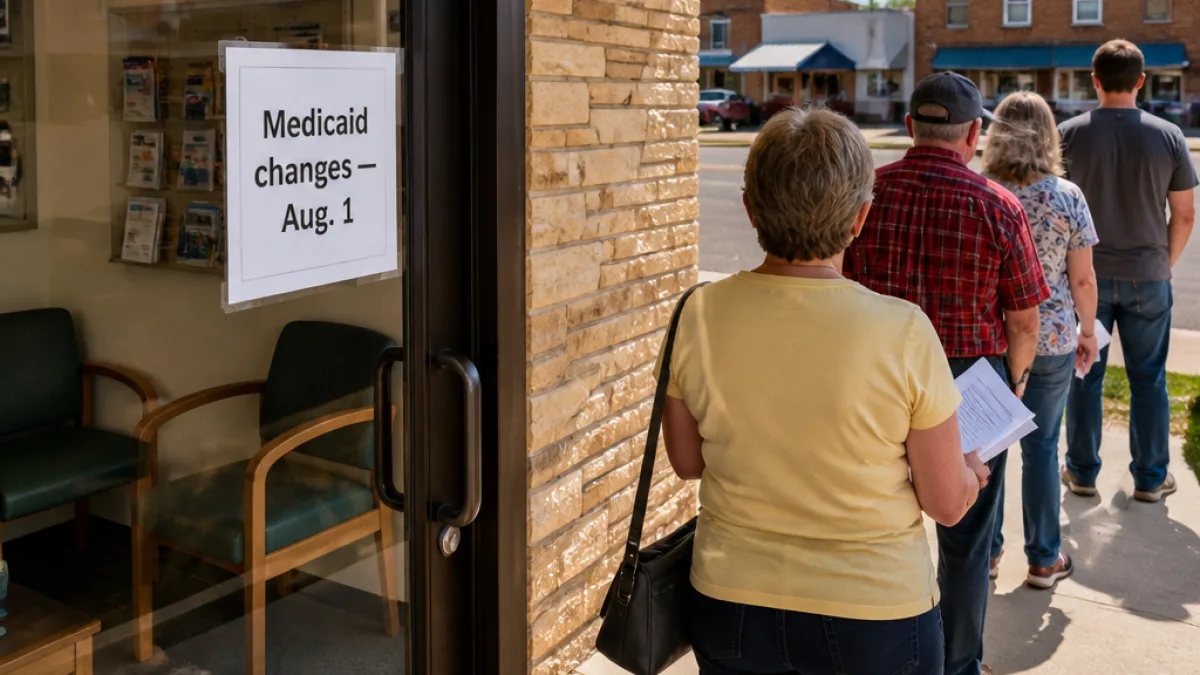
Curtis, Neb. — Nebraska will become the first state in the nation to begin removing people from Medicaid for failing to meet the federal work and activity requirements, state officials announced as the policy takes effect this summer. The state's Medicaid director said roughly 200 Nebraskans will lose coverage beginning Aug. 1.
What the new rules require
The federal law enacted in 2025 requires many Medicaid beneficiaries in participating states to document that they perform qualifying activities — such as paid work, volunteering, school attendance or job training — totaling about 80 hours per month to remain enrolled. The policy applies to an estimated 20 million people across 44 states, according to federal estimates tied to the legislation.
Some groups are exempt from the requirement: people with disabilities or serious illness, parents of very young children, caregivers and other specified populations. States were given until Jan. 1 to implement the rules, but Nebraska chose to begin earlier.
State rationale and safeguards
Drew Gonshorowski, Nebraska’s Medicaid director, described the early start as an effort to help members move toward economic stability and to build supports around beneficiaries who may need help connecting to work or training. He said the agency has added extra procedural checks to reduce errors in eligibility decisions.
"We've ensured that we have extra steps in place making sure we review any denial multiple times before it goes out the door," Gonshorowski said. "We don't want folks falling through the cracks on this."
Supporters of the work requirements argue they will encourage employment and reduce long-term reliance on public benefits. The federal budget law that created the policy projects savings to the federal government of roughly $325 billion over 10 years.
Concerns and possible scale of coverage loss
Researchers and critics caution that previous state experiments with work requirements did not increase employment and instead led to many people losing coverage because they were unaware of the new rules or struggled with paperwork. National estimates of people who could lose Medicaid under the new law by 2028 range from about 3 million to as many as 8.6 million.
Nebraska’s own projection included in federal filings estimated as many as 30,000 people could lose coverage over time, though state officials say the immediate number to be disenrolled is far smaller.
Local impact and what beneficiaries should know
For people in rural communities like Curtis, navigating new reporting requirements can present practical challenges: limited broadband access, fewer nearby job-training resources and constrained public transportation that makes participation in work or training harder. Clinics and social-service providers in small towns often act as contact points for benefits navigation, and staff there say even modest paperwork changes can disrupt care.
Officials have emphasized outreach and extra reviews before a denial is finalized. Still, beneficiaries should be aware of the deadlines and documentation needed to preserve coverage. The state has said it will provide multiple notices before changing enrollment status.
- Effective date for first disenrollments: Aug. 1
- Approximate number losing coverage on Aug. 1: ~200
- Estimated Nebraskans who could lose coverage over time: ~30,000 (state estimate)
- Required activity: 80 hours per month of work, volunteering, school or training
Policy debate and next steps
The rollout in Nebraska will be watched closely by other states and by researchers tracking outcomes. Advocates for beneficiaries say the test will show whether the state’s extra review steps prevent administrative churn — the repeated loss and regain of coverage that disrupts care — or whether the new requirements erect hurdles that leave vulnerable people uninsured.
Gonshorowski framed the policy as an opportunity to "reach out a hand" to members and help connect them with resources. Opponents point to studies of earlier programs that found little evidence of increased employment and substantial coverage losses driven by notification failures and paperwork barriers.
| Metric | Figure |
|---|---|
| Immediate disenrollments in Nebraska (Aug. 1) | ~200 |
| Estimated Nebraskans at risk over time | ~30,000 |
| National population affected | ~20 million in 44 states |
| Required activity | 80 hours/month |
For Nebraskans who receive a notice about eligibility, the most practical steps are to read the communication carefully, follow the instructions for reporting activities or requesting exemptions, and contact local assistance programs or the state Medicaid office if they need help. How well those steps work in rural counties will help determine whether the policy achieves its stated goals or produces further uninsured gaps in coverage.
The coming months will test whether the safeguards Nebraska has put in place are sufficient to prevent unnecessary loss of health coverage and to connect beneficiaries with employment and training opportunities.