The Nebraska Department of Health and Human Services says 92 of the state’s 218 confirmed cyclosporiasis infections have been connected to a continuing multi-state outbreak that federal agencies are investigating. State officials said most Nebraska cases — 191 — were acquired inside the United States, though not all are linked to the national probe.
Product recall points investigators toward iceberg lettuce
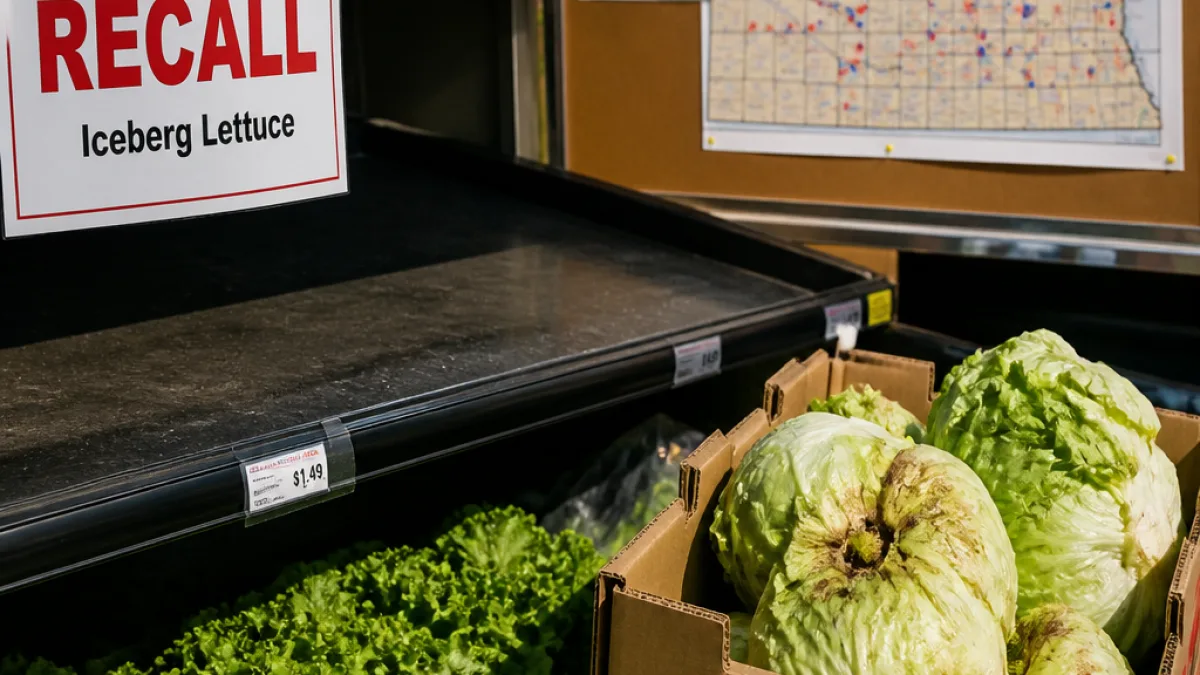
Federal partners, including the Centers for Disease Control and Prevention and the U.S. Food and Drug Administration, are probing a possible connection between illnesses and iceberg lettuce. On July 17, Taylor Farms recalled certain iceberg lettuce items sourced from Central Mexico; the CDC advises people not to eat those recalled products.
Public-health authorities recommend anyone who still has the recalled lettuce should either throw it away or return it to the place of purchase. Retailers and distributors are working with regulators as the traceback and laboratory analyses continue.
What cyclosporiasis looks like and why it’s tricky to trace
Cyclosporiasis is caused by the Cyclospora parasite and typically spreads when people eat or drink something contaminated. Symptoms generally appear about a week after exposure and commonly include watery diarrhea, fatigue, loss of appetite, weight loss, abdominal bloating, stomach cramps and nausea. Untreated infections can linger for weeks or longer, with symptoms that may wax and wane.
Investigators say outbreaks tied to Cyclospora can be hard to pin down for a few reasons:
- The parasite often causes illness days or weeks after exposure, complicating food recall from memory;
- Standard lab tests that rapidly link many bacterial or viral cases don’t work as well for parasites;
- Cases may be spread across wide areas and long periods, stretching the investigation across jurisdictions.
Local numbers and what they mean
At present, Nebraska’s public health agency reports 218 confirmed cyclosporiasis cases, with 92 identified as part of the multi-state outbreak under federal review. The state adds that 191 infections were acquired domestically. Officials caution that not every domestically acquired case is related to the ongoing investigation.
| Item | Count |
|---|---|
| Confirmed Nebraska cases | 218 |
| Linked to multi-state outbreak | 92 |
| Acquired in the U.S. | 191 |
Advice for consumers and clinicians
Health officials emphasize the risk to the general public remains low, but they urge caution. Practical steps include:
- Check pantries and refrigerators for recalled Taylor Farms iceberg lettuce and discard it or return it to the store;
- If you develop prolonged or severe diarrhea, contact a healthcare provider — Cyclospora infections require specific antimicrobial treatment;
- Keep records of food purchases when possible and report suspected foodborne illness to local health departments to assist the investigation.
Because Cyclospora is a parasite rather than a bacterium or virus, clinicians rely on targeted testing to confirm infection and prescribe treatment. The state health department and federal partners are coordinating epidemiologic interviews and traceback work to identify the likely source and halt further spread.
Why thorough investigation matters for Nebraska
Outbreaks tied to fresh produce have occurred in the past with items such as bagged salads, cilantro, basil and berries. For Nebraska — a state where packing and transport routes move fresh produce through regional markets and supermarkets — identifying a contaminated product quickly helps limit wider exposure and reassure consumers.
State and federal agencies continue to analyze laboratory data and interview patients to refine exposure timelines. Consumers with questions about the recall or symptoms can contact the Nebraska Department of Health and Human Services for guidance.
In situations like this, the work of public-health investigators is often a slow, patient grind: sifting purchase records, poring over menus and waiting on lab results. For now, the clearest actions for most people are simple — check your lettuce and see a doctor if you have persistent gastrointestinal illness.