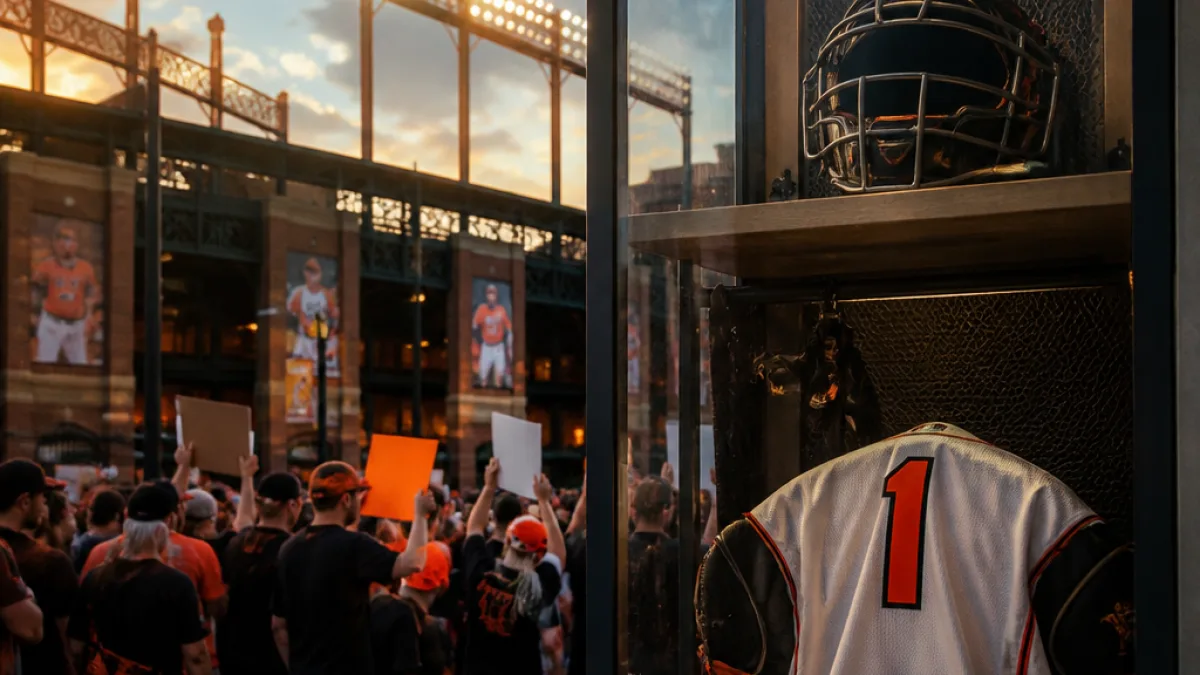
The Baltimore Orioles have shipped the face of their recent resurgence, catcher Adley Rutschman, to the Boston Red Sox in a trade that immediately reshapes the organization’s outlook and leaves fans and teammates grappling with the end of a high-profile chapter.
Rutschman was the No. 1 overall pick in the 2019 draft and arrived in the majors amid high expectations. When he was promoted and played 113 games in 2022, the franchise recorded its first winning season since 2016 and returned to the postseason in the following years. That arc, and the connection between Rutschman and the city, helped define the Orioles’ identity in the early 2020s.
"It felt like the arrival of the Messiah."
What Baltimore received
In return, the Orioles acquired six players, including top pitching prospect Anthony Eyanson, plus a player to be named later. The full reported return:
- RHP Anthony Eyanson
- RHP Kyson Witherspoon
- OF Enddy Azócar
- C Carlos Narváez
- Player to be named later
The collection of young players highlights a clear strategy: Baltimore’s front office traded a cornerstone major-league talent for depth and future upside, particularly on the mound.
| Player | Role/Note | 2026 Statline (from report) |
|---|---|---|
| Anthony Eyanson | RHP; MLB Pipeline No. 49, Boston's No. 2 prospect | High-A: 0.44 ERA, 1.51 FIP, 20.1 IP, 3 BB, 34 K; Double-A: 1.69 ERA, 3.31 FIP, 48 IP, 23 BB, 60 K |
Prospect capital and the pitching focus
Eyanson, a 21-year-old right-hander taken in the third round of last year’s draft, is presented as the headliner. Scouting reports in the trade coverage emphasize a mid-90s fastball that can touch triple digits, a mid-80s slider that misses bats against both sides, an upper-70s curveball and an improving splitter. The numbers included in the trade analysis show high strikeout totals and relatively low walk rates in High-A, with an uptick in walks after his promotion to Double-A.
For Baltimore, adding multiple pitching prospects responds to a persistent need: young, controllable arms who can be developed into rotation pieces or trade chips. The package also includes position players who could provide depth or develop into everyday contributors.
What this means for the city and the fans
Rutschman was more than a player in Baltimore; he was a public symbol of a rebuilding project that finally produced playoff baseball and restored optimism. The decision not to extend him long term — and the decision to send him to a divisional rival — will be measured both in on-field results and in the relationship between the franchise and its fan base.
For many fans, the trade will prompt immediate emotional reactions: anger, confusion, or resignation. For others, it will be an opportunity to evaluate the front office’s plan for sustainable success. The practical consequences are clear — losing a franchise catcher alters roster construction, bullpen usage and the everyday leadership in the clubhouse — but the intangible costs, including fan trust and civic identity, are harder to quantify.
Local baseball observers will watch several things closely in the months ahead:
- How quickly Eyanson and the other prospects advance through the Orioles’ system.
- Whether the organization supplements the incoming young talent with established major-league help.
- The team’s performance against division opponents, especially the Red Sox.
The trade closes a chapter that began with a high draft pick and tangible progress on the field. It opens another in which Baltimore is betting that multiple younger pieces, particularly pitching, can replace the production and leadership Rutschman provided. For a city that measures its sports teams by more than wins and losses, that gamble will be scrutinized both at Oriole Park and in living rooms across Baltimore.