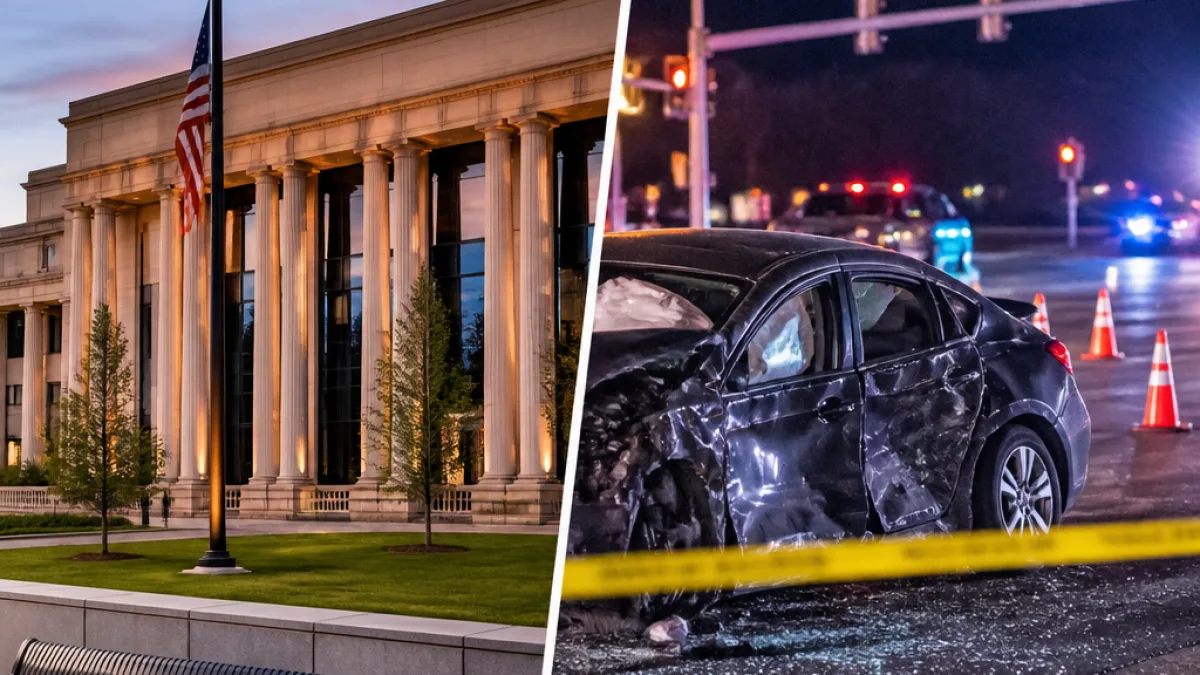
A south Charlotte high-speed collision that killed two people and left a child critically injured ended this week with a plea and a sentence that has drawn attention to sentencing practice and road-safety concerns in the city.
Guilty plea, short jail term
On June 28, 19-year-old Jason Anthony Scott pleaded guilty in Mecklenburg County court to two counts of involuntary manslaughter and one count of assault with a deadly weapon inflicting serious injury, according to court documents. The charges stem from a Dec. 27, 2025, crash at the intersection of Ardrey Kell Road and Red Rust Lane.
"pleaded guilty to two counts of involuntary manslaughter and assault with a deadly weapon inflicting serious injury"
Judge Matthew Osman imposed a six-month jail sentence to be served immediately, followed by three years of probation. Court records show the judge also suspended a longer sentence — listed in the documents as at least 2 years and 7 months — and ordered Scott's driving privileges revoked and a DNA sample provided.
What authorities say happened
According to the affidavit included in prosecution materials, the crash occurred about 7:45 p.m. on Ardrey Kell Road. Investigators say a BMW coupe driven by Scott was traveling at about 100 mph in a posted 45 mph zone when it struck a Honda CR-V.
The driver of the CR-V, identified in police materials as Lorin Manley, and a rear-seat passenger, identified as Gloria Manley, were found unresponsive and later pronounced dead at the scene. A 12-year-old girl who had been a front-seat passenger suffered major trauma — including internal bleeding and a crushed pelvis — and was initially trapped in the vehicle before bystanders freed her. Emergency crews also reported that Scott sustained a broken arm and spinal fractures.
Local consequences and questions
The case raises practical and legal questions for Charlotte residents: how the courts balance suspended sentences and immediate jail time in fatal crashes, whether current penalties act as sufficient deterrents for excessive speed, and how public infrastructure and enforcement might reduce similar tragedies.
- Victims: Lorin Manley and Gloria Manley — both killed at the scene.
- Injured: 12-year-old girl with life-threatening injuries.
- Defendant: Jason Anthony Scott, 19, pleaded guilty and received six months’ jail and three years’ probation.
Sentencing numbers in the documents indicate prosecutors sought a substantial term, but the judge used his discretion to suspend most of it. Such suspensions are not uncommon in North Carolina sentencing practice, particularly where plea bargains resolve cases without trial, but they can draw criticism from victims’ families and public-safety advocates who argue they may not reflect the severity of outcomes in fatal crashes.
| Item | Detail |
|---|---|
| Date of crash | Dec. 27, 2025 |
| Location | Ardrey Kell Road & Red Rust Lane, south Charlotte |
| Speed alleged | ~100 mph in a 45 mph zone |
| Charges pleaded | Two counts involuntary manslaughter; assault with a deadly weapon inflicting serious injury |
| Sentence | 6 months jail; 3 years probation; longer term (2 years, 7 months) suspended; driving privileges revoked |
Broader context in Charlotte
Charlotte has seen ongoing debate about roadway safety as the region grows. High-speed crashes that devastate families are a recurring concern in Mecklenburg County, where arterial streets and commuter traffic mix with residential areas. Community leaders and traffic safety advocates frequently point to engineering changes, speed enforcement and public education as levers to reduce fatal collisions.
For affected families, the court outcome is a legal resolution but seldom closes the local conversation about accountability and prevention. As the Manley family and the child recovering from severe injuries move forward, the case will likely reappear in public discussions about how Charlotte polices speed, designs intersections, and calibrates penalties that follow fatal crashes.
The case remains a sharp reminder that split-second decisions on local roads can have life-altering consequences. For residents and policymakers, the question now is whether the sentence imposed will be seen as fitting and whether it will prompt further changes to protect Charlotte neighborhoods.