Raleigh relaxes watering rules after steady rains boost reservoir levels
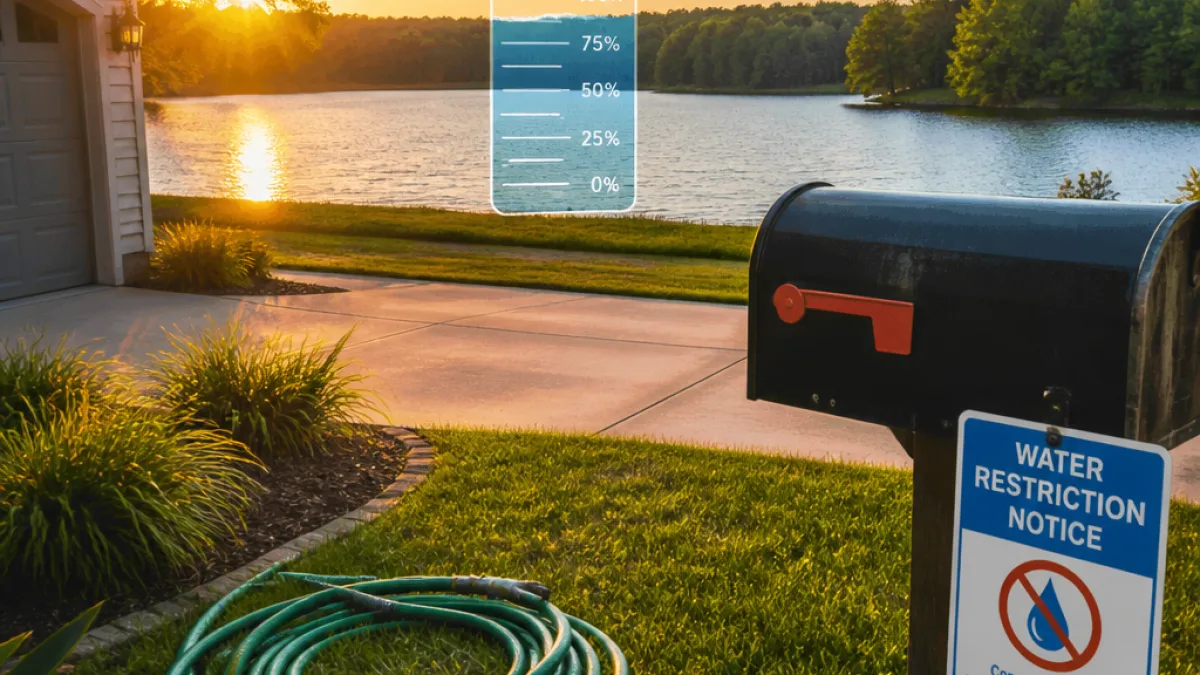
Raleigh officials announced Monday they will scale back Stage 1 water restrictions after recent rainfall and additional showers in the forecast improved regional supplies. The move follows measurements showing Falls Lake at roughly 84% capacity, a key indicator for the city's water system.
The change takes effect Monday. Under the prior Stage 1 rules, residents were limited to watering on designated days; hand watering of trees and shrubs remained permitted. City communications said the eased measures reflect improved reservoir conditions but did not indicate a return to unrestricted use.
The decision comes amid a contrast in regional policy: Durham, which draws from some of the same watershed areas, is remaining in Stage 2 water restrictions. Durham officials have said they intend to keep tighter conservation rules in place despite recent rainfall.
"We've got a cactus, we've got agave, we've got some yucca... These milkweed really do well in some drought. But this year got a little too far," said Raleigh gardener Susan Phillips, describing how plants in her Oakwood yard struggled through the dry spell.
Residents interviewed in Raleigh described adjustments to watering routines during the dry period. Phillips said she and her neighbors adhered to the limited watering schedule and used hand watering selectively to support trees and shrubs showing stress. She described visible signs of drought stress on many plants: wilted leaves and bare branches that she attributed directly to lack of water.
State and local water managers use reservoir levels such as those at Falls Lake to set conservation stages. While exact thresholds can vary, moving away from Stage 1 typically signals that immediate supply pressure has eased but that officials remain watchful for future demand and weather changes.
What changed and what remains
- Effective: Monday (city announcement)
- Reservoir level cited: Falls Lake approximately 84% capacity
- Raleigh: Scaling back Stage 1 restrictions
- Durham: Maintaining Stage 2 restrictions
City guidance under Stage 1 had allowed watering on specific days and allowed hand watering for targeted plants. Officials urged conservation even as restrictions ease, noting that reservoir levels and weather forecasts remain primary drivers of future policy shifts.
| Jurisdiction | Restriction stage | Noted reservoir level |
|---|---|---|
| Raleigh | Scaled back from Stage 1 (easing) | Falls Lake ~84% capacity |
| Durham | Remains at Stage 2 | Not specified |
Durham Mayor Leonardo Williams emphasized caution in the face of fluctuating conditions and indicated his city would keep its more stringent measures in place. "We rather be safe than sorry," he said, explaining why Durham has not loosened restrictions despite recent rain.
For residents, the practical implications are immediate. Lawn-watering schedules set by ordinance or utility rules determine when automated irrigation systems can run. Home gardeners who relied on hand watering to protect vulnerable plants said they will likely continue selective watering during heat spells or when vegetation shows stress.
City and utility officials typically monitor reservoir inflows, usage rates, and forecasts to set stages. While this easing reflects short-term improvement, officials and conservation advocates warn that a few weeks of rain do not eliminate longer-term vulnerability. Raleigh consumers are encouraged to check the city's official water resources page for any updates or detailed watering schedules as conditions evolve.
As storage levels change, so too may restrictions; residents should expect that future rainfall or dry spells could prompt renewed conservation measures. For now, the latest measurements have given Raleigh enough buffer to relax Stage 1 limits while neighboring Durham maintains a more cautious stance.