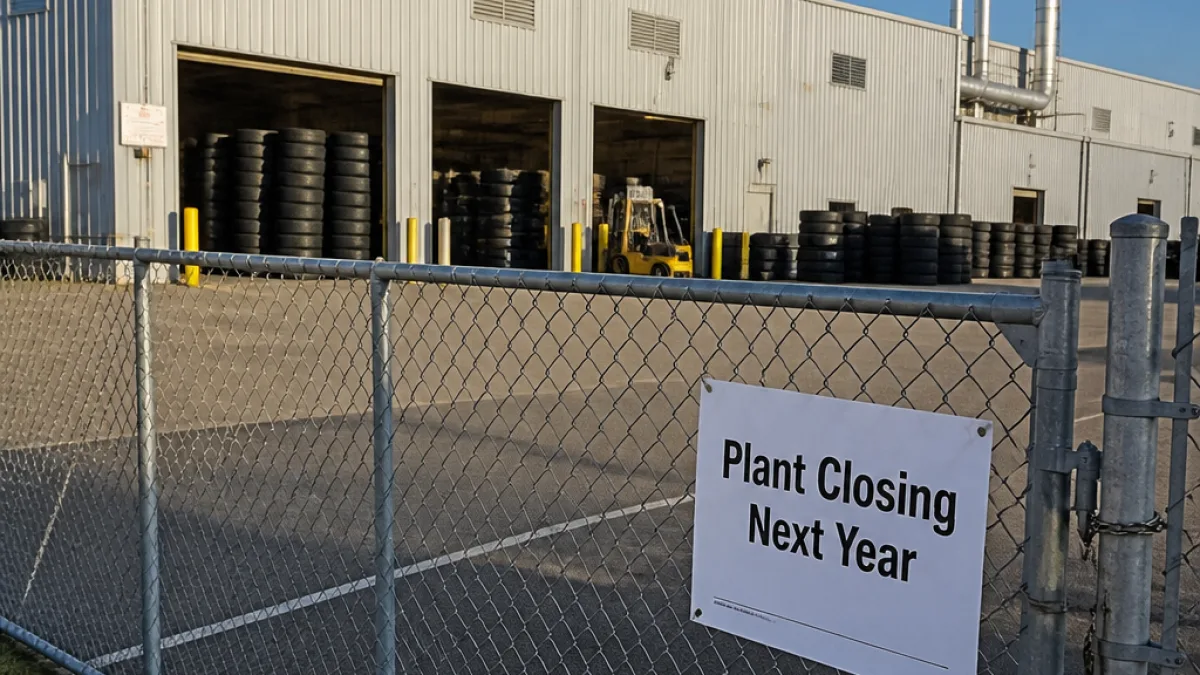
Goodyear Tire & Rubber Co. and the United Steelworkers have ratified a plan to permanently shut the company's consumer tire factory in Fayetteville, with the closure scheduled for next year. The move will affect 1,750 jobs and removes a significant production site from Goodyear’s Americas footprint.
Capacity and regional standing
The Fayetteville plant ranks among Goodyear’s largest production facilities in North America. At full capacity, it can produce about 31,000 passenger and 10,500 light-truck tires per day. Only two Goodyear-area plants exceed that output: Lawton, Oklahoma, and the former Cooper plant in Tupelo, Mississippi.
| Plant | Daily capacity (approx.) |
|---|---|
| Fayetteville, N.C. | 31,000 passenger, 10,500 light-truck |
| Lawton, Okla. | ~65,000 |
| Tupelo, Miss. (former Cooper) | ~42,000 |
Financial impact and timing
In a filing with the Securities and Exchange Commission, Goodyear estimated the plant exit will produce total pre-tax charges of between $535 million and $565 million. The company outlined expected cash and non-cash components:
- $190 million–$210 million in expected cash charges, chiefly related to associate-related and other exit costs;
- $290 million–$310 million in non-cash charges tied to accelerated depreciation and asset-related write-downs;
- $40 million–$50 million for pension special termination benefits.
Goodyear said it expects to record roughly $205 million–$225 million of those pre-tax charges in the third quarter of 2026, with an additional $65 million–$85 million to be recorded during the remainder of 2026. The company added that most cash outflows from the plan are expected to occur by the end of 2027.
"The majority of the cash outflows associated with this plan will occur by the end of 2027. These actions are expected to improve Americas segment operating income by approximately $90 million in 2027 and by approximately $270 million annually in 2028 and thereafter."
Local consequences and context
For Fayetteville, the closure removes a major source of manufacturing employment and local payroll. The plant’s daily production figures underscored its role in the regional industrial base; its absence will alter logistics, supplier relationships and the livelihoods of nearly two thousand workers and their families. While Goodyear projects improved segment operating income in 2027 and beyond, those corporate gains are likely to contrast sharply with the short-term economic and personal impacts in the Fayetteville area.
Details on the company’s plans for affected employees — including severance, transfers to other Goodyear facilities or potential retraining programs — were not included in the filing beyond the estimated charges tied to associate-related exit costs and pension benefits. The timeline for site decommissioning, environmental remediation or sale of the property also was not disclosed in the filing.
As the closure proceeds, local leaders, workforce agencies and community organizations will face the task of coordinating responses: connecting displaced workers to benefits and re-employment resources, addressing secondary effects on suppliers and service businesses, and considering economic development strategies for the site. The magnitude of the charges Goodyear has set aside indicates the company expects an extended and costly wind-down.
Moving forward, monitoring announcements from Goodyear, the United Steelworkers and local officials will be essential to understand how the transition will be managed and what support will be available to employees and the broader Fayetteville economy.