
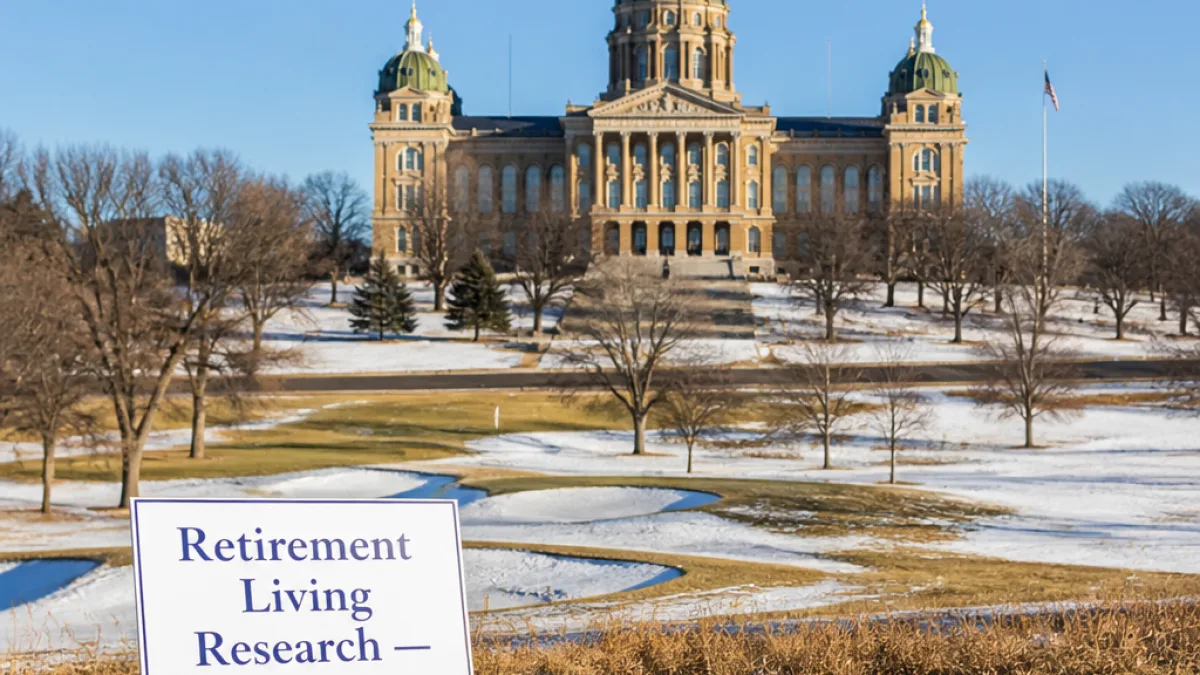
DES MOINES — Iowa has been named the top state to retire in for 2026, a sharp climb from its No. 16 position in last year’s national rankings. The analysis, conducted by Retirement Living Research, evaluated all 50 states across measures such as affordability, quality of life and economic stability to produce the list.
Why Iowa moved to the top
The report points to a combination of factors that helped propel the Hawkeye State to No. 1: notably its affordability, low senior poverty and strong safety metrics, alongside opportunities for active recreation.
Among the specific data highlighted by the researchers:
- Golf access: Iowa ranks third nationally for golf courses per capita — about 49 courses per 100,000 seniors.
- Property crime: The report lists Iowa’s property crime rate at 13 crimes per 1,000 residents, the ninth-lowest nationwide.
- Climate: The state’s average winter high is 18 degrees, a reminder the weather remains a drawback for some retirees.
What the ranking means locally
For cities and towns across Iowa, the designation is likely to shape conversations about housing, services and tourism for older adults. Retirement planning often centers on long-term costs — housing, health care and taxes — and the ranking reflects how Iowa performs across those broad categories rather than on a single metric.
Local officials and businesses that serve older residents may use the ranking as a selling point when promoting neighborhoods or senior services. Recreational sectors, like the state’s numerous golf courses, can point to increased interest from retirees seeking active lifestyles.
| Measure | Iowa (2026) |
|---|---|
| Overall retirement rank (2025) | No. 16 |
| Overall retirement rank (2026) | No. 1 |
| Golf courses per 100,000 seniors | 49 |
| Property crime (per 1,000 residents) | 13 |
| Average winter high | 18° F |
Balancing weather with cost and safety
The researchers explicitly noted that Iowa’s cold winters may make it less attractive for retirees who want year-round warmth. Still, for many planning retirement, the study concluded that lower cost of living, public safety and overall value outweigh climate concerns.
That trade-off is familiar to many Iowans overseeing family budgets at kitchen tables: a colder February but lower housing and living expenses that can stretch retirement savings further.
Broader context from the report
Retirement Living’s annual rankings urge prospective retirees to look beyond climate when evaluating destinations. The analysis factors in healthcare access, economic indicators and quality-of-life measures — elements that influence finances and daily living over the long term.
For Iowa, the jump to No. 1 suggests stability across several of those categories rather than dominance in a single area. In short: the state’s profile is balanced.
What retirees and families should consider
- Compare local housing costs and property taxes between communities; affordability can vary widely inside any state.
- Check local healthcare providers and proximity to specialist care — access matters as health needs evolve.
- Factor in personal preferences: active recreation options such as golf courses are plentiful in Iowa, but some retirees prioritize milder winters.
The report’s findings offer a framework for decisions many Iowans and prospective newcomers will weigh in coming months. While a No. 1 ranking does not guarantee the best fit for every household, it highlights the state’s strengths in affordability, safety and recreational access — criteria that are central to retirement planning.
For residents considering retirement now or in the future, the ranking gives new data to add to conversations about where to spend later life. Local planners and businesses may also see practical opportunities to respond, tailoring services and marketing to an older population that values value and security.