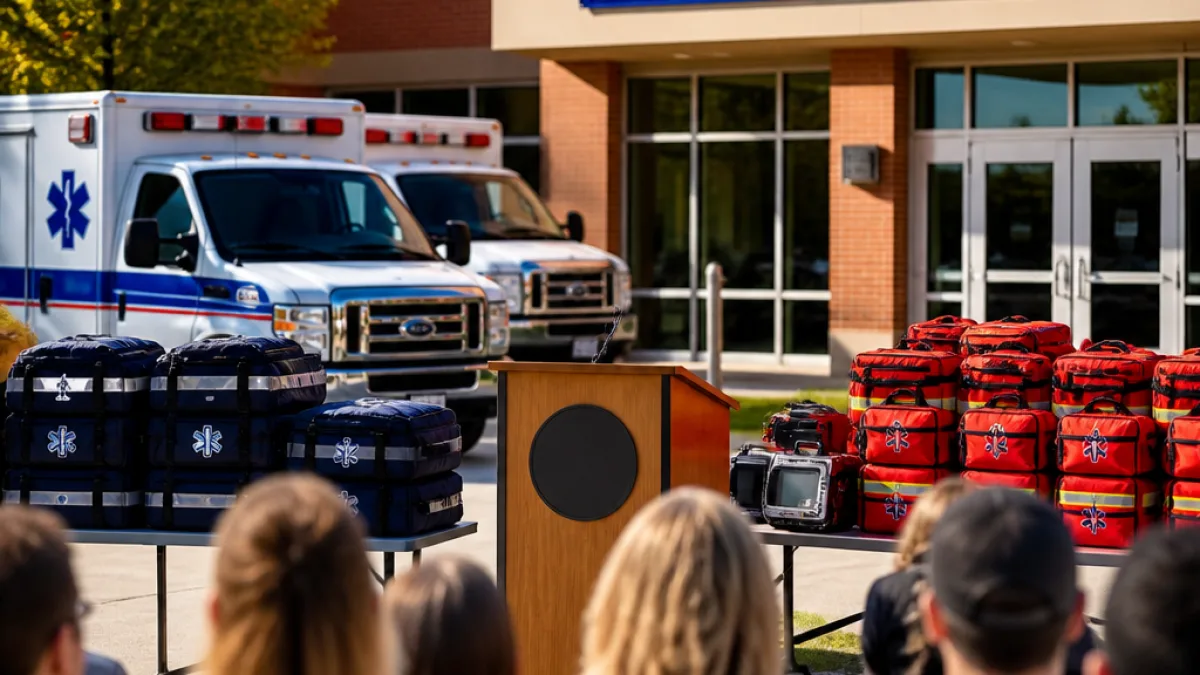
Federal education and labor officials visited Fort Dodge on Tuesday to announce that Iowa Central Community College has become the first institution in the nation approved for the U.S. Department of Education’s new Workforce Pell program. The designation applies to the college’s 14-week emergency medical technician program.
Short pathway, immediate job market impact
The college, which hosted the announcement at its Fort Dodge campus, promoted the program as a rapid route into frontline health care jobs that can be completed in a matter of weeks rather than years. College and state leaders say Workforce Pell will reduce financial barriers for people seeking credentials for high-demand roles and help employers fill openings more quickly.
At the event, Iowa Central President Jesse Ulrich described the approval as aligned with the college’s mission to help students earn credentials "as quickly as possible with as little debt as possible." He said the new funding pathway will help students enter essential careers while easing workforce shortages.
“Our purpose at Iowa Central is simple: to help students earn a degree of credential as quickly as possible with as little debt as possible, so they can build a better life. That is exactly why today’s announcement matters,”
U.S. Education Secretary Linda McMahon and Acting Labor Secretary Keith Sonderling joined state officials at the campus. McMahon framed the short-term EMT program as an example of the type of training Workforce Pell aims to support — shorter, skills-focused programs that lead directly to jobs without saddling students with the higher costs often associated with four-year degrees.
“It’s a shift that recognizes what learners and workers have been saying for years: they need faster, more-practical routes into real jobs, not a one-size-fits-all system that sidelines talent and delays opportunity,”
McMahon also emphasized interagency coordination with the Department of Labor to streamline workforce development, expand apprenticeships and better connect postsecondary programs to employer needs.
Who attended and what was said
The announcement drew a mix of federal and state officials and college leadership, underscoring the federal government’s intent to pilot Workforce Pell through community colleges and short-term credential programs. Iowa Gov. Kim Reynolds was among the officials present at the Fort Dodge event.
Congressional leaders who have supported Workforce Pell praised the approval as evidence the program is beginning to operate as intended. A statement from Rep. Tim Walberg (R-Michigan), chair of the House Education and Workforce Committee, called the announcement an example of congressional goals for the initiative.
Program specifics and local implications
The approved program at Iowa Central is an intensive, 14-week emergency medical technician curriculum. College leaders say the relatively short length and direct job alignment made it an appropriate candidate for the new funding pathway.
| Program | Length | Campus |
|---|---|---|
| Emergency Medical Technician (EMT) | 14 weeks | Fort Dodge |
Local health providers and first-responder organizations have frequently reported staffing gaps in recent years. Community college leaders contend Workforce Pell can accelerate credentialing timelines and expand the pipeline of trained EMTs who can enter the workforce quickly.
- Accessibility: Workforce Pell targets shorter, high-demand programs to widen participation.
- Affordability: The federal funds are designed to limit student debt by covering tuition for compressed credential programs.
- Employer alignment: The program emphasizes local labor-market needs like emergency medical services.
What comes next
Iowa Central will begin implementing Workforce Pell for the EMT program under the department’s approval. The announcement is also likely to prompt other community colleges and training providers to seek approval for short-term, workforce-oriented offerings.
State and college officials framed the approval as the start of broader changes to how federal aid can support workforce training. They emphasized the need to pair funding flexibility with employer partnerships and clear pathways to jobs so learners can move from training to employment with minimal delay.
For Fort Dodge and other Iowa communities, the new funding route offers a concrete option to accelerate training and potentially ease shortages in essential services. How widely Workforce Pell expands and how many programs qualify will shape its local impact in the months and years ahead.
Coverage of the rollout will continue as more institutions seek approval and the departments track outcomes for students and employers participating in Workforce Pell-funded programs.