Iowa County — A modest poultry processing operation that began serving area farms in June is already changing how Eastern Iowa producers move product to market, shortening drives that once stretched more than two hours each way and giving small-scale farmers a nearby option they hadn’t had for years.
Filling a gap left by regional closures
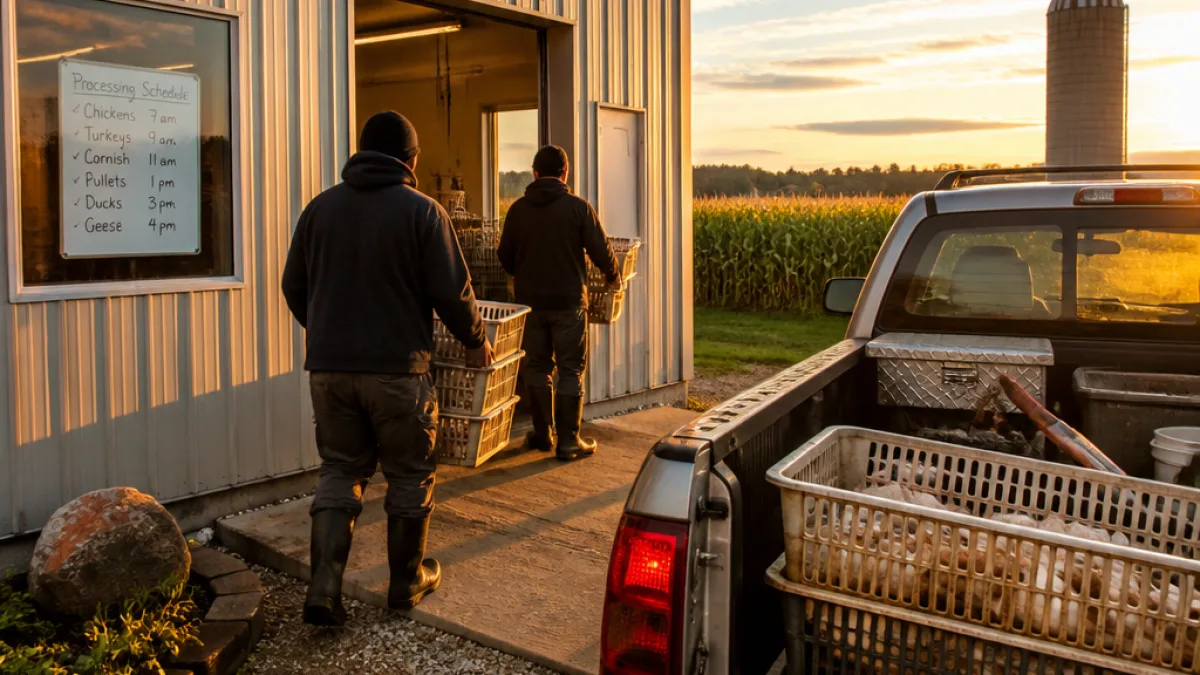
Jason Grimm, owner of Grimm Family Farm in Iowa County, started the processing operation first to meet his own farm’s needs. As other processors in the region shut their doors, he found himself making longer trips to get birds processed. Those closures, he said, made it impractical for many small producers to keep selling poultry direct to consumers.
Grimm’s facility began accepting birds from other farms in June. Since then, producers such as West Fork Farmstead in Washington County have begun using the closer option for their routine processing needs.
Shorter hauls, lower costs, steadier prices
For some producers, the nearest processor had become a three-hour drive. Natasha Wilson, a producer at West Fork Farmstead, said that distance increased costs and time, and also affected bird welfare. With Grimm’s operation nearby, farms can avoid long hauls and the added mileage and labor that come with them.
“We typically had to go about three hours one way. That was the closest processing that we could access before Jason opened this facility,”
Wilson told KCRG that the closer processing has allowed her farm to keep prices steady for customers. West Fork Farmstead processes about 1,200 birds annually for direct sale.
Potential for growth and added flexibility
Grimm said the processing work grew out of necessity when regional plants shuttered. Now, his facility can serve other producers and could enable farms to increase poultry production or add birds to their businesses, since farmers no longer need to plan around long transport times and limited appointment availability at distant processors.
“We’re able to service a lot of customers and hopefully even increase production or add poultry to their business, now that they have somewhere they can go to,”
Local impacts beyond convenience
The return of nearby processing services touches several practical and economic areas for rural producers:
- Reduced transportation costs: Shorter drives mean lower fuel and vehicle wear expenses and less time spent on the road.
- Animal welfare benefits: Less travel reduces stress on birds and the risks associated with long shipments.
- Market stability: Easier access to processing can allow small farms to maintain or stabilize consumer prices.
What it means for consumers and farmers
Direct-to-consumer poultry producers often rely on well-timed processing windows to supply farmers markets, restaurant accounts and direct sales. When regional processors close, small producers face scheduling bottlenecks and longer labor commitments for transporting birds. Having a local processor can shorten turnaround times and make it feasible for more farmers to sell poultry directly.
Data at a glance
| Item | Detail |
|---|---|
| Processor location | Iowa County |
| Facility start | June 2026 (began accepting outside birds) |
| Example customer | West Fork Farmstead, Washington County |
| Annual birds (West Fork) | 1,200 |
Why small processors matter
Over the last decade, rural America has seen consolidation in food processing that has left many regions with fewer options for small-scale producers. When one facility closes, the nearest operational plant can be hours away. That raises the threshold — in time, cost and logistics — for small farmers to stay in the poultry business.
Local processing facilities do more than cut travel time. They preserve the viability of diversified farm operations, support local food systems, and can keep more of the food dollar in the community by enabling producers to serve customers directly.
Next steps and community perspective
Grimm said he initially opened the operation for his farm’s needs; he is now serving other growers and hopes to expand capacity where demand exists. Producers interviewed say the facility’s presence has already allowed them to hold prices steady and reduce the time and mileage spent transporting birds.
For Eastern Iowa’s small poultry producers, the new Iowa County processor represents a practical fix to a persistent problem — one that could have ripple effects on local food availability and farm livelihoods in the months ahead.
Reporting from Iowa County.