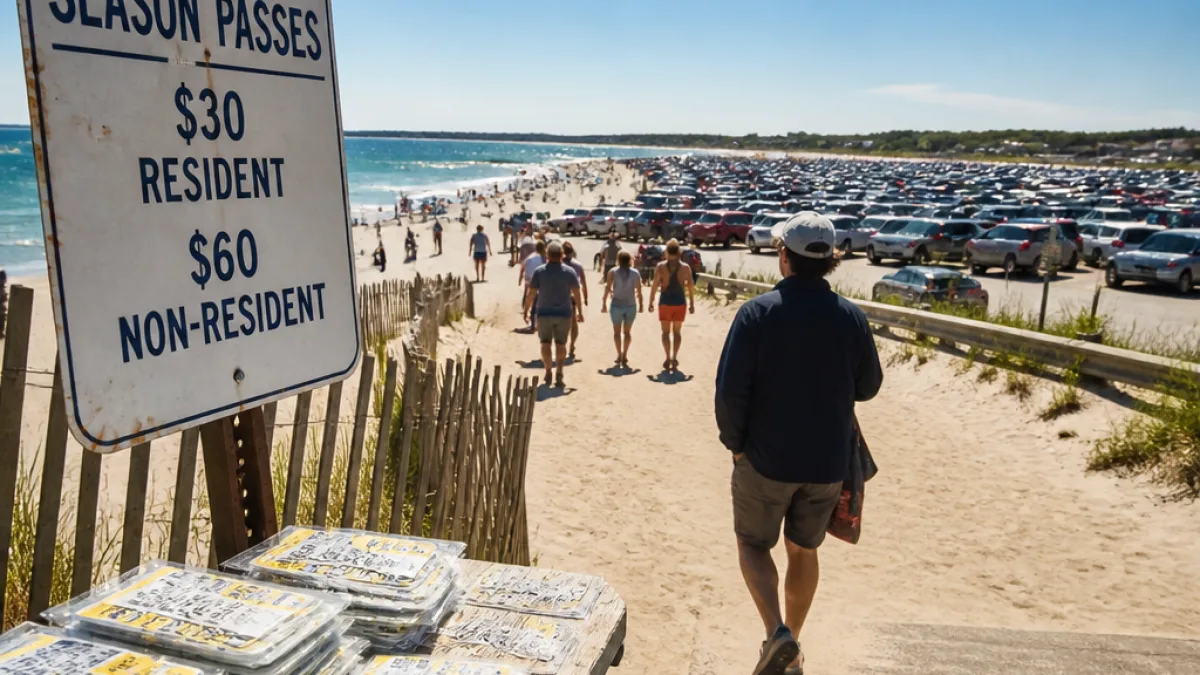
The Ocean State's beaches are packed, and many of the people filling parking lots and boardwalks aren't from Rhode Island. State data released late last month show the state's eight ocean beaches drew more than 300,000 visitors this season, and 51% of them were non-residents.
Who's paying — and how much?
Rhode Island allows visitors to access state beaches either through daily parking fees or by purchasing seasonal parking passes. A season pass costs $30 for Rhode Island residents and $60 for out-of-state residents. The Department of Environmental Management reported the state sold 35,047 season passes this year: 22,838 to residents and 12,209 to non-residents.
Those numbers have prompted questions about whether the state should charge visitors from other states more — especially given that a majority of this summer's beachgoers came from beyond Rhode Island's borders. But federal rules limit what the state can do.
Federal cap limits fee hikes
Under federal law, Rhode Island cannot charge non-residents more than double what residents pay for beach access. That means any attempt to raise the non-resident seasonal fee above $60 would require increasing the resident price as well. In other words, lifting the non-resident rate to match neighbors would force a bill for Rhode Islanders, too.
The seasonal pass rates in Rhode Island have not changed since 2002, and daily fees remain largely the same statewide, with the exception of Misquamicut State Beach in Westerly, where daily rates were raised in 2021 to help cover beach cleanup costs.
How Rhode Island stacks up
Neighboring states take different approaches to beach access pricing:
- Connecticut charges $112 per season for out-of-state vehicles at its four shoreline state parks; out-of-state visitors also face a weekend/holiday daily fee of $22. Connecticut does not charge cars registered in-state to enter those parks.
- Massachusetts charges non-residents a $40 daily fee at some state beaches; residents pay $14. Residents in Massachusetts can buy season passes for $60, but non-resident seasonal passes are not available.
| State | Resident season pass | Non-resident season pass / daily |
|---|---|---|
| Rhode Island | $30 | $60 |
| Connecticut | $0 (some parks) | $112 season; $22 daily (wknds/hols) |
| Massachusetts | $60 season; $14 daily | $40 daily; no non-resident season pass |
Local impact and the politics of pricing
At face value, Rhode Island's fee structure looks like a bargain to an out-of-stater: for $60 they can park all season at state beaches. That likely helps explain why more than half of this summer's beach visitors came from out of state.
But raising non-resident fees to match Connecticut would run afoul of federal constraints unless resident prices rose, too — a politically sensitive move. Increasing resident fees would shift costs onto Rhode Islanders who already contend with high property taxes and seaside infrastructure demands.
Beach revenue helps cover parking operations, lifeguards, trash removal and maintenance. Officials in other states have adjusted pricing to reflect those costs; in Rhode Island, the last notable change was the Misquamicut adjustment in 2021 aimed at cleanup funding.
Choices ahead
Policymakers weighing any change face a basic trio of trade-offs:
- Raise non-resident revenue but also increase resident costs due to federal limits;
- Keep current prices and rely on existing revenues to cover maintenance and services;
- Find alternative funding sources for beaches, such as state general funds or targeted local measures.
The crowd sizes this summer have put those trade-offs in plain sight. If lawmakers opt to keep passes cheap, Rhode Island will remain a regional magnet — and a budget question will remain unresolved.
For now, residents and visitors will keep paying the same rates approved more than two decades ago, and beaches will stay busy. Whether the state tweaks prices or pursues other funding, the question of who pays for Rhode Island's shoreline will be back in the conversation before the next season ends.