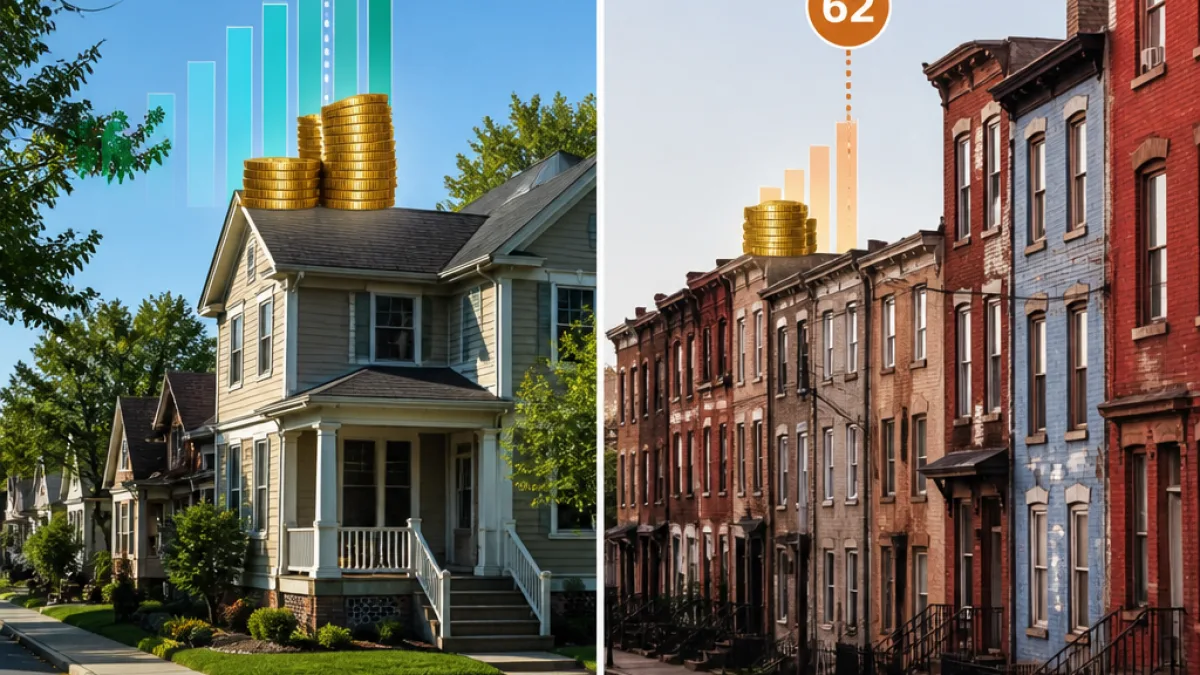
Newark ranks as the best place to retire in Delaware, while Wilmington is listed as the worst, according to a GobankingRates analysis that evaluated income, housing costs and other measures affecting older residents' quality of life.
Study highlights income and housing gaps
The personal finance website assigned Newark a livability score of 83, citing higher retirement incomes and a relatively moderate cost of living. GobankingRates reports the average income of households with retirement income in Newark at $45,461, and the average income of households with Social Security income at $27,664. The study lists the average monthly total cost of living in Newark at $2,052 and an average monthly mortgage cost of $2,103. As of May 2024, the average single-family home value in Newark was $352,939.
By contrast, Wilmington received a livability score of 62. GobankingRates recorded the average income of households with retirement income at $25,660 and the average Social Security income at $20,414. The study lists Wilmington’s average monthly total cost of living at $1,959 and its average monthly mortgage cost at $1,903. The average single-family home value in Wilmington as of May 2024 was $319,510.
Numbers in perspective
The GobankingRates ranking is based on U.S. Census Bureau American Community Survey data and other measures tied to retirement well-being, including population, household income and poverty rates among residents 65 and older. The analysis sought to balance income metrics against costs such as housing and monthly expenses to produce state-level best- and worst-place lists.
To make the contrast clearer, here are the key figures side by side:
| Metric | Newark | Wilmington |
|---|---|---|
| Livability score | 83 | 62 |
| Avg. retirement household income | $45,461 | $25,660 |
| Avg. Social Security household income | $27,664 | $20,414 |
| Avg. monthly total cost of living | $2,052 | $1,959 |
| Avg. monthly mortgage cost | $2,103 | $1,903 |
| Avg. single-family home value (May 2024) | $352,939 | $319,510 |
What this means for Delaware retirees
The gulf between Newark and Wilmington is driven largely by differences in retirement incomes. Newark’s higher reported retirement and Social Security incomes help its score despite mortgage costs that are slightly higher than Wilmington’s. Wilmington’s lower incomes, even with marginally lower mortgage costs, pull down its overall livability mark.
For Delaware residents weighing retirement options, those figures point to the familiar trade-offs between income, housing costs and access to services. Higher home values and mortgage payments can be offset by stronger retirement earnings, while lower costs of living may still leave retirees vulnerable if household incomes are limited.
Local context and broader trends
Newark’s performance on this list may reflect its economic ties to the University of Delaware and associated employment and retirement benefits for university staff and alumni who choose to remain in the area. Wilmington’s lower ranking aligns with long-standing challenges the city faces around poverty and uneven household incomes among older residents.
Nationally, such studies illuminate how retirement security in small states can vary widely from one municipality to another. Policymakers and advocates often point to these geographic disparities when pushing for targeted support for housing affordability, expanded property tax relief for seniors, and programs that bolster retirement income through employment or supplemental benefits.
- Newark ranked best in Delaware with a livability score of 83.
- Wilmington ranked worst with a livability score of 62.
- Key differences center on retirement and Social Security incomes versus housing costs.
While such rankings offer a snapshot based on available data, retirees and planners should consider individual circumstances—healthcare access, family ties, tax implications and personal savings—before making relocation decisions.
For Delaware, the GobankingRates analysis underscores the need for local and state conversations about how to ensure secure, affordable retirement options across diverse communities.