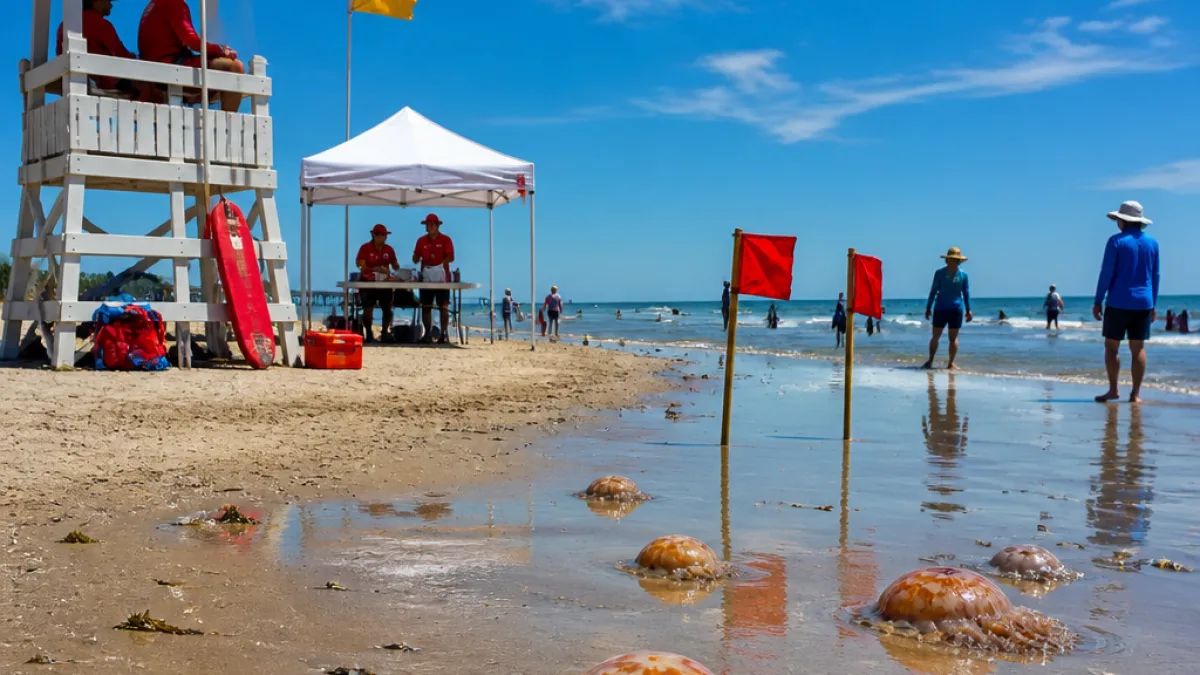
Beachgoers along Delaware’s coastline are reporting a sudden increase in painful jellyfish stings, prompting lifeguards to treat multiple incidents each day and raising questions about how warmer waters may be reshaping summer beach risks.
What lifeguards are seeing
At Dewey Beach, where tourism and water recreation are central to the summer economy, lifeguards say the volume of stings is more than they can remember for this time of year. Dewey Beach Patrol Lt. Chris Conaway told reporters he is seeing unusually high numbers of encounters and that crew members are treating stings throughout the day.
"I'm 32 years old and I've never seen stings like this up until this point," Lt. Conaway said.
Local accounts collected by lifeguards and news crews include families with multiple children affected and visitors describing the sensations as painful though typically short-lived. Even lifeguards have been treated after on-duty encounters.
Why marine experts point to warmer water
Scientists and extension agents say the spike is consistent with seasonal shifts that are exacerbated by warmer ocean temperatures. Chris Petrone, head of the Delaware Sea Grant Marine Advisory Service at the University of Delaware’s Ocean Campus, linked the increase to warming waters and the broader influence of climate trends on marine species distributions.
"If we have warmer water, we are going to see those jellyfish move in and thrive earlier and more often and in bigger numbers," Petrone said.
Petrone added that this particular wave of jellyfish is expected to be temporary and likely to give way in a few weeks to other species that may be less painful to humans. Still, he urged beachgoers to take practical precautions while the concentration remains high.
Practical steps for swimmers and families
Delaware officials and marine advisors recommend simple protective measures to reduce the risk of stings and ensure quick, appropriate treatment when they happen. Lifeguards emphasized that guarded beaches are the safest choice because crews monitor local conditions and can advise swimmers in real time.
- Swim on guarded beaches: Lifeguards have the best real-time knowledge of presence and concentration of jellyfish.
- Wear protective clothing: A long-sleeve rash guard can protect the upper body from contact with tentacles.
- Avoid concentrated areas: If jellyfish appear dense near your section of beach, stay out of the water.
- Quick first aid: Clean the affected area immediately and seek lifeguard assistance for treatment.
To make the guidance easier to follow, here is a short reference table summarizing recommended actions:
| Situation | Recommended action |
|---|---|
| Seeing jellyfish in the surf | Do not enter the water; inform lifeguards |
| Stung by a jellyfish | Rinse, seek lifeguard care, avoid rubbing the area |
| Planning beach time | Choose guarded beaches and consider protective clothing |
Local impact and context
Delaware’s beaches are a major draw for summer visitors; unusual marine events affect public safety protocols and can influence daily operations for municipalities and private operators. Lifeguard teams are adapting to the surge by treating stings on-site and notifying patrons when jellyfish are concentrated in a particular area.
Experts caution that while the current sting wave appears to be short-lived, changing ocean conditions are likely to alter the timing and intensity of such events in future seasons. That broader trend has implications beyond Delaware, signaling how coastal communities along the Mid-Atlantic may need to emphasize preparedness and public messaging around marine hazards.
What visitors should know now
For those heading to the shore this week: swim at guarded spots, ask the lifeguard about current conditions before entering the water and consider wearing a long-sleeve rash guard for additional protection. If stung, seek treatment quickly, and report dense jellyfish sightings to beach authorities so they can alert other swimmers.
State and local officials say they will continue to monitor the situation and work with marine scientists to better understand how seasonal and long-term conditions influence jellyfish activity along Delaware’s coastline.