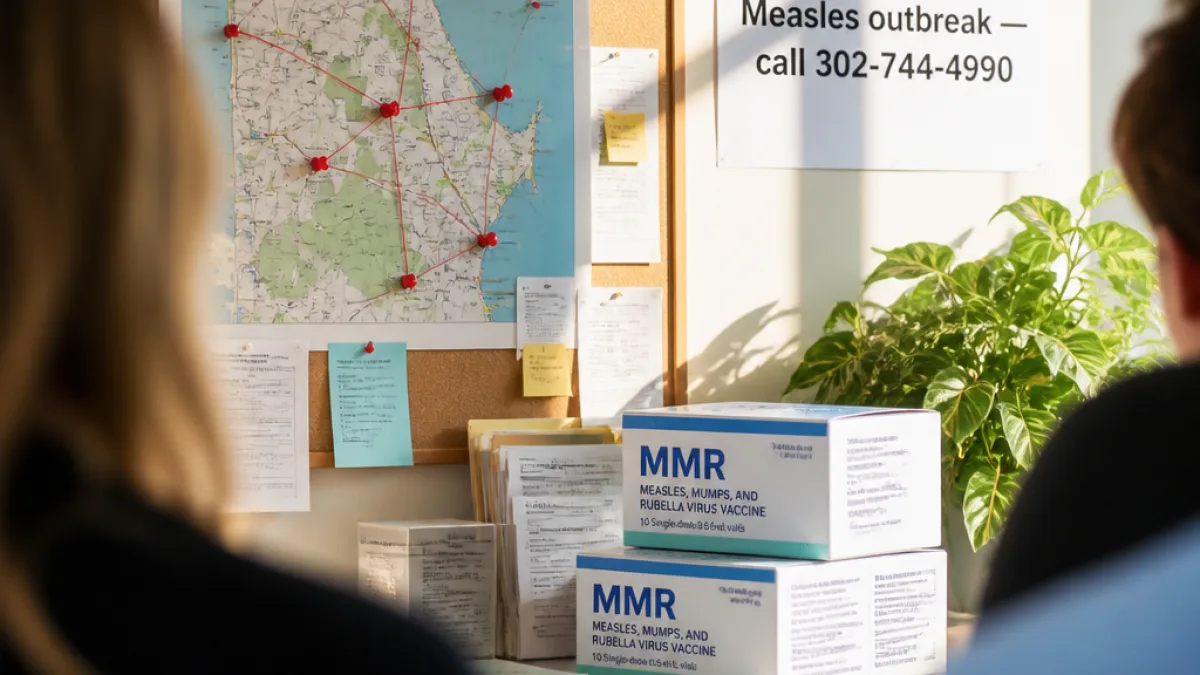
DOVER, Del. — Delaware health officials on Wednesday declared a measles outbreak after identifying four confirmed cases in Kent County, all involving unvaccinated adult men, the Delaware Division of Public Health said.
What officials know so far
State investigators said the four diagnoses are linked by time and place, meeting the federal standard for an outbreak. The Centers for Disease Control and Prevention considers three or more measles infections connected by time and location to be an outbreak.
Delaware Division of Public Health (DPH) officials are conducting extensive contact tracing to identify people who may have been exposed. At this time, authorities have not released any public locations tied to the infections; health officials told the public they will share more information if the investigation reveals exposure sites.
Who is most at risk and what to do
DPH emphasized that people who are unvaccinated, pregnant, immunocompromised or too young to receive the vaccine face the greatest risk of severe illness. Those who believe they may have been exposed should immediately contact a primary care provider or the state’s Office of Infectious Disease Epidemiology at 302-744-4990.
- Seek medical advice promptly if you are unvaccinated, pregnant, immunocompromised or a caregiver for someone in those groups.
- Check immunization records through the DelVAX Public Portal or with your health care provider if you are unsure of your status.
- People without evidence of immunity should consult a health care professional about receiving the MMR vaccine.
Vaccine effectiveness and schedule
Health officials reiterated that the measles, mumps and rubella vaccine is highly effective: two doses provide about 97% protection against measles for people who are not severely immunocompromised. The routine childhood schedule calls for a first dose at roughly 12 to 15 months of age and a second between 4 and 6 years of age.
| Data point | Detail |
|---|---|
| Confirmed cases | 4 (all unvaccinated adult men, Kent County) |
| Outbreak definition (CDC) | Three or more linked cases |
| MMR effectiveness | ~97% after two doses |
Symptoms and severity
Measles often begins with fever, cough, runny nose and red, watery eyes. Several days after those symptoms start, a characteristic rash typically appears, beginning on the face and spreading downward. The virus spreads easily through respiratory droplets and can lead to complications including pneumonia, encephalitis (brain inflammation) and death—especially among vulnerable patients.
Because symptoms can precede the rash, public-health officials say early recognition and rapid notification of health care providers are critical to limit spread.
Public-health response and next steps
DPH officials are reaching out to people identified through contact tracing to confirm vaccination status, provide guidance and recommend treatment where indicated. The agency urged Delawareans who are unsure of their immunity status to check records via the DelVAX Public Portal or contact their health care provider or local public-health clinic about vaccination.
The declaration marks the state’s first confirmed measles cases in more than a decade, public reporting shows, underscoring the continuing role routine immunization plays in preventing outbreaks. Officials said they will update the public with additional exposure information if investigators identify any locations where transmission may have occurred.
How Delawareans can prepare
Public-health experts advise residents to take a few practical steps: verify vaccination records, consult a medical professional if symptoms appear, and limit contact with high-risk individuals until clearance by a provider. Those with concerns about possible exposure can contact the state’s Office of Infectious Disease Epidemiology at 302-744-4990.
The DPH message to residents is direct: maintaining high vaccination coverage remains the best tool to prevent measles from gaining a foothold. As the investigation continues in Kent County, state authorities will monitor the situation and share new findings publicly.