Veto stands after lack of quorum at special Wilmington council meeting
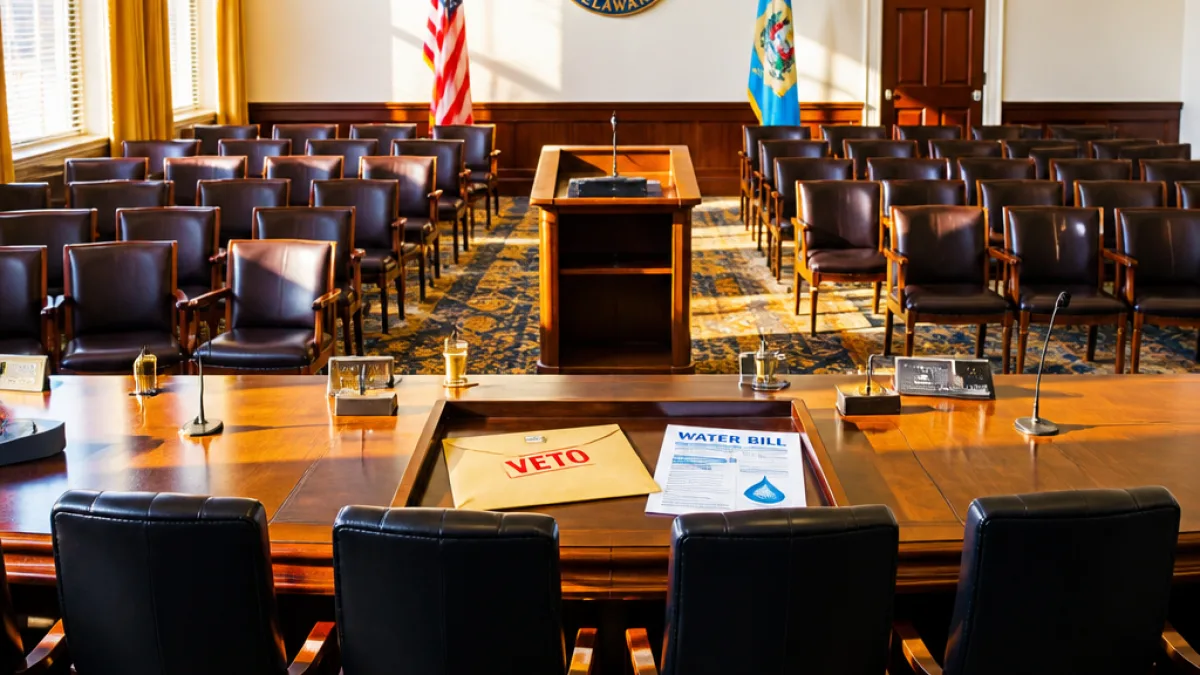
Wilmington’s effort to bar certain water shut-offs stalled Thursday when only five City Council members attended a special meeting to consider overriding Mayor John Carney’s veto. With no enacting vote possible, the mayor’s veto of an ordinance intended to protect vulnerable households remains in effect.
The ordinance, sponsored by Council member Shané Darby, would have prohibited the city from disconnecting water for customers who live at or below 350% of the federal poverty level if they also had a resident older than 65, younger than 5 or living with a disability. The protections came as the city implemented a 7% across-the-board water rate increase.
"If we can ask families to pay more every year, then we have a responsibility to to ensure that our most vulnerable residents are not left without running water when they fall on hard times,"
Darby offered that statement at a press conference on Aug. 5 to underline the ordinance’s intent to shield vulnerable customers without excusing them from payment obligations.
Attendance, procedure and next steps
Only five council members — Shané Darby, Christian Willauer, Coby Owens, Alex Hackett and Council President Ernest ‘Trippi’ Congo — were present at the Aug. 6 meeting. Congo reported that eight members had asked to be excused: James Spadola, Nathan Field, Latisha Bracy, Maria Cabrera, Zanthia Oliver, Yolanda McCoy and Michelle Harlee. Because the meeting lacked the quorum required for an override vote, it dissolved into a Committee of the Whole session where public comment continued but no binding votes could be taken.
| Item | Details |
|---|---|
| Council members present | 5 |
| Council members absent/excused | 8 |
| Key protections in ordinance | Customers ≤350% FPL with someone ≥65, ≤5 or disabled |
| Recent water rate change | 7% increase |
Mayor’s rationale and fiscal concerns
Mayor Carney’s veto letter argued that current guardrails against disconnections are adequate and warned that adding the proposed restriction could remove leverage the city uses to collect overdue bills. The city's Office of Management and Budget attached a fiscal note to the legislation indicating the potential for significant revenue losses if households stopped paying their water bills, estimating a range from hundreds of thousands to millions of dollars.
The fiscal projection underscores a core tension: balancing consumer protections for vulnerable residents against the utility’s need to collect revenue to maintain service and infrastructure. City officials must weigh the immediate public-health risks of shut-offs against long-term budgetary impacts that could affect the utility system as a whole.
Local consequences and broader implications
For Wilmington residents facing rising costs, the episode highlights several practical and political consequences:
- Households that fall behind on bills and meet the specified vulnerability criteria remain at risk of having water service disconnected under current city policy.
- The potential revenue shortfall outlined in the fiscal note could lead to reduced service or future rate adjustments if nonpayment increases.
- Political dynamics on the seven-member council — including absences that prevented a vote — will shape whether similar protections resurface and how they’re structured.
Advocates for the ordinance framed it as a targeted safety net to protect those most at risk of public-health harms from loss of water. Opponents, including the mayor, framed it as a constraint that could weaken the city’s ability to collect delinquent accounts and preserve utility operations.
With the veto intact, any revival of the proposal will require a future vote with sufficient attendance to override the mayor or a new measure that addresses fiscal concerns raised by city budget staff. The dispute adds Delaware’s largest city to a growing national conversation about utility affordability, the role of municipal safeguards for vulnerable residents, and how cities reconcile customer protections with fiscal stability.
City Council members and the mayor’s office did not announce a timeline for further action by the end of the meeting; public comment continued during the Committee of the Whole session but no final outcome was reached.