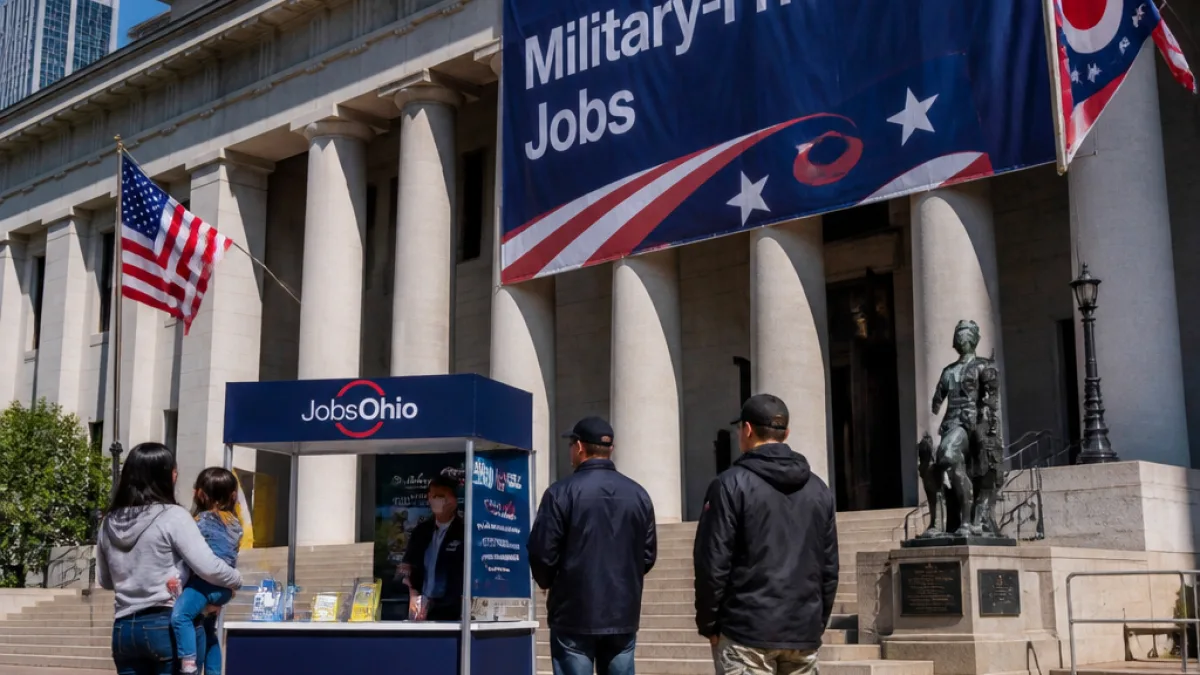
Ohio is mounting a concerted effort to claim the title of the nation’s most military-friendly state, using economic development tools and new policies aimed at attracting jobs and supporting service members, veterans and their families. But what will it take to transform that ambition into measurable benefit for the people who live here?
JobsOhio leads private-sector push
JobsOhio, the state’s private economic development arm, is central to the campaign, according to the organization’s president and CEO, JP Nauseef. The agency is coordinating with business leaders, community organizations and lawmakers to shape recruitment strategies and incentives that prioritize military households.
“People in Ohio value military service,” JP Nauseef said in an interview with Military.com. “One of the other things that we value here is strong communities, and when military members are deployed, good community members take care of those families who stay behind.”
The initiative builds on Ohio’s recent rise in business rankings: CNBC named Ohio the nation’s number one state for business, up from 15th in 2022. State leaders are pitching that business climate alongside workforce advantages rooted in the military community.
How large is Ohio’s military community?
The scale of the constituency the state hopes to serve is substantial: about 46,000 active-duty, National Guard and reserve personnel live in Ohio, and more than 680,000 veterans call the state home, according to Military OneSource figures cited by Military.com.
| Group | Approximate number |
|---|---|
| Active-duty, Guard, Reserve | 46,000 |
| Veterans | 680,000+ |
Policy changes and business strategies
State legislators have approved policies and programs intended to make it easier for veterans and military families to work in Ohio. Lawmakers and JobsOhio officials describe measures that streamline workforce entry — including expedited credential recognition and training for military spouses — as central to the plan. The specific bills and program details were not enumerated in the interview material but are shaping the state’s economic development pitch to employers.
- Target workforce: veterans and military-affiliated households.
- Tools: incentives, training, credential transfer policies.
- Goal: attract private investment with a military-first hiring message.
Why businesses care
Employers routinely rank veterans highly for their discipline and training, and state officials say that reputation makes Ohio attractive to companies looking for a reliable talent pipeline. JobsOhio is marketing those workforce credentials to recruiters and corporations, arguing that a focus on military hiring can both meet employer needs and strengthen communities that host service members and their families.
What remains unclear
Promises to become the country’s most military-friendly state raise questions about how success will be measured. Will progress be counted by job placements, retention rates for military spouses, faster license transfers, statewide wage gains for veterans or a mix of metrics? Officials tout broad gains in business climate and workforce development, but concrete benchmarks and timelines were not detailed in the available reporting.
That absence matters to veterans and families deciding whether to relocate, employers weighing investment, and communities planning services. If the state expects businesses to take a military-first approach, stakeholders will want clear data showing results.
Next steps and local impact
State leaders and JobsOhio say they will continue recruiting businesses with targeted outreach and policy incentives. For active-duty service members, veterans and spouses, the immediate impacts could include faster pathways to civilian employment and more employers actively seeking their skills. For communities, the strategy aims to pair economic growth with supports for military families left behind during deployments.
Ohio’s bid to top the nation on military friendliness is underway. The question now is whether the effort will translate into measurable gains for the roughly 726,000 military-connected Ohioans whose careers and communities the strategy aims to serve.