When Tennessee lawmakers moved this year to prevent households from shouldering the cost of increasingly voracious data centers, they framed the measure as a simple protection for ordinary electric customers. Yet the law’s narrow language leaves a significant opening that critics say could saddle nearby neighborhoods with pollution and noise while sidestepping local review.
What the law does
The new statute requires data centers with power demands of at least 50 megawatts to fund the electrical grid upgrades needed to serve them, reversing a practice that sometimes allowed utilities to spread those upgrade costs across all ratepayers. The change follows Gov. Bill Lee signing a broader, voluntary White House initiative that sought to ensure companies — not households — bear the cost of major data center infrastructure.
Sen. Brent Taylor, a Shelby County Republican who sponsored the bill in the Senate, said the measure was intended to keep ordinary customers from seeing increases on their electric bills. Proponents argue that as data centers grow — especially those supporting artificial intelligence and cloud computing — the demand on local grids has ballooned, and utilities should not automatically shift the financial burden to residential consumers.
Where the loophole is
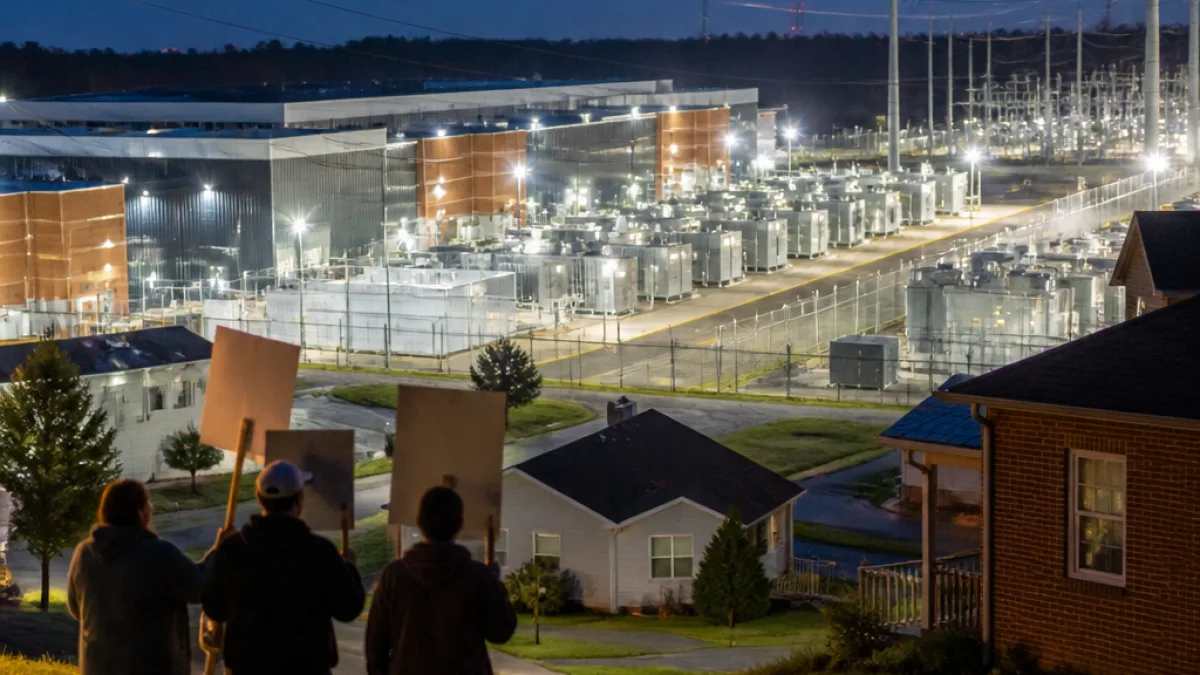
Despite that intent, the law includes an important carveout: it does not require review for on-site power generation. That exemption allows data centers to install and operate equipment such as gas-powered turbines without the same oversight state or local authorities might otherwise apply. Environmental groups and community coalitions warn the exception could mean increased air pollution, continuous noise, and limited local control for communities that host the facilities.
"America's continued economic and technological leadership depends on reliable, large-scale data center infrastructure built here at home,"
The quotation above appears in the voluntary White House pledge joined by Gov. Bill Lee and 22 other Republican governors emphasizing the role of data centers in national economic strategy. But critics say the pledge and Tennessee’s law stop short of guaranteeing protections for neighbors or the environment.
Concerns from communities and advocates
Opponents caution that allowing unreviewed on-site generation could recreate the very harms the rule seeks to avoid. Gas turbines used for on-site power can emit particulate matter, nitrogen oxides and other pollutants; they also operate loudly when run as backup or supplemental generation. Community groups have said such impacts often fall hardest on lower-income neighborhoods and communities of color that host industrial or utility infrastructure.
At the same time, supporters say data centers are vital to Tennessee’s economic future — a point underscored by the federal pledge language. The tension is between attracting high-tech investment and protecting public health and municipal prerogatives.
What remains unresolved
Under the law as written, utilities may still help fund upgrades if the improvements benefit other customers or meet existing rules for large energy users. That leaves room for negotiated outcomes and utility discretion. It also means that some ratepayer support for infrastructure is still possible when broader public benefit can be demonstrated.
- 50 megawatts — threshold at which data centers must pay for grid upgrades.
- On-site generation exemption — allows gas-powered equipment to operate without state or local review.
- Voluntary pledge participation — Gov. Bill Lee joined 22 governors in a White House pledge favoring private cost-bearing for data center infrastructure.
What residents should know
For communities where data centers may be proposed, the exemption means local officials and residents should ask detailed questions about backup power plans, emissions controls and noise mitigation. Because the law allows some flexibility when upgrades provide broader benefits, municipal leaders may still negotiate conditions or seek agreements tied to community protections when facilities are proposed.
| Issue | What the law requires |
|---|---|
| Grid upgrades | Data centers ≥ 50 MW must pay for necessary upgrades |
| On-site power | Exempt from state or local review, including gas turbines |
| Utility cost-sharing | Allowed if upgrades also benefit other customers or use existing large-user rules |
The debate unfolding in Tennessee mirrors a national conversation: how to balance the economic promise of large-scale digital infrastructure with environmental protection, public health and local control. As data centers become ever more central to cloud services and AI, the stakes for neighborhoods, utilities and regulators will only grow.
For now, the law marks a shift in who pays the electric bill for grid expansion — but the on-site generation exception leaves open a second set of consequences that residents and local leaders will have to manage in the years ahead.