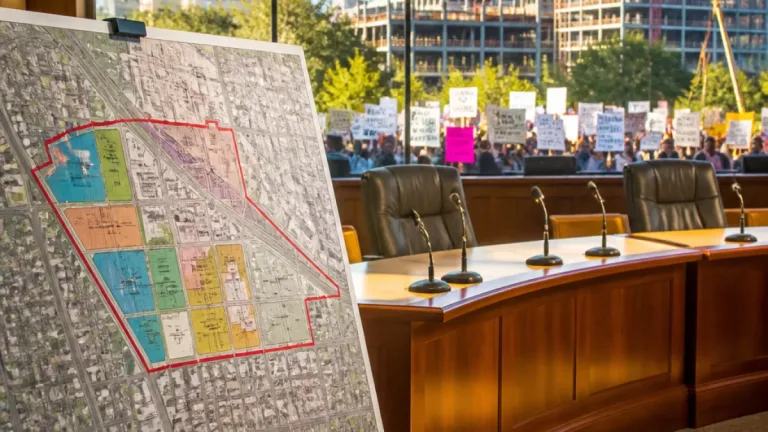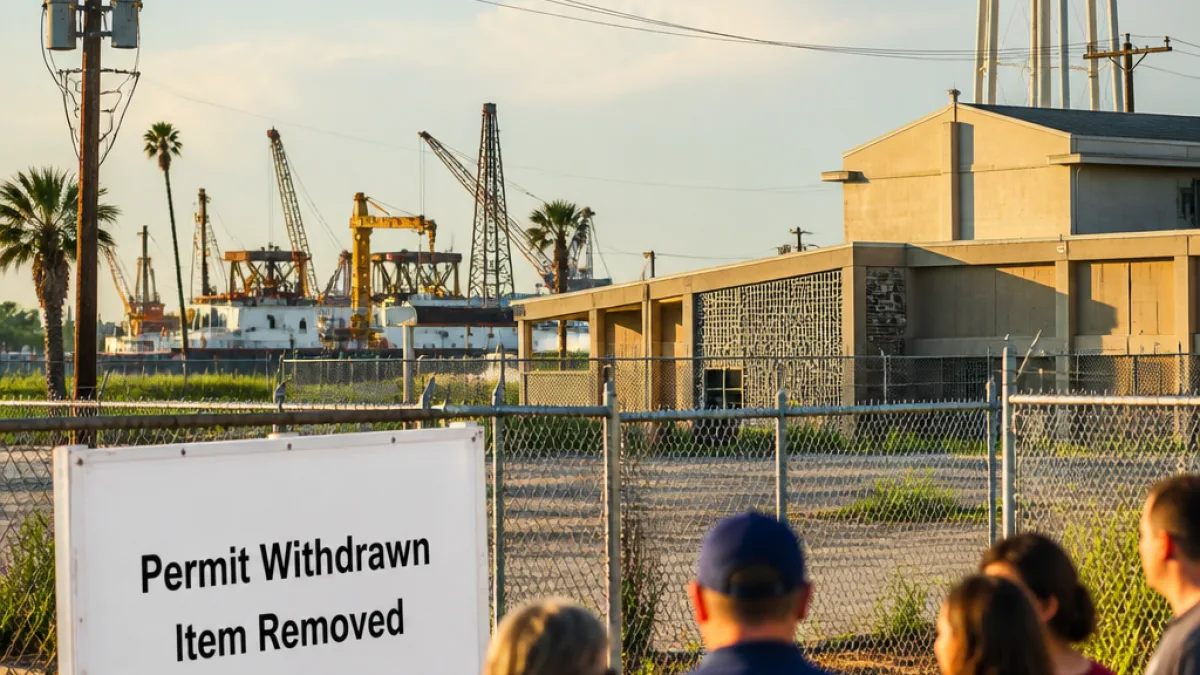
Brownsville officials announced this week that an application to convert a former Southwest Key facility on Padre Island Highway into a data center has been withdrawn from the upcoming planning and zoning agenda, while the city crafts a policy to guide similar proposals.
Applicant withdraws; item removed from agenda
The city posted on social media that the permit request was pulled, and "as a result, the item has been canceled and will not be presented, discussed, or considered by the commission." The application sought a special use permit to repurpose the building near the Port of Brownsville; the identity of the company was not disclosed in initial reports.
Neighbors raise concerns about local impacts
Residents in the surrounding neighborhood had already voiced opposition. Longtime area resident Hugo Izaguirre, whose family has lived locally for generations, said he is opposed to locating a data center near homes.
"I absolutely hate the idea of a data center being here," Izaguirre said. "They're rife with pollution, the rising cost of water, the cost of electricity — all of those things are things that will be pushed back up to us."
Those concerns mirror broader worries about how large computing facilities can affect municipal services and utility rates, particularly in places that are still building out infrastructure.
City leaders want clear rules before more proposals arrive
Brownsville City Commissioner at-large Nurith Galonsky told reporters the city intends to adopt a formal policy on data centers before future projects move forward. She said the policy could address how much water and electricity a facility may require and whether a data center should be self-sufficient. Commissioners also want to consider appropriate distances between such facilities and residential neighborhoods.
"The city has decided that we want to create and adopt a policy on data centers as more and more data centers are looking to be created throughout the county," Galonsky said. "This could be a few months, and even then I personally — and I'm sure my peers will also probably review this policy on a regular basis..."
What this means for Brownsville
For residents, the withdrawal buys time. The city now has a window to develop standards specific to Brownsville's needs — from resource allocation to siting rules — rather than handling each proposal on an ad hoc basis. That approach could create clearer expectations for companies interested in locating data infrastructure here and for residents who live nearby.
For elected officials, the work will require balancing economic development opportunities with concerns about environmental effects, utility capacity and community quality of life. Galonsky framed the effort as iterative, saying commissioners may revisit the policy regularly as the city gains experience with data centers.
Stakeholders and next steps
The immediate next steps are procedural: the specific permit request will not be discussed at the planning and zoning commission while the applicant has withdrawn it. Separately, city staff and commissioners will begin or continue drafting policy guidance for data centers.
- Residents: Concerned about pollution, water and electric costs.
- City Commission: Seeking to set requirements on resources, self-sufficiency and siting.
- Applicant: Withdrew special use permit request; identity not disclosed in initial reports.
| Issue | Raised by |
|---|---|
| Water and electricity demand | Commissioner Galonsky, residents |
| Proximity to neighborhoods | Commissioner Galonsky, Hugo Izaguirre |
| Policy development timeline | City Commission (ongoing; "a few months") |
The city did not provide immediate responses to interview requests the week the permit was first announced; Channel 5 reported that initial interview requests went unanswered for more than a week. That delay and the eventual withdrawal underline two realities: residents want a say, and city leaders want guidelines before more proposals arrive.
Brownsville's location and available industrial space make it a point of interest for infrastructure projects. How the city writes its policy will shape which types of data center proposals are feasible here — and how neighborhood concerns are handled — for years to come.
Details on the policy drafting process, public meetings and opportunities for comment have not yet been released. Residents watching the issue can expect the commission to discuss parameters and timelines publicly as they work toward an ordinance or formal guidance.