
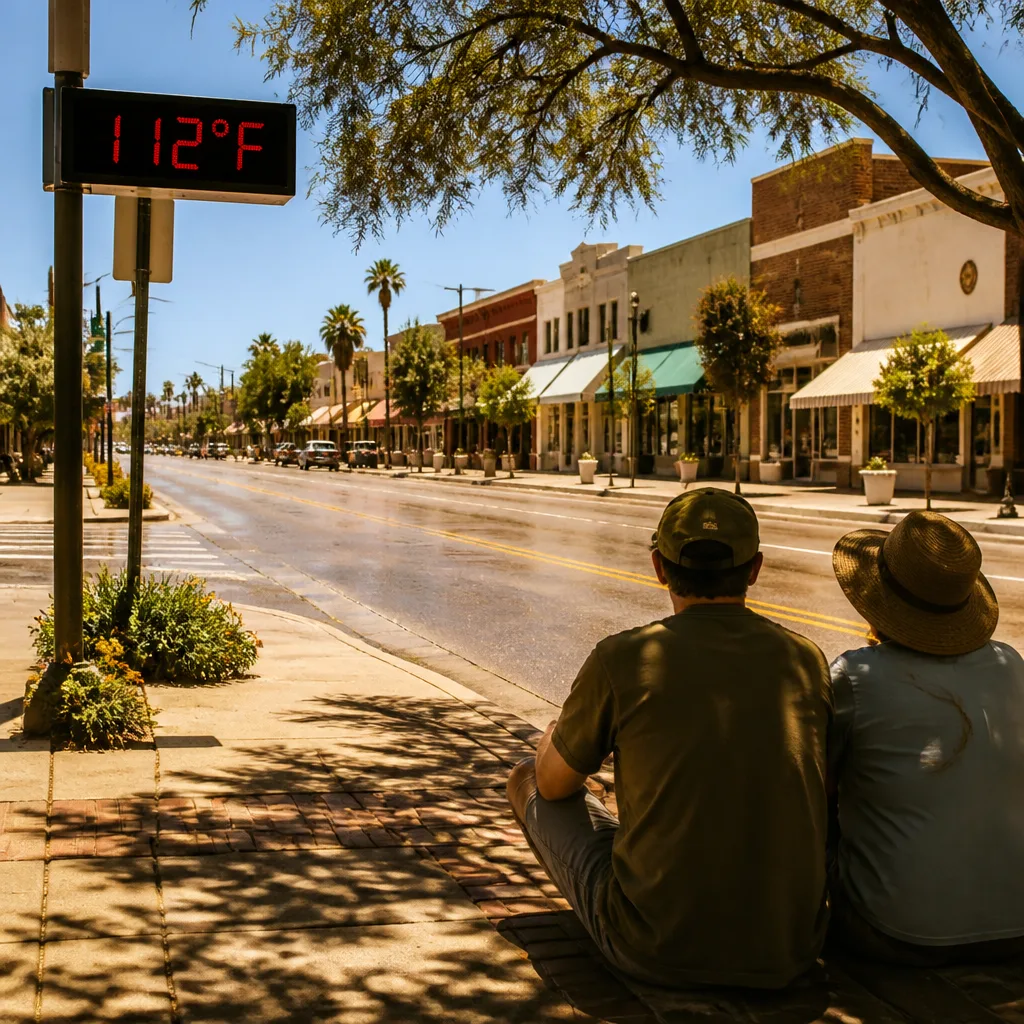
The central and southern United States remained under a broad, dangerous heat dome Sunday, with at least 40 million people covered by extreme-heat warnings as blistering temperatures and oppressive humidity stretched from Minnesota to Mississippi and into parts of the West.
Widespread warnings, localized records
Forecasters said the heat index — what it feels like when humidity is combined with the air temperature — exceeded 100 degrees Fahrenheit across large swaths of the country. Portions of the Southwest were forecast to reach extremes near 120 F, while Rapid City, South Dakota, reported an all-time high of 112 F on Saturday.
- At least 40 million people were under extreme-heat warnings.
- Heat indexes topped 100 F from Minnesota down to Mississippi.
- Parts of the Southwest faced readings approaching 120 F.
National Weather Service meteorologists described the pattern as a classic heat dome, in which persistent high pressure traps hot air near the surface and boosts overnight lows as well as daytime highs, prolonging dangerous conditions.
Vulnerable populations feel the strain
Across the affected region, service providers and local officials scrambled to reach people most at risk. Outreach teams in Omaha, Nebraska, handed out water and urged those without cooling options to seek shelter. Homeless service staffers reported widespread exhaustion and dehydration among people living outdoors or in poorly ventilated spaces.
“We’re seeing a lot of people who are exhausted, drained by the heat in a way that is really dangerous,” said Pete Miller, an outreach manager for the Threshold CoC homeless services network in Omaha.
Meteorologists warned that the combination of heat and humidity made even brief outdoor exposure hazardous for children, older adults and anyone with underlying health conditions. Cooling centers and hydration outreach were emphasized as key local responses.
Secondary hazards and impacts
Forecasters also cautioned that the heat dome’s dynamics were producing instability around its periphery, raising the risk of severe thunderstorms, flash flooding and hail, particularly around the Great Lakes in the coming days. That volatility could shift eastward, bringing a mix of risks to communities already coping with high temperatures.
“Right now, it’s affecting a lot of people right in the middle of the country,” said Bob Oravec, a National Weather Service meteorologist. “The core of the heat sinks southward by early next week.”
Officials advised short-term protective measures including staying hydrated, avoiding strenuous outdoor activity during the hottest hours, checking on neighbors and using air-conditioned public spaces when possible. Temperatures were expected to ease in the central U.S. by midweek, though forecasters cautioned that high heat could return by the weekend.
| Metric | Reported |
|---|---|
| People under extreme-heat warnings | 40 million |
| Heat index range (central U.S.) | 100 F+ |
| Highest reported single-day reading | 112 F (Rapid City, S.D.) |
Communities from the Plains to the Gulf Coast are balancing immediate public-health needs with concerns about longer-term trends as heat events grow more frequent and intense. For now, emergency officials and relief organizations are focused on cooling, hydration and protecting those who have the least access to safe shelter or reliable cooling.
As the heat dome slowly shifts, residents were urged to monitor local forecasts and heed advisories from the National Weather Service and local public-health authorities.