A Spokane County detective says the man charged with starting one of the wildfires that has devastated the Spokane area admitted he planned the blaze for about two weeks, researched weather conditions and constructed a simple time-delay ignition device using household materials.
How the suspect told investigators he planned the fire
Detective Michael Drapeau wrote in a court filing that Aaron Farinacci described a deliberate process: checking forecasts to find a day of high winds, low humidity and heat, studying the history of a well-known serial arsonist and buying items to make a device that would start a fire after a delay.
According to the filing, Farinacci picked Saturday, Aug. 1, knowing winds could reach about 50 mph (80 kph). He told the detective he intended the fire to grow but not to the scale that ultimately occurred.
What investigators say the device was
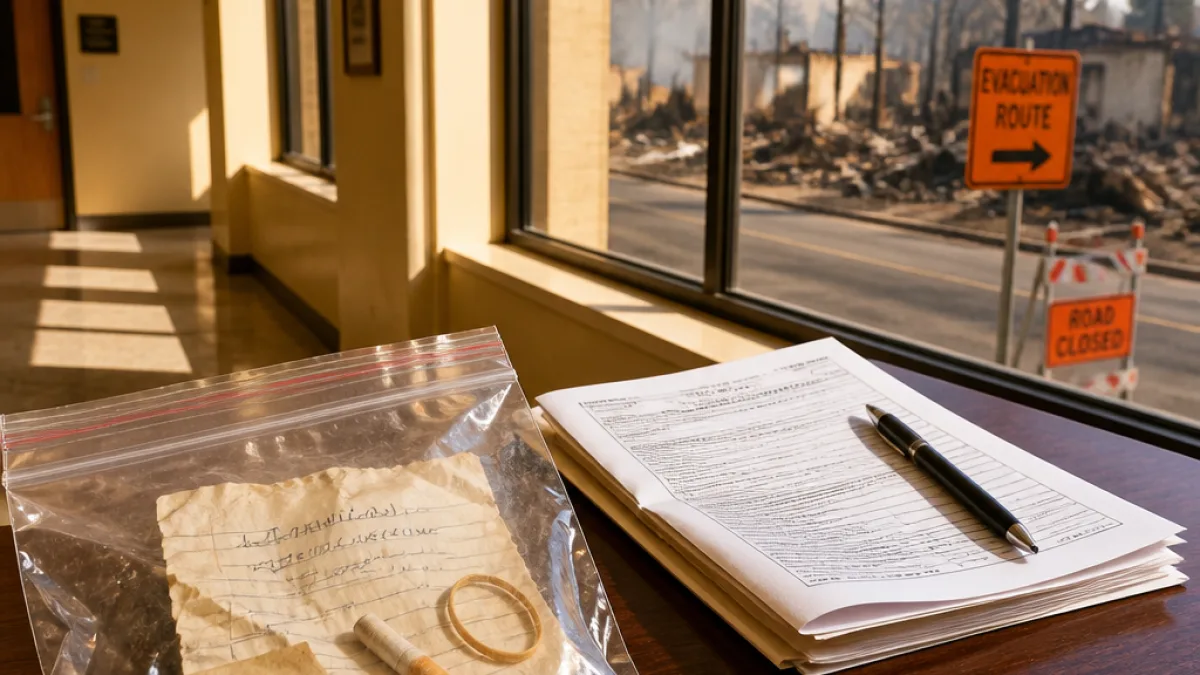
The court filing outlines the materials and method Farinacci reportedly used. He assembled what the detective described as a "time delay device" from:
- notebook paper
- matches
- a cigarette
- a rubber band
Detective Drapeau wrote that Farinacci ignited the constructed device with a cigarette in dried grass, then left the scene and headed for the street after running from nearby tracks. The filing quotes Farinacci saying that he finds "fire is powerful, beautiful, and that things that go through fire experience a kind of rebirth."
"Fire is powerful, beautiful, and that things that go through fire experience a kind of rebirth."
Scale and local impact of the fires
The Old Trails blaze that Farinacci is accused of starting is one of three wildfires burning in the Spokane area. Collectively, those fires have caused widespread destruction: more than 850 homes have burned and tens of thousands of people were ordered to evacuate their neighborhoods, according to court filings and emergency reports cited in the detective's statement.
Authorities have not suggested the suspect acted to target any particular people or property; the filing says he acknowledged the fire would be large but asserted he did not intend the catastrophic growth it reached.
Criminal process and public safety questions
Farinacci is charged with arson and was scheduled to appear in court on Thursday. The detective's filing is part of the prosecutorial record and will be used in pretrial proceedings and any determination about bail or further charges.
Beyond the criminal case, the filing raises questions law enforcement and fire officials will face about prevention and detection. Arson investigations in wildland and urban-interface fires are complex, typically relying on interviews, physical evidence and reconstruction of burn patterns. When suspects describe specific planning steps and materials, it can accelerate investigators' ability to link a person to ignition sources.
Local fire agencies, meanwhile, must balance immediate suppression and recovery with public education about risks in the wildland-urban interface — where homes border flammable vegetation — and the need to secure potential ignition materials during high-risk weather.
Practical context for residents
For Spokane-area residents trying to understand how a simple device can become a catastrophic wildfire, the elements are straightforward: dry fuels, strong winds and a sustained ignition. Small, smoldering starts in dry grass or leaf litter can spread quickly under gusty conditions. Fire officials repeatedly warn that under such conditions, even a brief ignition can escalate beyond control.
The court filing provides specific details about the materials claimed to have been used in this case, and those specifics underscore how ordinary items can present severe hazards during extreme fire weather.
Next steps
As the criminal case proceeds, investigators will continue to gather evidence to corroborate the confession and the physical mechanics of ignition. Meanwhile, recovery and firefighting efforts continue in affected neighborhoods as officials account for property losses and displaced residents.
| Known facts | Detail |
|---|---|
| Date alleged fire started | Aug. 1 |
| Wind reported | ~50 mph (80 kph) |
| Homes reported burned | More than 850 |
| Evacuations | Tens of thousands |
Authorities have not released additional details about motives beyond the statements in the detective's filing. Prosecutors will weigh the available evidence as the case moves forward; any trial would aim to establish the facts of planning, ignition and responsibility for the resulting damage.
The filing attached to the arson charge provides a window into both how a small, improvised ignition can trigger a major wildfire and how investigators build a prosecutable case when suspects describe their own actions. For the thousands displaced and homeowners assessing losses, those procedural details may offer limited comfort while long-term recovery begins.