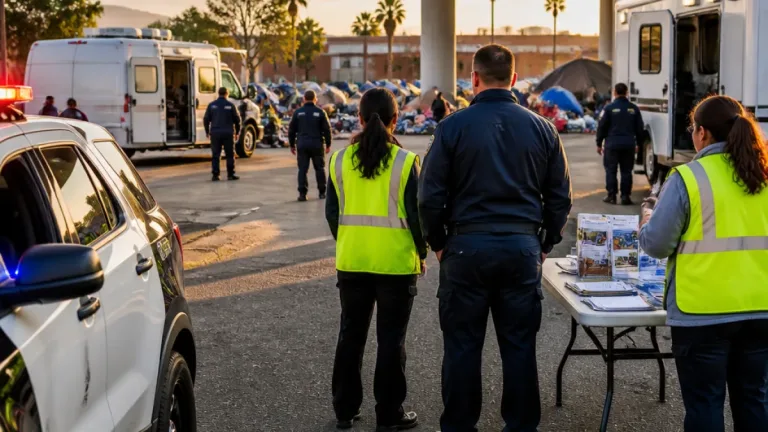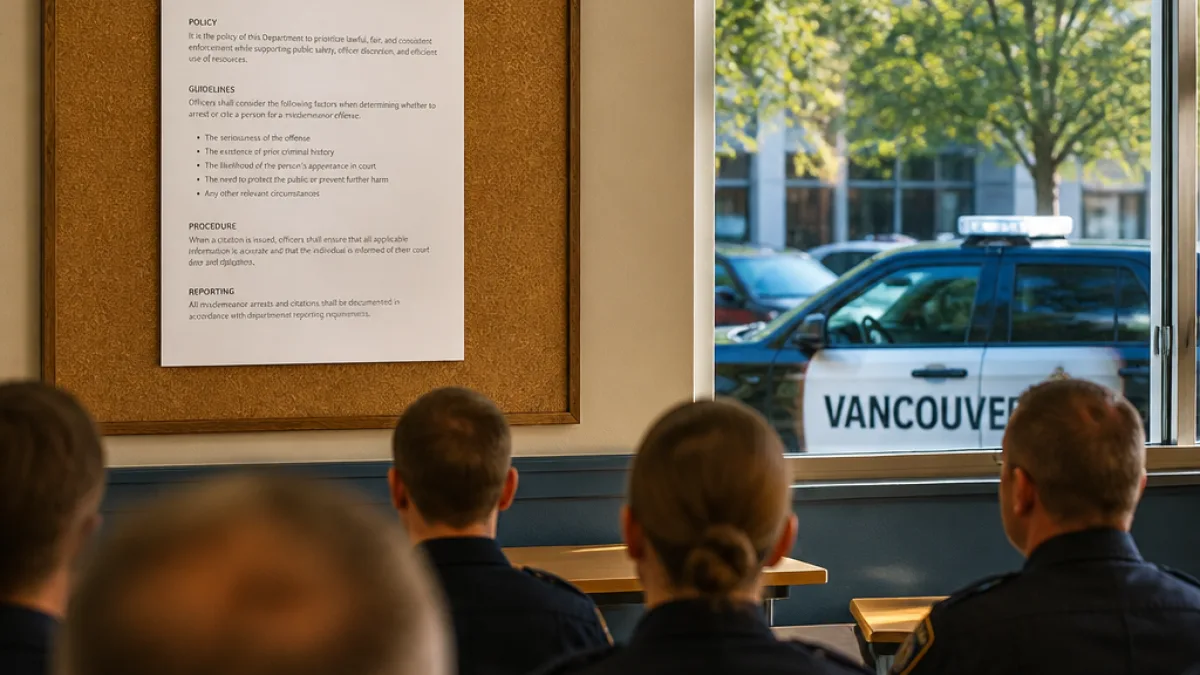
The Vancouver Police Department has been instructed not to arrest people suspected of lower-level misdemeanors and instead to refer those cases to the City Attorney, according to an internal memo from Chief Troy Price obtained by The Columbian. The change follows a Washington State Supreme Court decision that establishes limits on public defense caseloads and is already reshaping how local criminal cases enter the system.
What changed and why it matters
The Supreme Court's action places new caps on the number of cases assigned to public defenders. Local officials say the policy has immediate operational consequences: without enough attorneys to represent indigent defendants, prosecutors and courts face a backlog and counties are struggling to staff open positions.
- Operational shift: Officers must refer lower-level incidents — such as many theft, traffic and drug-use cases — to the City Attorney rather than arresting suspects on the spot.
- Supervisor review: Arrests remain possible in exceptional circumstances but require authorization from a supervisor.
- Resource constraint: Local leaders and associations warn the new standards effectively increase the number of public defenders required.
“The proposed standards would have the effect of effectively tripling the number of attorneys needed to handle public defense cases in Washington,”
Deanna Dawson of the Association of Washington Cities made that observation while responding to the court’s standards. Derek Young with the Washington State Association of Counties told the state supreme court that counties were already having difficulty filling deputy prosecutor and public defender jobs.
Practical effects for Vancouver residents and police
For residents, the immediate consequence will be fewer on-scene arrests for low-level offenses. Instead, people suspected of minor crimes will be routed through an administrative or charging review by the City Attorney's office. For officers, this shifts workload from arrest processing and jail booking toward report writing and documentation that supports referral decisions.
| Area | Likely impact |
|---|---|
| Street-level policing | Fewer arrests for minor theft, traffic and low-level drug use |
| Prosecutorial intake | More referrals to the City Attorney for charging decisions |
| Public defense | Increased demand for attorneys if cases proceed to court |
The memo has drawn pushback from the Vancouver Police Union, which objects to officers being prevented from making arrests in situations they believe constitute crimes. That tension underscores a broader system problem: the court’s attempt to ensure constitutionally adequate representation collides with local staffing shortages and the practical mechanics of criminal processing.
How long this interim practice will last depends on several variables: whether additional public defenders are hired, whether prosecutors and the City Attorney alter charging practices, and whether courts or the Legislature change funding or staffing rules. For now, residents should expect a noticeable decline in on-scene arrests for lower-level offenses and an increase in cases handled administratively by the City Attorney.