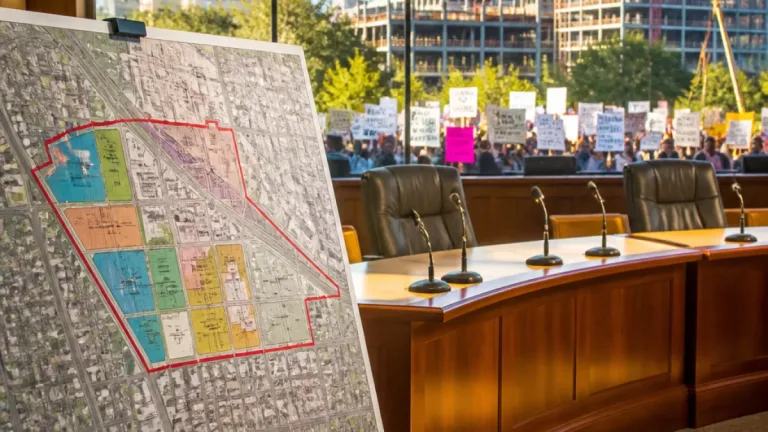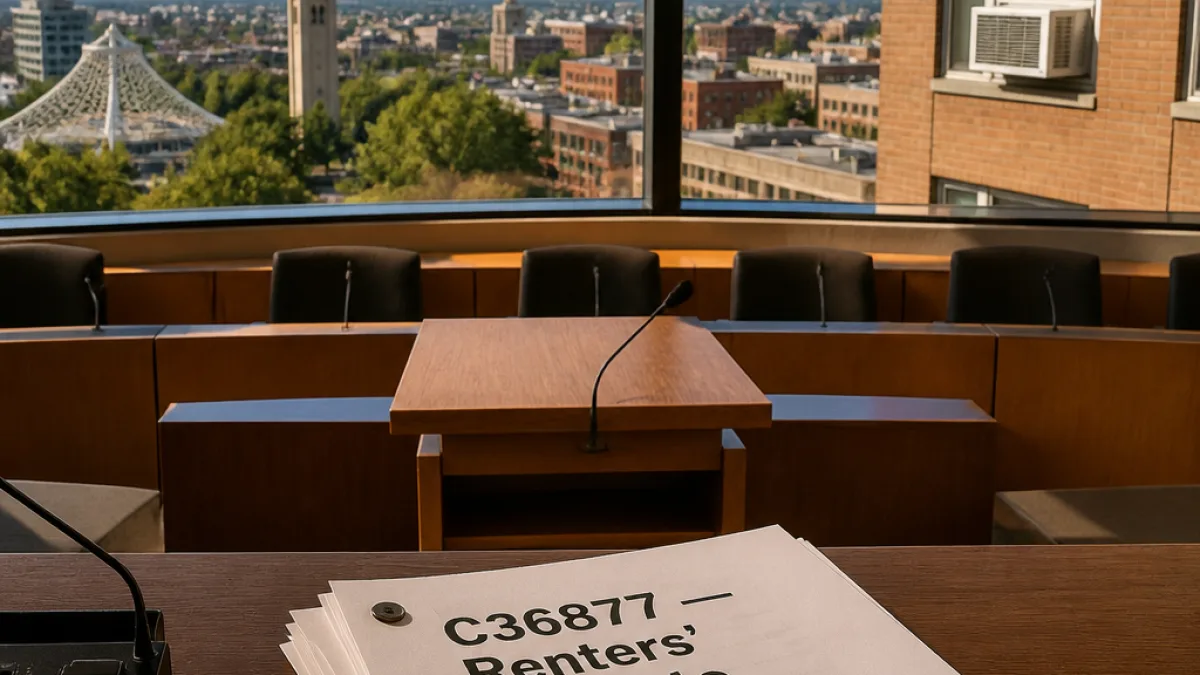
On Wednesday night the Spokane City Council advanced a citywide rewrite of tenant protections relating to extreme heat, voting 5-2 to adopt ordinance C36877, known as the “Renters’ Right to Cooling.” The measure establishes adequate cooling as a basic right for tenants in rental housing and expands on state law that required landlords to accommodate portable cooling devices.
What the ordinance requires
As adopted, the ordinance defines adequate cooling as cooling sufficient to prevent risks to tenant health and mandates that every rental dwelling have adequate cooling in at least one room. It also creates new tenant remedies and compliance pathways for landlords and city officials.
- Tenants may terminate their rental agreements if dwellings do not provide adequate cooling.
- Tenants may arrange for the installation of cooling equipment and deduct the installation cost from rent up to $500, with that deductible indexed annually in July to the Consumer Price Index (CPI).
- Dwellings lacking adequate cooling are deemed defective and subject to enforcement remedies by local officials.
- All new construction permitted after Jan. 1, 2027, must include cooling equipment.
Enforcement, exceptions and local implementation
The ordinance gives city officials discretion to grant extensions to comply in specific circumstances, including when providing cooling would pose an undue hardship, require major electrical upgrades, or when the property is an historic building. It encourages partnerships between the City and energy providers to identify tenants vulnerable to extreme heat and to supply cooling devices and other forms of relief. Landlords are also required to provide notices to tenants about their rights under the ordinance.
“Everyone, regardless of their income or housing status, deserves shelter from the elements, including extreme heat,” Council Member Sarah Dixit said during the council meeting.
The council amended the ordinance several times after receiving community input and public testimony. Amendments addressed implementation details, though the adopted ordinance retains the core requirements and tenant remedies described above.
How this changes the system
For tenants, the ordinance formalizes a course of action beyond petitioning for a portable air conditioner: it creates a legal basis to end tenancy, pay for installation and recoup costs up to a capped amount, and to rely on city enforcement if dwellings are not compliant. For landlords and property managers, it imposes affirmative obligations to ensure the habitability standard includes protection from heat-related health risks and to provide notice of tenant rights.
For the city and partner agencies, the ordinance creates an operational task list: define enforcement procedures; manage requests for hardship extensions; coordinate with energy providers to identify and assist vulnerable tenants; and track compliance for new permits issued after Jan. 1, 2027. These are changes that require cross-department collaboration, budget and staffing decisions, and an outreach effort to inform both tenants and landlords about the new rules.
| Requirement | Detail |
|---|---|
| Adequate cooling | Cooling sufficient to prevent tenant health risks; at least one room per dwelling |
| Tenant remedy | Terminate lease or install equipment and deduct up to $500 (CPI-adjusted annually) |
| New construction | Cooling equipment required for permits issued after Jan. 1, 2027 |
The ordinance names climate justice partners — including the Gonzaga Climate Institute — as collaborators in the development and advocacy of the measure. That partnership indicates a policy approach that ties public health, housing and climate resilience together.
With the 5-2 vote, Spokane joins a growing list of localities formalizing heat protections as part of habitability standards. The immediate next steps will be administrative: publishing clear guidance for tenants and landlords, setting up enforcement channels, and coordinating outreach so residents understand the new rights and responsibilities created by ordinance C36877.
City communications identified the ordinance as an expansion of existing state law and emphasized its goal of protecting residents during extreme heat events without sacrificing attention to implementation details for historically or structurally constrained buildings.