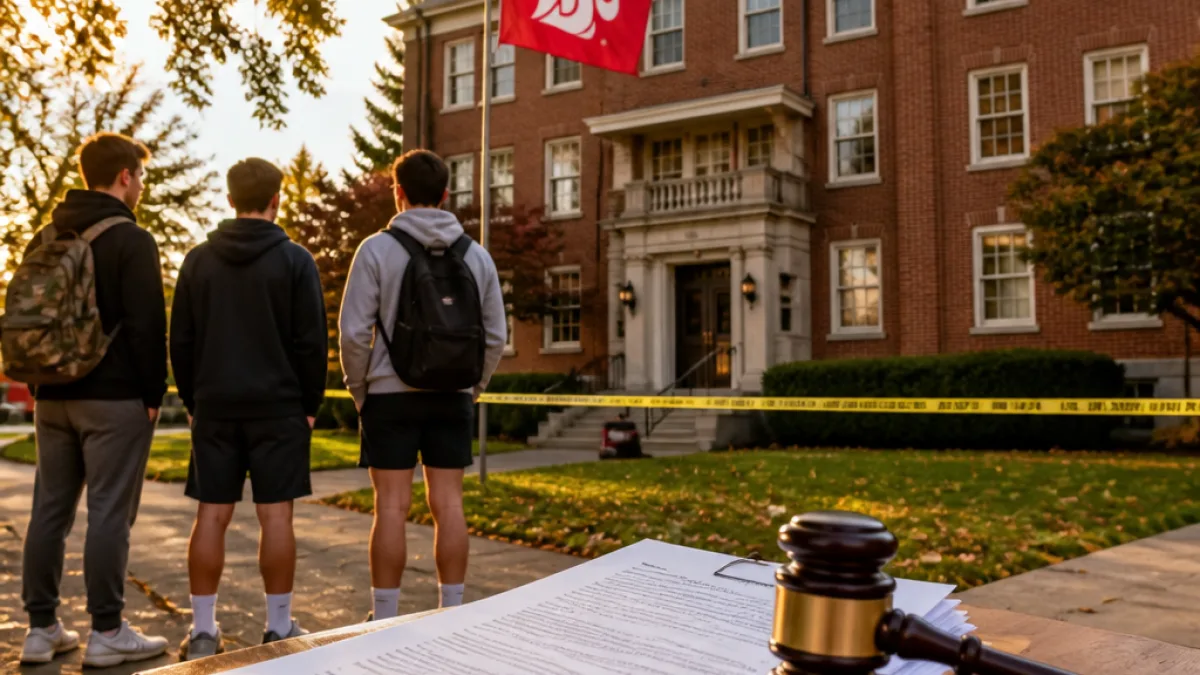
The Washington Supreme Court on Thursday ruled that Washington State University had a legal duty to protect Sam Martinez, the 19-year-old Bellevue freshman who died of alcohol poisoning during a fraternity hazing ritual in 2019. The closely divided 5-4 decision means the family’s wrongful-death lawsuit may go to trial, preserving the appeals court finding that the university can be held accountable for harms flowing from its recognized student organizations.
What the court found
By upholding the 2025 ruling from the Washington Court of Appeals, Division 1, the Supreme Court agreed that WSU’s relationship with its recognized fraternal organizations created a special relationship that gave rise to a duty to use reasonable care in supervising those organizations. The appeals court wrote that because of that special relationship, WSU "owed a duty to use reasonable care to control the fraternity and protect Sam from the foreseeable harms of fraternal hazing and alcohol misuse." The Supreme Court’s majority adopted that reasoning, allowing the family’s claim to proceed.
That ruling reverses the earlier 2022 King County Superior Court decision dismissing the case on grounds that the university did not owe Martinez a duty of care.
Immediate reactions and next steps
WSU issued a statement saying the decision does not determine the final outcome. The university said it "respects the judicial process and will continue to engage responsibly and thoughtfully as the case moves forward." The statement reiterated the school’s ongoing focus on student safety and on strengthening policies, education and oversight related to hazing.
"These efforts reflect its ongoing commitment to its students and community, including fostering a campus community that provides students with the education and resources to make responsible choices," WSU said.
The university also said legal counsel will carefully analyze the high court’s opinion before determining next steps. Because the case is moving toward trial, the legal process will now focus on questions of fact and potential damages rather than whether a duty existed.
Why the ruling matters — the legal mechanics
At issue in the earlier proceedings and in the Supreme Court ruling was the concept of a university’s legal duty. Courts generally require plaintiffs to show that a defendant owed them some duty of care before imposing liability. This case pivots on two connected ideas:
- Special relationship: Courts sometimes find a heightened duty where an institution has regulatory, supervisory or custodial authority over a person or group. The appeals court concluded WSU’s formal recognition and oversight responsibilities created that relationship with its fraternities.
- Foreseeability: If harmful conduct is a foreseeable result of an institution’s failure to supervise — here, hazing and alcohol misuse — a duty to take reasonable steps to prevent that harm can arise.
Legal scholars and campus administrators will watch closely to see how this decision is applied in other contexts — for example, to other student organizations or to different types of foreseeable campus harms.
Policy implications on campus
The death prompted the Legislature to pass "Sam’s Law," which requires university employees to report hazing. The court’s ruling now raises practical questions for Washington’s public colleges and universities: what level of oversight is sufficient, how institutions document and respond to suspected hazing, and how training and reporting systems should be structured to reduce legal risk as well as protect students.
Campus risk managers will likely review recognition policies for student groups, incident reporting procedures, and communications with students and families. The ruling may incentivize universities to intensify monitoring of high-risk events and tighten sanctions for hazing.
Timeline at a glance
| Year | Event |
|---|---|
| 2019 | Sam Martinez, a freshman at WSU, dies during a fraternity pledging event. |
| 2022 | King County Superior Court dismisses wrongful-death suit, finding no duty of care. |
| 2025 | Washington Court of Appeals reverses dismissal, finds university may owe a duty; case allowed to proceed. |
| 2026 | Washington Supreme Court upholds appeals court; wrongful-death suit can go to trial. |
The coming trial will address whether WSU’s actions or omissions were the proximate cause of Martinez’s death and what damages, if any, are appropriate.
Practical information for students and families
Students and parents on Washington campuses should be aware that state law now mandates reporting of hazing by university employees, and that universities are under growing legal pressure to prevent and investigate risky conduct. Students are encouraged to:
- Familiarize themselves with their campus’ hazing policies and reporting procedures.
- Use university hotlines or confidential reporting tools if they witness or experience hazing.
- Seek immediate medical attention or call 911 if someone is in medical distress at an event involving alcohol or hazing.
The Supreme Court decision does not resolve fault or liability — those determinations remain for the trial court and jury — but it solidifies a legal pathway for families seeking accountability when institutional oversight is alleged to have failed.
As the case proceeds, universities across Washington will likely reassess how recognition, oversight and intervention practices intersect with student safety and legal responsibility.