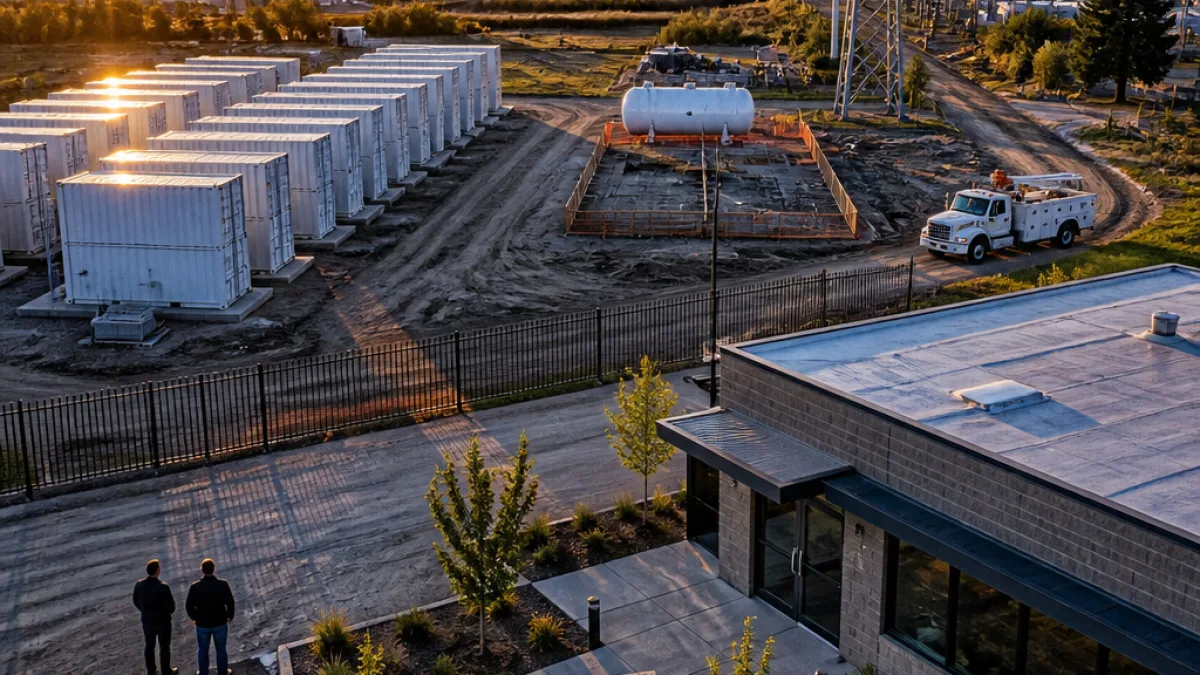
Private discussions surface as county weighs moratorium
Spokane County leaders are facing fresh scrutiny after newly obtained records show Commissioner Al French held meetings and exchanged emails for more than a year with utility officials and a company proposing a massive data center on the West Plains. The disclosures come as the county debates whether to impose a temporary moratorium on new data-center permits.
The project at the center of the controversy is tied to Apricus Energy Solutions and a proposal described in documents as the Rock Point Data Center Project, colocated with a hydrogen-production facility near 11703 West Medical Lake Highway, west of Spokane International Airport near the Hayford Road intersection.
What the records show
Emails and Zoom logs obtained through a public-records request show Commissioner French communicated with Avista officials and with Sean Boyd, president and CEO of Apricus, about the proposal. In one Feb. 9 message, Boyd wrote French:
"We appreciate your continued support and look forward to hearing about additional water supply streams. We are getting prepared to move forward on the Data Center project with two power studies with Inland (Power and Light) and Avista."
French has declined to disclose details of those conversations while the county delayed a vote this week on whether to adopt a moratorium on new data-center construction. The vote postponement left county planning staff and utilities with limited time to craft rules to address the unique demands of large computing facilities.
Scale and local impacts
Data-center projects have become a flash point across the region because of their substantial electricity and water needs. County records and reporting indicate the Rock Point project could eventually seek up to 1,000 megawatts of power; previously reported public comments noted a potential initial scale of up to 500 megawatts in the broader Avista service area. To put that in local terms, the proposal’s power demand has been characterized as exceeding the combined usage of all county residential and business customers if fully realized.
| Item | Reported figure |
|---|---|
| Initial possible demand mentioned publicly | 500 MW |
| Project eventual target per documents | 1,000 MW |
County officials and utilities must consider several system-level questions if such a load materializes: where will the power be generated or delivered from, can the local grid reliably support it, and what are the implications for water supplies and fire protection? Those technical issues often require multiagency coordination and lengthy permitting timelines.
Tax incentives and political context
Another central issue is whether the county and state should extend sales-tax breaks for data-center equipment. Commissioner French testified in February supporting a bill by Rep. Timm Ormsby, D-Spokane, that would align Washington’s tax treatment for data-center equipment with incentives elsewhere in the state. Apricus’s Boyd asked French directly about receiving those benefits.
- Local planning — moratorium would pause new data-center permits while rules are developed.
- Infrastructure — utilities must assess grid capacity and conduct power studies (Avista and Inland Power were named).
- Resource use — water supply for cooling and hydrogen production is a stated concern.
Questions of transparency and next steps
The records were produced after a stay-at-home mother in North Spokane filed a public-records request. Their release has prompted residents and some county officials to ask for clarity about the nature and extent of the conversations between a sitting commissioner and project proponents.
County commissioners have authority over zoning and permitting on unincorporated lands, and a moratorium is a common tool used to pause development while regulatory frameworks catch up. Advocates for a pause argue it would give planners time to quantify utility impacts and craft binding conditions. Opponents of a moratorium typically warn it could deter investment.
For now, the key decisions will be guided by the county commission’s next public meetings, the technical results of power studies by Avista and Inland Power, and whether state-level tax policy shifts in favor of data-center incentives. Each of those steps will shape whether the Rock Point proposal proceeds, and under what terms.
Local residents, utility customers and ratepayers can expect a mix of technical hearings and policy debates in the coming weeks as the county balances economic development with infrastructure capacity and environmental concerns.