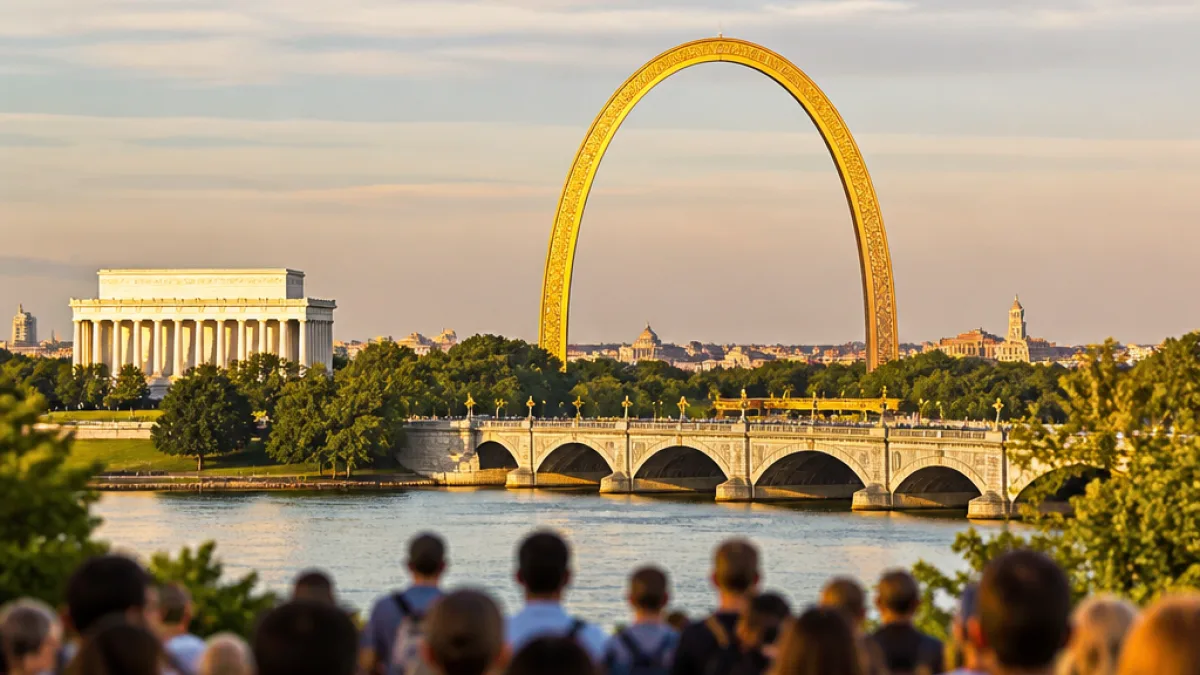
The National Park Service concluded in a new assessment that President Donald Trump’s plan for a gilded, 250-foot memorial arch at Memorial Circle would materially alter the historic visual and spatial relationships that link many of Washington’s most iconic sites.
What the Park Service found
The NPS report, released Monday, places the immediate project zone within the Memorial Avenue Corridor cultural landscape — a nationally recognized historic designed landscape running between the Lincoln Memorial and Arlington National Cemetery. The agency warned the arch would change “character-defining visual and spatial relationships” among a number of protected properties.
“The bridge alignment and associated ceremonial landscape were intended to physically and symbolically unite North and South through a coordinated monumental composition extending across the Potomac River,” the report notes.
Among the more specific concerns cited by the Park Service is that the proposed arch would break the carefully planned axis linking the Lincoln Memorial, the Arlington Memorial Bridge and Arlington House — the historic home once occupied by Confederate Gen. Robert E. Lee. Those alignments have been deliberately preserved for generations as part of the capital’s symbolic geography.
Why this matters to Washington
Washington’s monuments and ceremonial spaces were designed not only as individual landmarks but also as a network of visual relationships. Removing or interrupting those sightlines can alter the meaning visitors take away from the site, the Park Service concluded.
That conclusion puts a new obstacle in the way of a project that has already cleared several administrative gates. The arch received initial approval last month from a federal commission whose membership includes appointees aligned with the president. But federal preservation law and National Park Service review carry substantial weight when changes could affect nationally significant historic resources.
Local implications and ongoing disputes
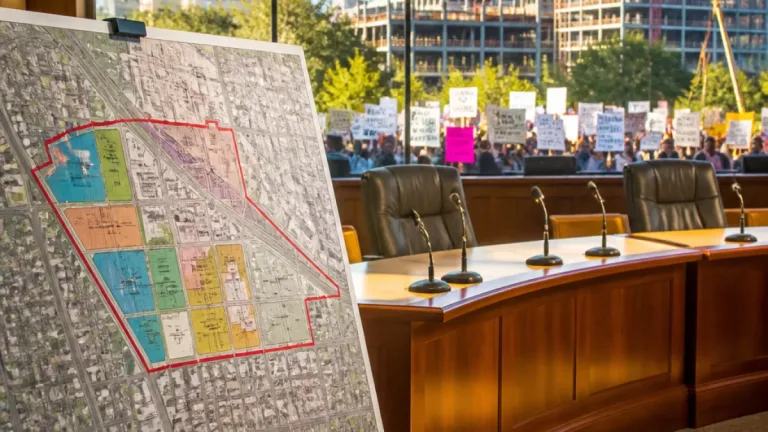
The possibility that a towering arch could reshape the memorial corridor has already generated opposition. The report arrives amid litigation challenging the project, and it may complicate the route forward for planners and backers who have argued the site is appropriate for a major monument to the United States’ 250th anniversary.
Officials who have supported the arch see the proposal as a way for the current administration to leave a durable mark on the capital. Preservationists and some historians say the Park Service assessment reinforces long-standing concerns about preserving the capital’s historic composition.
- Design integrity: The NPS found the arch would produce a visual interruption in a nationally significant ceremonial composition.
- Symbolic impact: The planned alignment historically symbolizes the link between North and South; the arch would intrude on that arrangement.
- Regulatory consequences: The report could strengthen legal and administrative challenges to the project.
Sites called out in the assessment
| Site | Role in corridor |
|---|---|
| Lincoln Memorial | Western focal point of the Memorial Avenue Corridor |
| Arlington Memorial Bridge | Ceremonial connection across the Potomac |
| Arlington House (Robert E. Lee’s former home) | Eastern terminus historically aligned with the Lincoln Memorial |
| Arlington National Cemetery | Part of the larger memorial landscape |
The report does not, by itself, block construction. But it provides a formal statement from the agency charged with stewarding the federal government’s historic properties and parklands — a finding that can influence permitting, litigation and public debate.
What comes next
Despite the Park Service’s findings, the arch proposal has advanced in forums populated by presidential appointees and allies, and its supporters are expected to press on. Opponents have already taken legal action and are likely to use the NPS report as ammunition in court and in broader preservation reviews.
For residents and visitors, the debate is about more than aesthetics. It raises questions about who decides the capital’s commemorative landscape, how long-term preservation is weighed against political projects, and what standards govern changes to nationally significant views.
As this dispute moves through regulatory and judicial channels, the National Park Service assessment is certain to be a central document: a federal agency’s formal caution that the proposed arch would reshape — and, in the agency’s judgment, damage — the designed relationships that give much of Washington its meaning.