Extended Guard presence will carry steep price tag for Washington
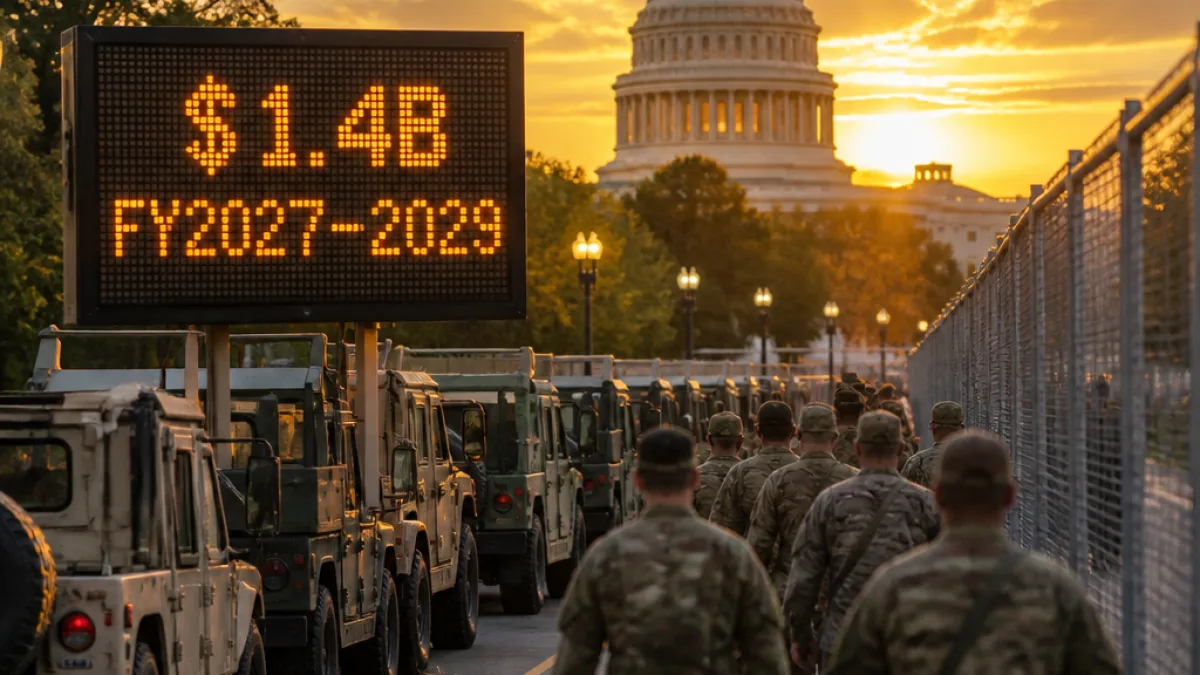
The Defense Department has told Congress that keeping the National Guard in Washington through January 2029 will cost roughly $1.4 billion for fiscal years 2027–2029, offering a hard-dollar look at a deployment that has reshaped the city’s streets and stirred political controversy.
The estimate, provided to lawmakers and reported to The Associated Press, assumes an average of 2,500 Guard members stationed in the District over the period. The deployment began last summer after the president issued an emergency order the administration said was intended to combat crime. At peak moments this summer — including the city’s 250th anniversary of the Declaration of Independence — troop levels surged to about 5,000.
What the Guard has been doing on Washington streets
Officials say Guard members have supported arrest operations, but their duties have also extended to nontraditional law enforcement tasks: snow removal and beautification projects are among the activities the troops have performed, according to reporting that accompanied the estimate.
- Deployment period covered by estimate: FY 2027–2029
- Estimated cost to taxpayers: $1.4 billion
- Average troop presence assumed: 2,500
- Peak troop level this summer: about 5,000
“While American families are getting flattened by skyrocketing costs, Donald Trump is spending $1.4 billion to keep troops on the streets in Washington for years on end,” said Sen. Elizabeth Warren in response to the estimate.
Local and political friction
The estimate comes as local officials and some Democrats criticize the deployment as an intrusion on the city’s autonomy and an unnecessary militarization of public space. The Pentagon’s projection gives those critics a concrete figure to use in arguing about priorities and accountability.
How the money is tallied and who ultimately bears it are central questions. The estimate was prepared in response to questions from Sen. Elizabeth Warren and provided to the Associated Press; The Washington Post reported the figure earlier. The Pentagon has publicly said the Guard mission will continue until Jan. 20, 2029, or until terminated by the president.
| Item | Detail |
|---|---|
| Estimated cost | $1.4 billion (FY2027–2029) |
| Average personnel | 2,500 |
| Peak personnel this summer | About 5,000 |
| Deployment began | Last summer (2025) |
| Current planned end | Jan. 20, 2029 (unless ended earlier) |
Consequences for Washington residents and city governance
For Washingtonians, the estimate translates into several immediate concerns. First, the amount is a visible example of federal spending routed to a single city operation that traditionally falls under local law enforcement. Second, the prolonged presence of uniformed, armed troops on city streets alters daily life and public perception of safety — a change that city leaders have criticized as undermining local control.
Critics also point to the spending trade-offs. The $1.4 billion figure now belongs to the public record and will be part of ongoing debates about whether federal resources are being used for policing in a manner that respects the District’s elected officials and residents.
The Pentagon’s estimate does not offer a detailed, year-by-year breakdown in the material provided to reporters, nor does it parse how much of the cost is for salaries, logistics, equipment, or mission support. Those details will matter to members of Congress and to local officials pressing for oversight.
As Washington heads into another political cycle and with the Guard’s mission scheduled through Jan. 2029, questions about accountability, cost and the impact on everyday life remain unresolved. The estimate gives opponents numeric ballast; it gives supporters a measure of scale for a policy they argue reduced some types of crime. For now, the bill — and who ultimately pays — is on the record.