The federal oversight of political prediction markets is changing fast as regulators and lawmakers move to define who can trade, what events may be listed and how existing market rules will apply to wagers on elections and government actions.
Regulatory shift at the CFTC
The Commodity Futures Trading Commission (CFTC) has signaled a notable change in approach by proposing a rule that would limit the agency’s power to bar the listing of certain event contracts tied to political outcomes. The proposal reopens a debate about whether markets that price election outcomes, judicial decisions or regulatory actions should be treated like traditional commodity derivatives or permitted as a form of public forecasting.
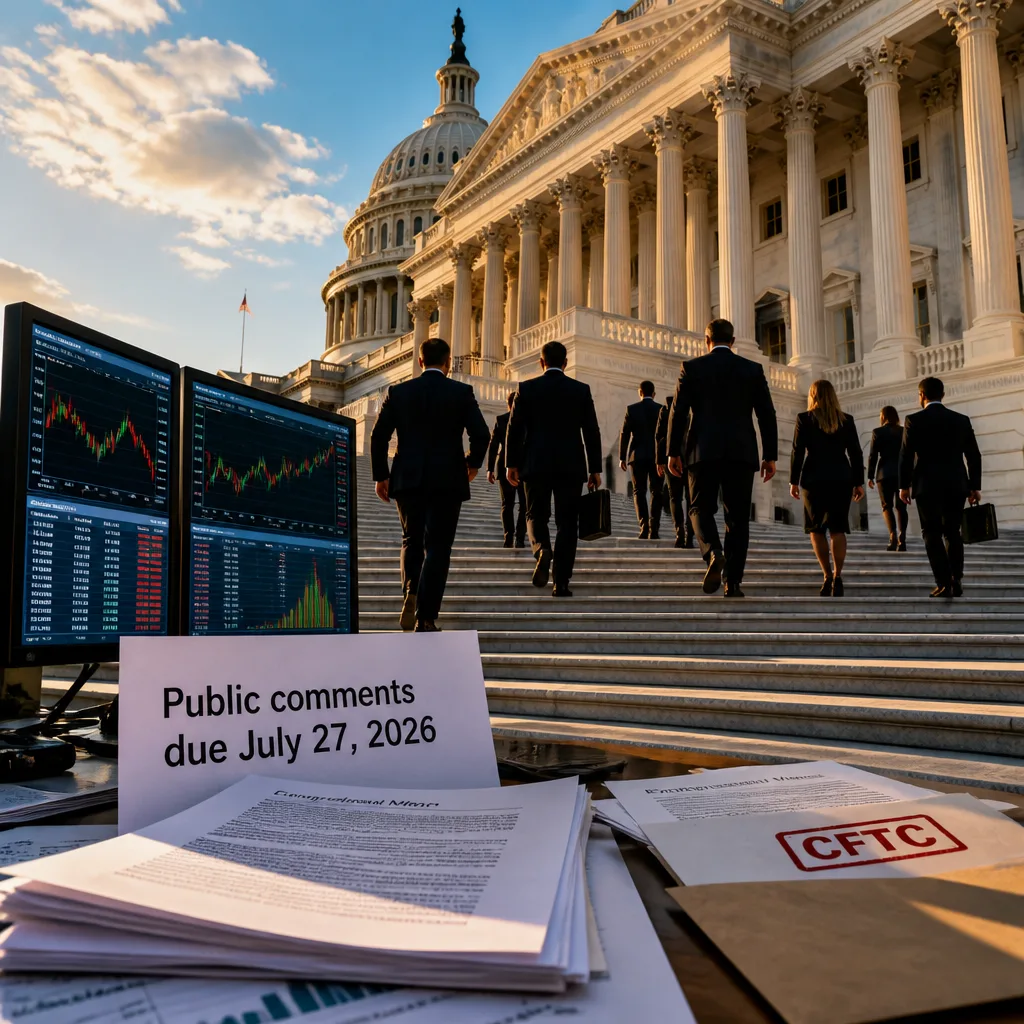
Comments on the CFTC proposal are due July 27, 2026, a deadline that will shape how swiftly the industry and other agencies must adapt. The agency has also emphasized that existing prohibitions on illegal trading practices remain in force and that it intends to police abuses on prediction platforms.
Congress and ethics push tighter limits
At the same time, lawmakers and federal ethics officials are erecting sharper barriers. The Senate has adopted language that bans its members and employees from participating in prediction markets. In the House, a bill under consideration would extend restrictions to Members’ families. Executive branch employees remain subject to long-standing ethics rules that constrain trading based on nonpublic information and create conflicts when market positions intersect with official duties.
- Platforms are responding by crafting their own rules, including prohibitions on trading by political insiders for certain contract types.
- Market participants — campaigns, vendors and third-party traders — can no longer assume an unregulated space; multiple federal regimes may apply.
- Observers note that trading volumes and media attention have pushed prediction markets closer to the mainstream as barometers of political sentiment.
Practical consequences and unanswered questions
The convergence of agency rulemaking, congressional restrictions and platform policies raises concrete questions for several groups. Campaigns that monitor markets for sentiment or hire vendors to analyze contract prices must weigh legal and reputational risks. Platforms face a dual mandate: grow user engagement while preventing insider trading and complying with an evolving regulatory framework. And federal employees who handle sensitive information must navigate how personal trading limits intersect with markets that price the outcomes of their workplaces.
| Actor | Recent action |
|---|---|
| CFTC | Proposed rule narrowing authority to bar event contracts; policing illegal trading |
| Senate | Ban on Members and employees trading in prediction markets |
| House | Bill that would extend restrictions to Members’ families (under consideration) |
| Platforms | Implementing insider-trading prohibitions and content policies |
How these layers of oversight will interact is not settled. The CFTC’s move narrows one avenue of restriction even as Congress expands another. That mismatch could prompt legal challenges, additional rulemaking or coordinated legislation to align authority across agencies.
The stakes are clear: if prediction markets continue to grow in size and influence, they could change how campaigns and the public interpret political risk and forecasts. But expanding markets without robust guardrails also risks insider trading, market manipulation and the mixing of private profit motives with public decision-making.
With comments due later this month and multiple policy tracks in play, the next weeks will determine whether political prediction markets evolve under a consistent federal framework or remain governed by a patchwork of rules, platform terms and ethics guidance.