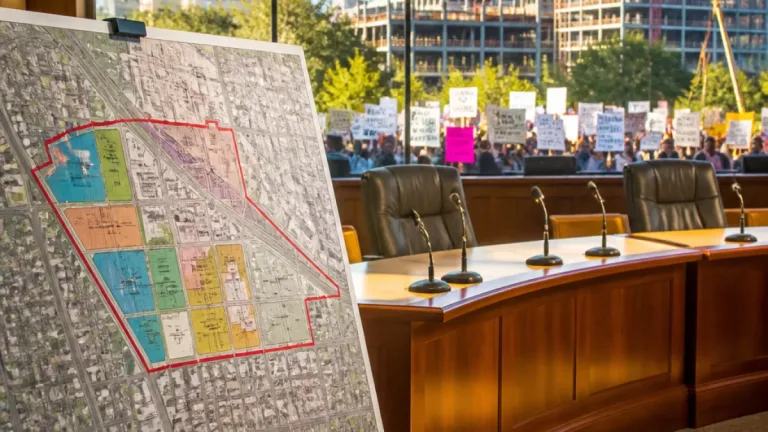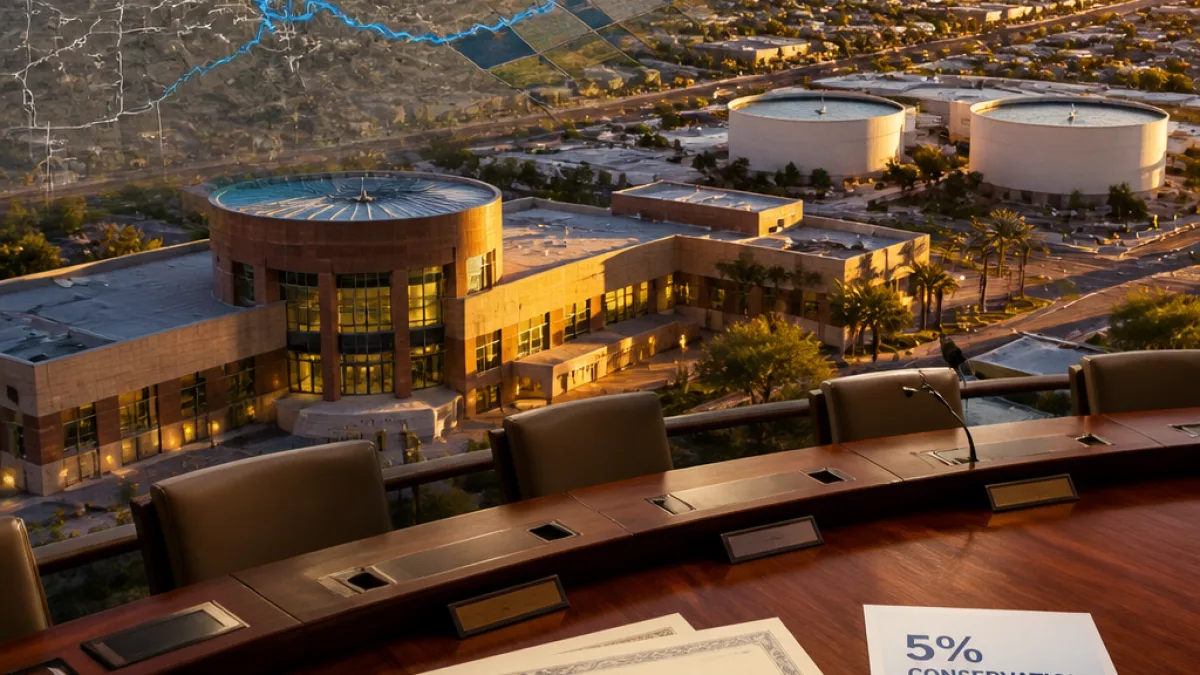
Scottsdale officials this month approved an $8.25 million purchase of water from the Harquahala Valley as the city braces for uncertain Colorado River allocations next year. Council members voted to buy millions of gallons in the form of long-term storage credits — a kind of water "savings account" meant to buffer possible cuts to Colorado River deliveries.
Why Scottsdale is acting now
The city currently depends on the Colorado River for roughly 70% of its water supply, a significantly higher share than some neighboring cities — Phoenix, for example, relies on the river for about 40% of its water. With Western states still negotiating how to share shrinking river flows, Scottsdale officials say tapping additional, banked supplies is a prudent step to reduce short-term risk.
Long-term storage credits let a municipality store excess water — often delivered at a different time or place — for later recovery. The Harquahala Valley credits are intended to be part of that contingency mix, supplementing the city’s existing supplies and reserves.
City stance and conservation stage
The purchase comes while Scottsdale remains in Stage One of its drought plan, which asks residents to voluntarily reduce water use by 5%. City officials say mandatory restrictions are not currently required.
“The City of Scottsdale is currently not doing water restrictions because we are in a position now where we don’t need to,”
That assessment was echoed by Bryan Cassens, assistant senior director for water resources, who told Arizona’s Family the city has been preparing for possible shortages for years. But some water policy experts warn that planning should go beyond securing water credits.
Sarah Porter, director of the Kyl Center for Water Policy at Arizona State University, voiced concern about the city’s readiness for "very deep shortages." She emphasized that the challenge is not only finding alternative supplies but also having the infrastructure to move those supplies to treatment plants and deliver finished water to all parts of town.
- Scottsdale’s current reliance on Colorado River water: approximately 70%
- Recent City Council action: approved $8.25 million purchase of Harquahala Valley long-term storage credits
- Conservation stage: Stage One — voluntary 5% reduction requested
Infrastructure questions and local consequences
Porter’s point underscores a practical problem for residents: even if Scottsdale secures alternative water sources or credits, the city must have the physical conveyance systems — pipelines, treatment capacity and delivery networks — to bring that water to consumers across geographically varied neighborhoods. That issue is especially relevant for northern parts of Scottsdale, where older infrastructure and elevation differences can complicate delivery.
Without adequate infrastructure, banked water may remain virtual insurance rather than an immediately usable supply. Upgrading pipelines, treatment facilities or pump stations carries its own costs and long lead times — decisions that the city will have to weigh against budget priorities and ratepayer impacts.
What residents should know and expect
For now, Scottsdale is asking for voluntary conservation and has not implemented mandatory restrictions. City leaders say the purchase of Harquahala credits is one step among several in a multi-year planning process. Residents should anticipate continued public communication from the city about:
- Changes to conservation stages or mandatory restrictions if river allocations worsen;
- Updates on infrastructure projects needed to mobilize alternative water supplies;
- How the city plans to use long-term storage credits and when those supplies would be available.
| Item | Figure |
|---|---|
| Scottsdale share from Colorado River | ~70% |
| Phoenix share from Colorado River | ~40% |
| Approved Harquahala purchase | $8.25 million |
| Current drought stage | Stage One (voluntary 5% reduction) |
The City of Scottsdale has been publicly framing these moves as measured and preemptive. But water experts caution that budgeted purchases and voluntary conservation need to be paired with infrastructure planning to ensure those supplies can be used effectively if deeper shortages arrive. City residents should expect ongoing debate among elected officials, water managers and the community as the state continues negotiating Colorado River allocations.