
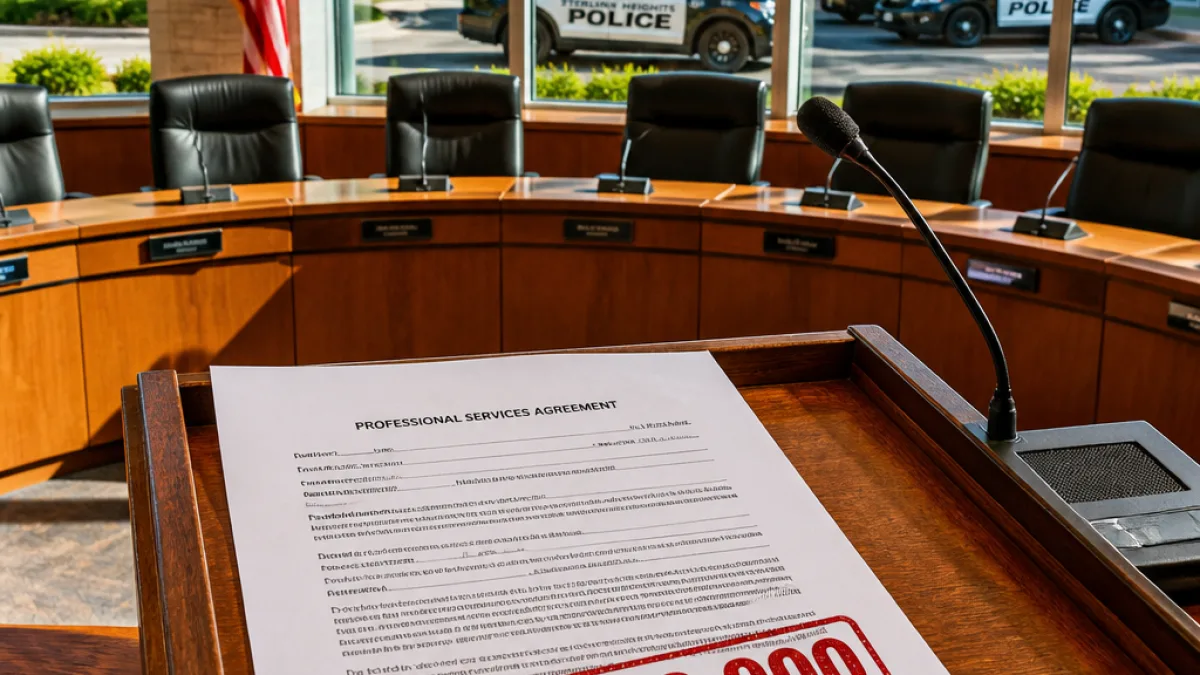
The Sterling Heights City Council approved an $88,000 contract this week to commission a strategic organizational review of the city’s police department — the first such review in the agency’s more than 50-year history. City officials framed the work as a forward-looking investment aimed at strengthening leadership, supporting employees and ensuring the department can meet community needs.
Scope and purpose of the review
The contract was awarded to Virginia-based Eagle Hill Consulting. The firm will examine the department’s organizational dynamics, workplace culture, leadership alignment, employee engagement and related operational practices. The Sterling Heights Police Department currently staffs 161 officers.
The review will be structured in three phases: discovery, analysis and recommendations. At the conclusion of those phases, the consultant will deliver a strategic plan that prioritizes action steps the city and department can take. City leaders noted an optional fourth phase — implementation support — could be considered later and would require separate approval and additional funding.
Leadership changes and internal context
Police Chief Andrew Satterfield, who took the helm a year ago after a 27-year career with a neighboring department, told the council the agency has experienced substantial leadership turnover over the past 12 months. He cited the addition of two new captains, three new lieutenants and six new sergeants, and argued those shifts make a structured review timely.
“This review is about supporting our employees, strengthening the organization from within and ensuring the department remains well-positioned to meet the needs of our community now and in the future.”
The line above, included in the city’s news release, came from City Manager Mark Vanderpool describing the review as a “proactive investment” in the department’s future. In public comments, Satterfield emphasized the need to continually evaluate how the department supports its workforce and maintains service standards.
What the review will produce
According to the release, the consultant’s work will culminate in a strategic plan that identifies specific recommendations and ranks action steps by priority. The stated goals are internal strengthening — focusing on employee well-being and workplace effectiveness — and preserving the department’s public service standards.
- Phase 1 — Discovery: Information gathering about practices, culture and structure.
- Phase 2 — Analysis: Assessment of findings and identification of gaps and opportunities.
- Phase 3 — Recommendations: Development of a strategic plan with prioritized actions.
City officials did not attach a timeline for completion in the release nor did they specify if the consultant’s report will be made publicly available in full. Any move to fund implementation support beyond the initial study would require separate City Council approval.
Local consequences and questions for residents
The review raises practical and political questions for residents and city policymakers. Internally, the department must manage the transition of new leaders while maintaining day-to-day policing. Externally, residents will want clarity on how identified recommendations affect patrol operations, community policing initiatives, training, and officer wellness programs.
| Item | Detail |
|---|---|
| Contractor | Eagle Hill Consulting (Virginia) |
| Budget | $88,000 |
| Department size | 161 officers |
| Phases | Discovery, Analysis, Recommendations (optional Implementation) |
For residents, the review is not a momentary administrative exercise. It is a deliberate effort to examine how Sterling Heights’ largest public safety institution is organized and led, and whether its internal practices match community expectations. As the city and department move forward, transparency about findings, timelines and follow-through will shape public confidence in the process.
The City Council’s vote to fund the review signals municipal leaders are willing to allocate resources to evaluate and potentially reshape internal operations. Whether the work produces substantive change will depend on the rigor of the analysis, the willingness to act on tough recommendations and the city’s readiness to invest in implementation if required.