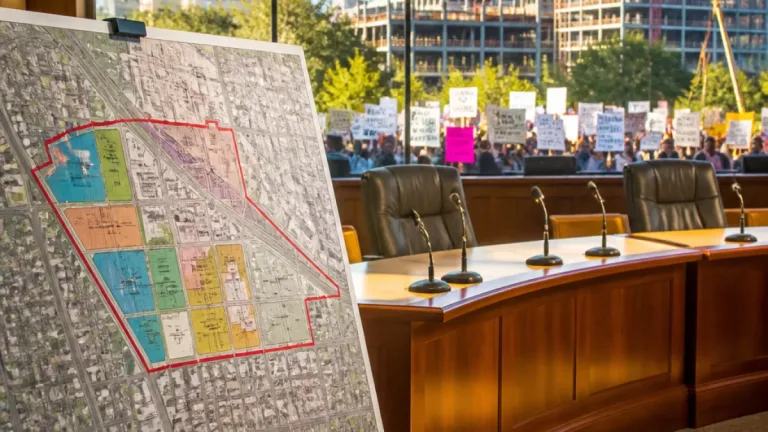
The Fremont City Council voted July 28 to delay putting a proposed city charter question on the November ballot, opting instead to continue community outreach and study potential ordinance changes that could be implemented without rewriting the city's governing document.
Council response after public pushback
The decision follows two public hearings in July that revealed strong concern among residents about the pace and scope of the charter effort. City records show the initiative drew heavy comment at the July 28 meeting—36 public commenters, with more than half expressing reservations that the process was moving too quickly or that they were insufficiently informed.
Council leaders framed the vote as a pause for more education and operational planning, rather than an outright rejection of the charter concept. Mayor Raj Salwan praised resident involvement, saying the turnout and scrutiny were evidence of civic engagement.
“More Fremont residents understand what a charter is today than at many previous points in our history. That alone is an achievement.”
Vice Mayor Yajing Zhang said the delay gives the city time to demonstrate how a charter could improve municipal operations, especially procurement and independent oversight.
“I think that what needs to be done is, focus more on the operational improvement. So that [people] can clearly see the benefit of being a charter.”
What the council will study next
Rather than placing the charter question before voters this fall, the council directed staff to pursue further engagement and hold study or working sessions on targeted changes that do not require a charter. The council identified several specific areas for attention:
- Procedures allowing the mayor to add agenda items;
- Authority for the council to hire or fire a staff member who would serve the council directly;
- Mechanisms for filling a suddenly vacant council seat by appointing the candidate with the next-highest vote total from the previous election.
| Item | Description |
|---|---|
| Mayor agenda authority | Exploring options to let the mayor place items on council meeting agendas. |
| Council-staff hiring | Studying rules to permit the council to hire or terminate a staff member who reports to the council. |
| Vacancy filling | Considering appointing the candidate who received the next-highest votes to fill an abrupt council vacancy. |
Residents split, skepticism remains
Public comment at the hearings illustrated a split in the community. Several residents said they worry that adopting a charter would not solve local governance problems and might complicate accountability. One commenter warned that charter status does not make a city immune to misconduct, arguing that existing laws already address corruption and that the primary issue is in how rules are implemented.
Other residents, including a Fremont native who attended city schools, expressed support for the charter effort as a way for local voters to shape governance rather than relying solely on state law from Sacramento.
Next steps and implications for Fremont
By delaying a ballot measure, the council has effectively extended the timeline for any charter change, giving staff and elected officials additional months to draft proposals, hold workshops and refine the case to voters. That window also creates room for opponents and proponents alike to organize, educate neighbors and influence the scope of any future proposal.
Operational items the council has asked to study could be enacted through ordinances or policy changes if council members craft them carefully and secure required votes. Those narrower changes would alter day-to-day council procedures without fundamentally changing Fremont's legal status.
For residents, the immediate consequence is more time to learn about the implications of a charter and to engage in a debate over municipal control, transparency, procurement and oversight. For the council, the challenge now is to translate public input into clear policy proposals and to show, through outreach and study sessions, why a charter — or targeted ordinances — would improve city operations.
The city has not announced a revised timeline for additional hearings or a future ballot question; council members indicated further community engagement would be scheduled in coming months.