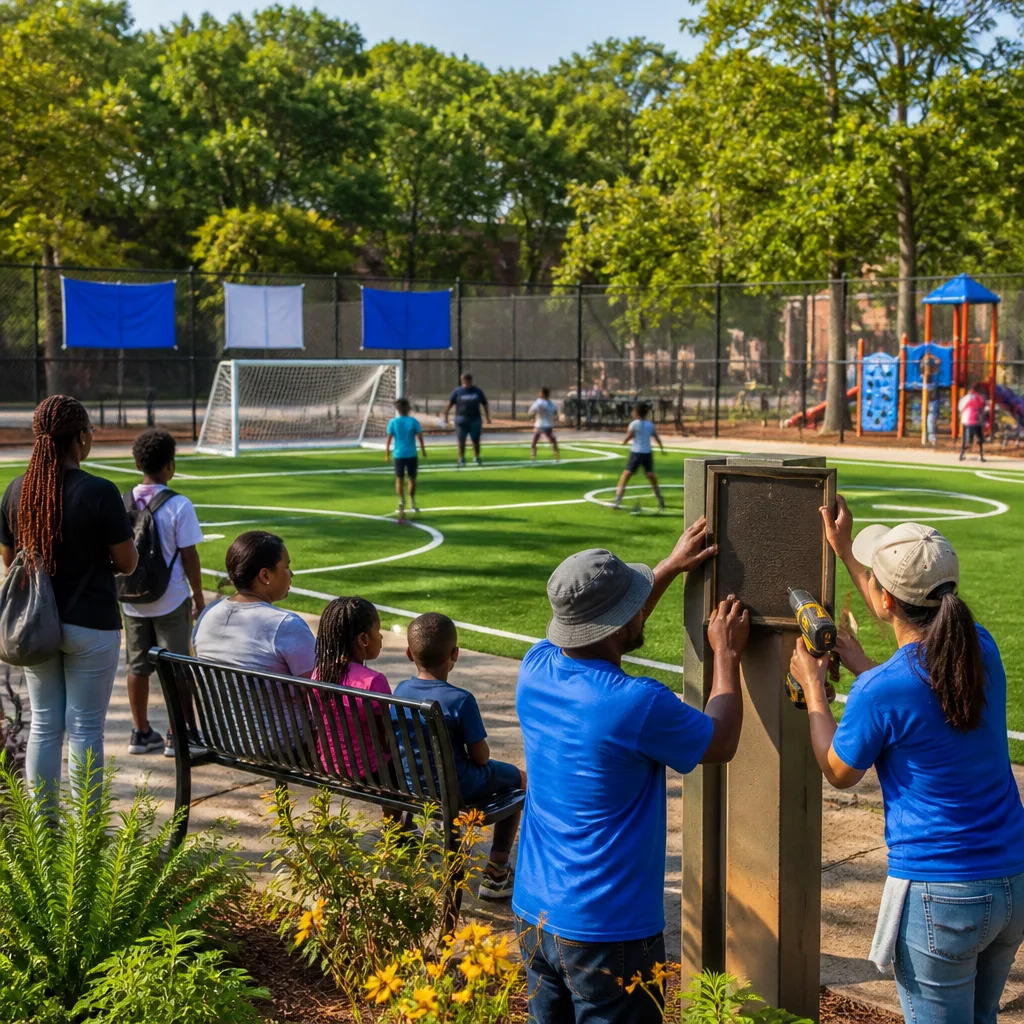
Tyler Adams, a starter for the U.S. men’s national team, is turning post-World Cup momentum into community fields. The midfielder has teamed with Allstate and the U.S. Soccer Foundation to open a compact playing surface at Sandtown Park in South Fulton, Georgia — the third mini-pitch completed under this initiative.
From stadiums to neighborhood parks
Adams said the project is about more than producing future professionals. He framed the mini-pitches as local access points where children and families can gather, play and develop social skills as much as athletic ones. The recent installation follows previous pitches in Philadelphia and Detroit, all part of the same partnership.
"I think the goal is obviously to give these underserved communities access to the game,"
The first-person perspective echoes a common rationale among athletes who invest in grassroots infrastructure: create the spaces so opportunity exists, then let communities decide how to use them. Adams noted he did not always have a reliable place to play as a child, a motivating detail he cited when discussing the project's aims.
Why mini-pitches matter now
The timing comes as national interest in soccer remains elevated following the 2026 World Cup. Adams, who also started for the United States at the 2022 World Cup in Qatar, said his prior tournament experience helped shape expectations on the field but that hosting the event at home brought intensified attention from fans and media.
- Partners on the project: Allstate and the U.S. Soccer Foundation.
- Locations completed: Philadelphia, Detroit, Sandtown Park (South Fulton, Georgia).
- Stated goals: expand access in underserved communities, foster social and athletic growth.
The initiative illustrates a familiar post-tournament challenge: how to translate a surge in enthusiasm into durable participation and infrastructure. Mini-pitches are one small-scale model aimed at lowering barriers — proximity, cost and safe public space — that can otherwise stop youth participation.
What this could mean for communities
Small-sided fields are credited in various programs with increasing play frequency and engagement because they require less space and maintenance than full-size fields. For cities and neighborhoods with limited recreational budgets, a compact pitch can be a pragmatic investment. Adams and his partners are leveraging celebrity and sponsorship to place such assets where families will encounter them daily.
| Mini-pitch | City |
|---|---|
| First | Philadelphia |
| Second | Detroit |
| Third | Sandtown Park, South Fulton, Georgia |
Adams acknowledged the limits of what the project can control: providing the field is only the first step. How kids, families and local groups use the space — whether for organized programs, pickup play or other community activities — will determine its long-term impact. Still, the installations signal a practical approach to keeping momentum from large international tournaments rooted in local neighborhoods.
As the U.S. looks ahead to the 2027 Women’s World Cup in Brazil and the 2030 edition hosted by six countries, projects like Adams’ offer one pathway to broaden the player base and nurture the social benefits of sport where people live.