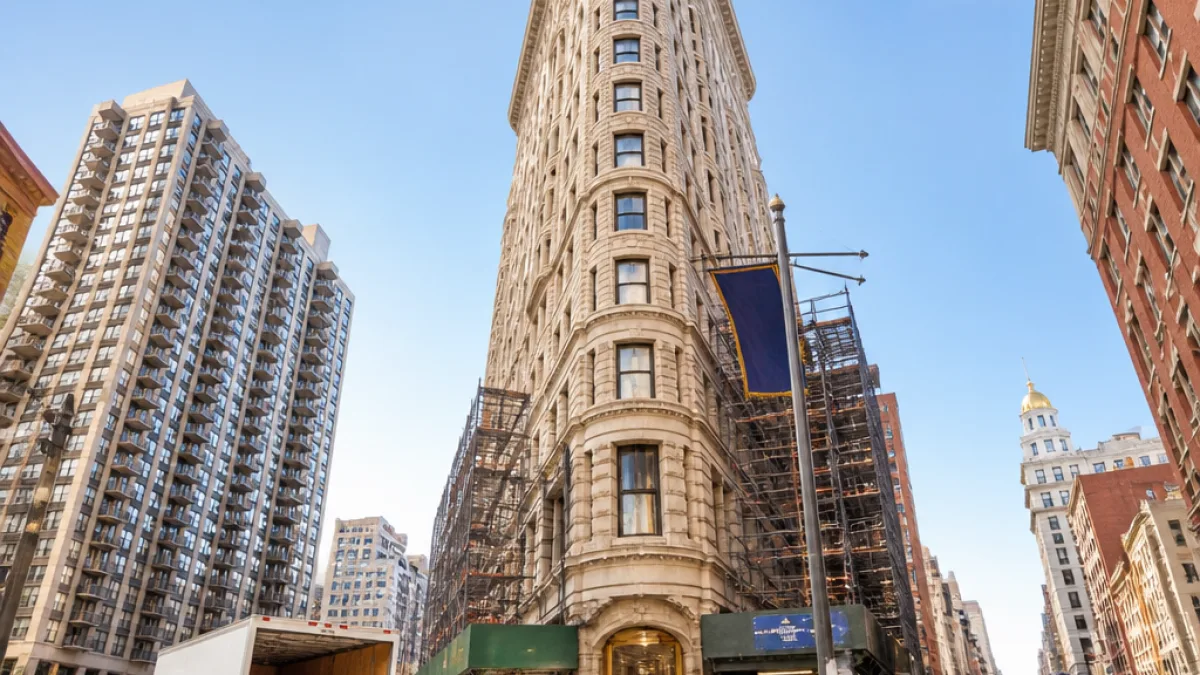
The Flatiron Building, one of Manhattan’s most recognisable landmarks, is completing a dramatic transformation that replaces long‑standing scaffolding and dated offices with ultra‑luxury residences, some listed at as much as $58.5 million.
From early skyscraper to high‑end housing
Completed in 1902 and designed by architect Daniel Burnham, the triangular Flatiron has been a fixture at Broadway and Fifth Avenue for more than a century. Its Beaux‑Arts facade and narrow prow have drawn tourists and photographers by the thousands. For the past seven years, however, the building was largely hidden behind scaffolding while undergoing a large‑scale renovation that reworked both its interior and exterior.
Developers are now positioning the revamped property as a trophy residential address. The new units are marketed at the very top end of Manhattan’s market: the most expensive listings in the project reach $58.5 million, putting them among the priciest offerings in the city. According to data compiled by Manhattan Miami Real Estate, only 21 residences in New York City are publicly listed at higher price points, and the single most expensive listing sits at $128 million near Central Park.
What the change means for the neighborhood
The building’s conversion is more than an architectural update; it is reshaping how the neighborhood functions. The small triangular park in front of the Flatiron — once a constant magnet for tourists snapping photos of the full facade — saw a dip in visitors after scaffolding went up and the pandemic reduced tourism, said James Mettham, president of Flatiron NoMad Partnership.
With the scaffolding coming down and wealthy new residents expected to move in, the immediate area could experience renewed foot traffic and shifts in retail demand — from quick‑service options to higher‑end boutiques and services catering to affluent buyers.
- Historic milestone: Completed in 1902 with pioneering steel‑frame construction.
- Price context: Flatiron units top out at $58.5 million; only 21 NYC listings are higher.
- Neighborhood impact: Park visitation fell during scaffolding and the pandemic; reopening may revive or redirect local activity.
Luxury redesign in a city of expensive conversions
The Flatiron’s makeover follows a broader pattern in Manhattan: converting older commercial buildings into luxury residences. The developers emphasize the building’s architectural legacy while inserting modern amenities and layouts that support multimillion‑dollar pricing. The juxtaposition is stark — Burnham’s turn‑of‑the‑century engineering celebrated as innovation now underwrites some of the most expensive homes on the market.
Industry data shows ultra‑high‑end listings remain a small but highly visible segment of New York’s housing market. While such projects attract international attention and significant capital, they also intensify the debate about the city’s housing priorities and the distribution of redevelopment benefits.
What buyers are getting — and what the city is losing
Buyers in this tier expect bespoke finishes, views and exclusivity. For the Flatiron project, selling historic character alongside modern luxury is central to the pitch: a preserved Beaux‑Arts exterior framing interiors designed for contemporary high‑net‑worth lifestyles. The economic logic is clear for developers — prestige properties command outsized prices — but they also raise questions about who benefits when landmark buildings are repurposed.
| Metric | Figure |
|---|---|
| Year completed | 1902 |
| Highest listed Flatiron unit | $58.5M |
| NYC listings priced higher | 21 |
| Most expensive NYC listing | $128M |
The Flatiron’s rebirth will be watched closely by preservationists, local business owners and real‑estate observers alike. For a neighborhood that once relied on steady tourist traffic to its iconic frontage, the question now is whether a new residential clientele will restore economic vitality — or remap the area in ways that change its character.
Whatever the outcome, one image remains: the Flatiron’s wedge-shaped silhouette — a century of engineering and attention-grabbing design — now reemerging as a symbol of Manhattan’s most expensive housing ambitions.